

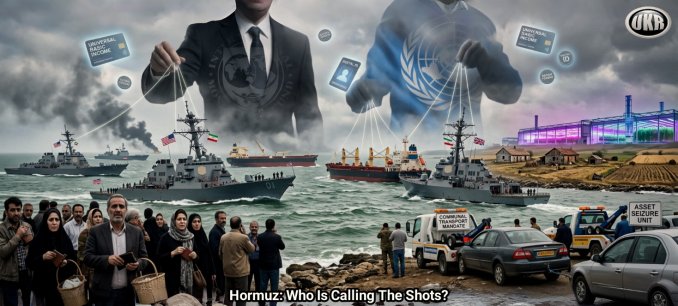
The Spark, the Standoff, and the Strait: Unpacking the War on Iran
CHARLIE HOWDEN
I’ve been trying to make sense of what’s going really on with the war on Iran. The US says it is blockading the Straits of Hormuz to destroy Iran’s economy, but it risks destroying the world economy, including its own, in the process. So, let’s have a look and see if we can make any sense out of it. Take it up in the comments.
Picture this: it’s the end of April 2026, and the world is holding its breath over the powder keg in the Persian Gulf. After a whirlwind of airstrikes, naval showdowns, and shadowy proxy battles, it has simmered into an uneasy ceasefire, but the air crackles with the threat of explosion. What kicked off as a thunderous US-Israeli assault on 28 February is now a high-stakes game of chicken, where nobody’s blinking. Western headlines scream of taming a rogue regime, Iranian voices roar defiance, and powers like Russia, India, and China shake their heads at the chaos rippling across the globe. At the epicentre? The Strait of Hormuz, where only about ten ships a day are making the passage through it, way less than a tenth of normal traffic.
And just what is Donald Trump’s strategy. Is he out to crush Iran? Or China? Is he creating his own new world order based on US hegemony? Or is he handing globalist elites at the World Economic Forum (WEF) and their UN Agenda 2030 playbook a golden opportunity to reshape the world into the Global government tyranny they desire?
Let’s rewind to the fireworks. The war erupted when Trump, fresh off a 60-day ultimatum for Iran to scrap its nuclear ambitions and ditch its proxies like Hezbollah and the Houthis, imitated joint strikes with Israel. Tehran lit up under the bombs and Supreme Leader Ali Khamenei was killed. Trump’s strategy was, he said, crystal clear: regime change, pulverise Iran’s missiles, sink its navy, wipe out its air force, neuter its terror network, and slam the door on any atomic dreams. But Iran didn’t follow the script, fought back effectively, and oh so predictably closed the Straits. By early April, a fragile two-week truce kicked in and on 7 April Iran eased tanker access through Hormuz, the US paused the pounding and Trump stretched it indefinitely on 21 April, bragging that 75% of targets were toast. And then, after calling the Iranian regime a bunch of gangsters for closing the Straits, the US imposed its own, very much reducing traffic and directly ordering around 40 ships to turn back and putting shells into at least one of them. But still, there’s no grand deal in sight. Iran’s rebuffing US demands for ironclad nuclear handcuffs and talks in places like Islamabad have hit the skids after Iran refused to accept America’s demand for capitulation and Trump yanked his envoy at the last minute.
Western sources paint a picture of gritty impasse. “An awkward limbo of ‘no war, no peace’,” as the NYT quips, with diplomacy derailed and both sides digging in like a modern Somme. The Guardian captures the frustration: a “deepening sense of deadlock” despite frantic regional shuttle diplomacy. Trump keeps dangling the phone line to Tehran; “Call if you want to talk” but insists no nukes, period. Casualties? Murky as ever, though US brass concedes Iran’s still got plenty of punch left in its missile and drone arsenals.
In Tehran it’s a tale of grit and grievance. PressTV and IRNA frame this as a brutal US-Israeli bulldozer trampling sovereign soil—day 57 of invasion by 25 April, no less. Iran’s pushing “workable frameworks” for peace, but with teeth: demands for war reparations from Gulf neighbours over wrecked bridges and power grids, like the Karaj-Tehran lifeline. Their 10-point blueprint? Crack open Hormuz, lift the US naval stranglehold, but only if the West coughs up real security pledges. No more nuclear grovelling without it. And the warnings? Chilling. Tehran vows “mayhem” on Israel and the US if the truce snaps, teasing “new surprises” in its arsenal. Even US senators are calling the whole mess “disastrous,” with failed bids to leash Trump’s war powers stacking up.
Russia’s take, via RT and Sputnik, is laced with schadenfreude. This war’s laying bare America’s Achilles’ heel, they say, exposing the limits of Yankee might and turbocharging a multipolar shake-up. Will it fizzle in weeks or drag everyone into the abyss? Either way, it’s a boon for arms peddlers and a body blow to Europe’s wallet via energy shocks. Dmitry Medvedev smirks at the ceasefire as “common sense” finally dawning, though he notes the US has chomped off a chunk too big to swallow. Gulf allies? They’re sitting on the sidelines, too spooked by the economic fallout to jump in.
In India, The Hindu and Times of India dish out even-handed dispatches with a subcontinental edge. Trump’s griping that Iran’s Hormuz-centric pitch dodges the nuclear elephant in the room. Tehran drops explosive rhetoric—”We’ll smash and shatter America”—while US ships play cat-and-mouse with suspect vessels. No nukes from Trump, but plenty of “bombs” if the deal dies. UAE whispers admit the pain: “Iran hit us hard, but we did nothing,” despite Uncle Sam’s umbrella.
China’s Global Times and Xinhua? They skewer the whole affair as Yankee hubris run amok. A month in, and the end’s nowhere—exchanges slowed since 8 April, but threats simmer. Iran’s no to flimsy ceasefires without a forever fix, countering with its own plans. Protests rail against “imperial” strikes, and officials murmur it’s “close to over,” yet resistance burns bright.
But zero in on the Strait of Hormuz, where this madness bites hardest and is already having a huge, disastrous effect on the world economy that can only get worse. Normally, it’s a frenzy: 20 million barrels of oil daily, plus LNG and sundry goods, with 30,000 ships zipping through in a year. That’s 120-140 vessels a day keeping the global engine humming. But since Iran’s retaliatory blockade post-28 February, now mirrored by US warships, it’s a wasteland. Traffic’s cratered to 3-6 ships daily, a jaw-dropping 95% plunge. The UN’s trade arm sounds the alarm: this chokepoint’s snarl-up could torpedo global commerce, from crude to fertilisers, LNG to nine vital commodities. Oil prices? Skyrocketing. Food security? Teetering on the brink, per WTO trackers.
So let’s probe the “logic” behind the US blockade. Ostensibly, it’s to kneecap Iran’s economy, starving its war chest by choking exports. Sounds ruthless, right? Except… is it? Here’s where it gets ludicrous. Slamming Hormuz doesn’t just hurt Tehran; it hammers everyone from British pump prices to Chinese factories. The world’s economy is the real casualty, with IMF forecasts slashing 2026. Why torch the village to smoke out one house? It’s like using a sledgehammer to crack a walnut, only the hammer rebounds and bashes your own thumb. Critics whisper this isn’t strategy; it’s self-sabotage, amplifying vulnerabilities in a hyper-linked world. If the goal was pure economic warfare on Iran, precision sanctions or targeted interdictions would do the trick without igniting a global bonfire. Instead, this blunt blockade reeks, at best, of overreach, begging the question: is it really about Iran, or something grander—and more destructive?
Trump’s endgame? He spells it out: those five pillars of destruction, from missiles to mullahs. By April, he’s crowing about nearing “core strategic objectives,” with chunks of Iran’s arsenal in ruins and proxies on the ropes. Regime change? The dream of toppling the ayatollahs via precision chaos. But reality? A mixed bag at best. Navy’s battered, sure, but Tehran’s leadership clings on, more iron-fisted than ever. Proxies? Still kicking. Nuclear sites? Pockmarked, but breakout capacity lurks. Talks have thawed from outright brawl to frosty haggling, yet Trump’s megaphone diplomacy—ultimatums one day, olive branches the next—has bred suspicion, not solutions. The fallout? Shattered alliances, normalised brinkmanship, and a sprint towards multipolarity that leaves America looking isolated. Quick win? Hardly. It’s a quagmire that’s rewritten the Middle East board—and not in Washington’s favour.
And now, the thorny speculation: is Trump’s fireworks display, wittingly or unwittingly, fuelling the WEF’s dystopian dream, and the UN’s Agenda 21/2030 blueprint for “sustainable” control? Recall the WEF’s infamous line: “By 2030, you’ll own nothing and be happy” – code for centralised overlords engineering scarcity to herd the masses into digital cages—universal basic income, asset grabs, and supranational rule under the guise of climate and equity fixes. Agenda 21, that 1992 UN blueprint evolving into 2030’s sustainable development goals, pushes similar themes: interconnected crises as levers for global governance, from resource rationing to behavioural nudges.
The Hormuz blockade’s shockwaves are a near-perfect match. Sky-high energy costs? They erode savings, forcing folks from car ownership to communal transport, aligning with “own nothing” mobility mandates. Commodity crunches in food and fertilisers? They spike prices, hammering small farmers and pushing reliance on corporate or state handouts echoing Agenda 2030’s food security pacts that centralise supply chains. Global growth dips? Cue the calls for “resilient” economies via green transitions, digital IDs, and wealth redistribution, WEF wet dreams all. Trump’s “America First” bluster rails against Davos elites, yet his blockade is brewing the very brew they sip: interdependence turned weapon, crises as catalysts for reset. Europe’s energy woes? Priming the pump for supranational grids. US consumers squeezed? Softening resistance to universal controls. It’s ironic poetry—anti-globalist Trump, by fracturing the old order, accelerates the one where sovereignty shrinks and elites orchestrate from afar. Is it coincidence, or does chaos always pave the road for the “experts”?
In the end, this war on Iran dances on a razor’s edge; ceasefire holding by threads, diplomacy gasping for air. Sources from Tehran to Beijing agree: one wrong move spells apocalypse. Trump’s tactical jabs have landed, but the strategic boomerang’s swinging back, potentially scripting the globalists’ next chapter. As Hormuz slumbers, the world grapples with a stark choice: de-escalate, or watch the blockade’s logic unravel into a blueprint for controlled decline.
This article (Hormuz: Who Is Calling The Shots?) was created and published by Free Speech Backlash and is republished here under “Fair Use” with attribution to the author Charlie Howden

••••
The Liberty Beacon Project is now expanding at a near exponential rate, and for this we are grateful and excited! But we must also be practical. For 7 years we have not asked for any donations, and have built this project with our own funds as we grew. We are now experiencing ever increasing growing pains due to the large number of websites and projects we represent. So we have just installed donation buttons on our websites and ask that you consider this when you visit them. Nothing is too small. We thank you for all your support and your considerations … (TLB)
••••
Comment Policy: As a privately owned web site, we reserve the right to remove comments that contain spam, advertising, vulgarity, threats of violence, racism, or personal/abusive attacks on other users. This also applies to trolling, the use of more than one alias, or just intentional mischief. Enforcement of this policy is at the discretion of this websites administrators. Repeat offenders may be blocked or permanently banned without prior warning.
••••
Disclaimer: TLB websites contain copyrighted material the use of which has not always been specifically authorized by the copyright owner. We are making such material available to our readers under the provisions of “fair use” in an effort to advance a better understanding of political, health, economic and social issues. The material on this site is distributed without profit to those who have expressed a prior interest in receiving it for research and educational purposes. If you wish to use copyrighted material for purposes other than “fair use” you must request permission from the copyright owner.
••••
Disclaimer: The information and opinions shared are for informational purposes only including, but not limited to, text, graphics, images and other material are not intended as medical advice or instruction. Nothing mentioned is intended to be a substitute for professional medical advice, diagnosis or treatment.
Disclaimer: The views and opinions expressed in this article are those of the author and do not necessarily reflect the official policy or position of The Liberty Beacon Project.


Leave a Reply