


UK Regulator and “Kick It Out” Report Calls for Policing and Censorship of Legal Online Speech Under Censorship Law
What counts as harm is no longer measured by law, but by how much it offends the ear of a regulator.

A new report by Ofcom and anti-discrimination group Kick It Out has thrown its weight behind a growing campaign to restrict online speech in the UK, even when that speech breaks no laws.
Backed by the government and tied to powers granted under the Online Safety Act, the document marks a significant moment in the institutional push to transform what is currently legal expression into material subject to moderation, suppression, and even criminal investigation.
It’s a move that would have been politically unthinkable a decade ago. Today, it’s being packaged as harm reduction.
The most striking aspect of the report is how explicitly it acknowledges the legality of much of the content it targets. It doesn’t claim that current laws are inadequate in tackling actual hate speech or criminal abuse. Instead, it argues that lawful content, opinions, statements, or commentary that some users might find offensive, ought to be suppressed anyway.
The authors present this as a moral imperative. Content that might “normalize” harmful behavior or “offend” certain communities, even when fully within legal bounds, is framed as dangerous.
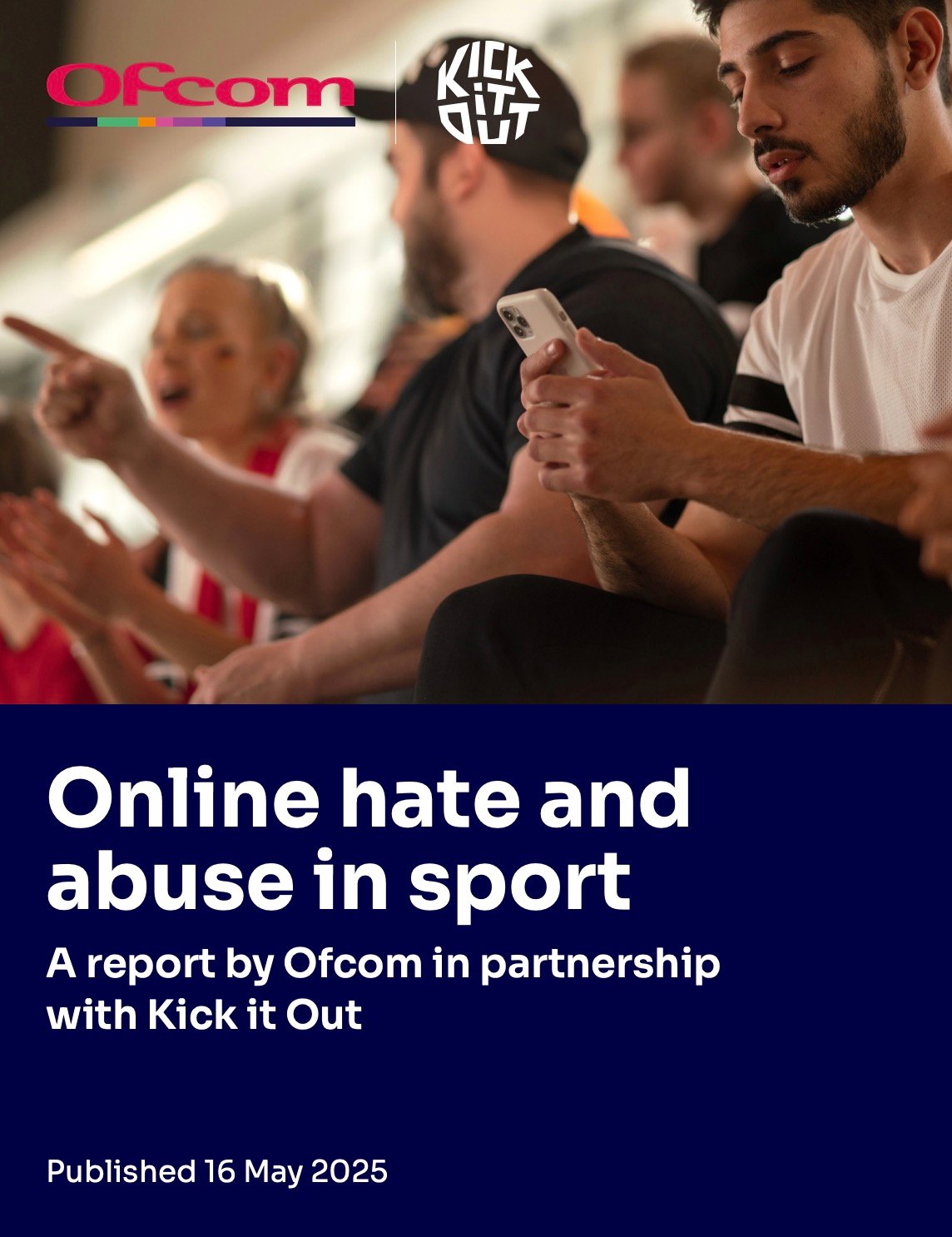
The report calls for stronger moderation tools, more aggressive enforcement, and deeper intervention from tech platforms. The implication is that legality is no longer the standard, perceived harm is.
This shift is more than semantic. It reflects an ideological transformation in how speech is treated online: less as a right, and more as a privilege to be conditioned on social acceptability.
Throughout the report, there’s a persistent conflation between criminal activity and mere controversy.
The distinction between unlawful hate speech and legally protected, albeit unpleasant, commentary is muddied. The end result is a framework that sees all negative speech, particularly speech involving race, religion, or sexuality, as inherently harmful and in need of control.
“Some participants hoped that if the police started taking action against hate and abuse online, this would send a message,” the report states, in what reads more like a policy recommendation than a casual observation.
That this so-called “hate and abuse” is often legal does not appear to be a problem for the authors. Instead, it’s a justification for expanding law enforcement’s role in the digital realm.
What the report ultimately calls for is a system in which speech that is legally protected is nevertheless treated as if it were criminal, not by the courts, but by private companies under regulatory pressure.
Among the recommendations are platform-level interventions: turning off comment sections, using third-party moderation services, and automating the identification and removal of “harmful” content.
These interventions are framed not as options, but as obligations for companies that wish to comply with emerging standards under the Online Safety Act.
Crucially, Ofcom, now the lead regulator under that Act, signals its willingness to develop codes of practice that would pressure platforms into enforcing rules beyond what the law requires. In effect, this turns Ofcom from a regulatory body into a speech governance authority, with no clear limits.
The broader implications of this report cannot be ignored. What began as an effort to address clear-cut online harms, harassment, abuse, and criminal threats, is now morphing into a campaign to govern tone, attitude, and political expression.
Kick It Out, an organization once focused on combating racial abuse in football, has become a key advocate for expanding these new powers. It has lobbied for censorship mechanisms to be enshrined in law, and this report forms part of that larger campaign.
Far from being a neutral study of online behavior, it reads as a policy document meant to entrench a new norm: one in which platforms are expected to police public discourse according to criteria that go far beyond the law.
This is not a slippery slope argument. It’s already happening.

••••
The Liberty Beacon Project is now expanding at a near exponential rate, and for this we are grateful and excited! But we must also be practical. For 7 years we have not asked for any donations, and have built this project with our own funds as we grew. We are now experiencing ever increasing growing pains due to the large number of websites and projects we represent. So we have just installed donation buttons on our websites and ask that you consider this when you visit them. Nothing is too small. We thank you for all your support and your considerations … (TLB)
••••
Comment Policy: As a privately owned web site, we reserve the right to remove comments that contain spam, advertising, vulgarity, threats of violence, racism, or personal/abusive attacks on other users. This also applies to trolling, the use of more than one alias, or just intentional mischief. Enforcement of this policy is at the discretion of this websites administrators. Repeat offenders may be blocked or permanently banned without prior warning.
••••
Disclaimer: TLB websites contain copyrighted material the use of which has not always been specifically authorized by the copyright owner. We are making such material available to our readers under the provisions of “fair use” in an effort to advance a better understanding of political, health, economic and social issues. The material on this site is distributed without profit to those who have expressed a prior interest in receiving it for research and educational purposes. If you wish to use copyrighted material for purposes other than “fair use” you must request permission from the copyright owner.
••••
Disclaimer: The information and opinions shared are for informational purposes only including, but not limited to, text, graphics, images and other material are not intended as medical advice or instruction. Nothing mentioned is intended to be a substitute for professional medical advice, diagnosis or treatment.
Disclaimer: The views and opinions expressed in this article are those of the author and do not necessarily reflect the official policy or position of The Liberty Beacon Project.


Leave a Reply