


MATT ROBERTS
During the campaign and since the Makerfield by-election, calls for a variation on the theme of ‘uniting the Right’ have intensified. Whether explicit appeals for unity or warnings about ‘splitting the vote’, the underlying idea is the same: the Right must consolidate because more voters overall support Leftist politics. If the Right remains fractured in the way the Left has always been, it cannot win power, and Britain will be governed by a coalition of Left-wing parties, with disastrous consequences.
It is hard to fault this analysis as far as it goes. For decades the Conservative Party held together as a broad coalition of (mostly) Right-of-centre voters and politicians, and had a remarkably successful electoral record, governing for 32 of the last 50 years. In the same period the Left-of-centre vote was routinely split between Labour, the Liberals and latterly Liberal Democrats, the Greens, and earlier incarnations of the SDP. Challenger parties on the Right (the BNP, UKIP, the Brexit Party) were mostly single-issue vehicles that functioned as pressure groups rather than serious contenders for government. However, what the analysis misses is that an easy coalition on ‘the Right’ cannot currently exist. The old Conservative broad church, accommodating libertarians, paternalist One Nation Tories and Burkean conservatives, was sustainable because these factions were largely aligned on the economic axis around broadly free market principles, standing in opposition to statism and socialism. That alignment has broken down.
British politics is undergoing what Stephen Davies has termed the “Great Realignment”: a structural shift away from the old economic axis of markets versus state towards one dominated by questions of identity, sovereignty, belonging, cultural continuity and the scale and nature of governance itself. Davies is right that this is the new organising logic. My own thinking had been moving in similar directions before I encountered his work, and it provides a very helpful frame.
The Left began the process decades ago by colonising the commanding heights of culture, institutions, education, speech and group identity. The Right’s response has been slower, more fragmented and often reactive. The very labels ‘Right’ and ‘Left’ have become largely negative. Much of what now passes for the Right is defined only in contradistinction to whatever the progressive Left has claimed. Many figures now routinely considered on the Right are, in important respects, classical liberals or former Leftists. They find themselves there not because they have adopted Burke or Scruton, but because they reject the latest progressive settlement.
The result is a Right composed of partially competing first principles where once there was a shared economic philosophy. Some prioritise demographic realism and civilisational continuity above almost everything else; others focus on shrinking the unmanageable state and confronting the permanent bureaucracy of quangos and officials; still others emphasise fiscal discipline or residual commitments to classical liberalism. Many of these principles are held in common to a degree, but the order of priorities varies hugely. They reflect different diagnoses of Britain’s core predicament and therefore different hierarchies of what must be done first, what can be compromised and what cannot.
Among these competing hierarchies, questions of national identity, cultural continuity, demographic balance and the nature of Britishness stand out as the sharpest and least negotiable fracture. Because most others have been reconciled in previous paradigms, this seems the most important to discuss here. This is not an issue that obsesses only one segment of the Right. Significant voices continue to view relatively high levels of net migration as economically vital or morally imperative. Others accept that current inflows are too high and argue the priority must be to stop the arrivals and tighten borders. A third current goes further, maintaining that the existing scale of demographic change already poses an existential threat to social cohesion and the viability of inherited institutions and that substantial returns will be necessary. Between these positions sits a managerial centre-Right that treats rising pressures on housing, services, integration and public trust as problems to be managed and contained and sees immigration as mostly a matter of velocity and identity as a question of assimilation. The differences remain unreconciled, if not irreconcilable.
The identitarian currents within the broader Right, which place civilisational continuity and demographic change at the absolute centre, are not a transient fringe that can easily be marginalised or wished away. Thus far, attempts to exclude them from debate have only led to growing street protests. Continued attempts to police these voices, to drag the entire Right back inside Establishment-respectable guardrails or to dismiss stronger positions on belonging as inherently ‘extreme’ certainly do not encourage consolidation and are not building a coalition.
Purists exist on every side: technocratic managerialists, uncompromising small-state libertarians and identitarian hardliners alike. None will be easily won over to a compromise. But meaningful compromise on the new axis of realignment cannot emerge without serious, sustained dialogue that engages these positions on their own terms rather than through thought-terminating clichés or boundary enforcement. A refusal to engage that insists on narrowing the Overton window to the managerial centre only drives the unresolved questions underground or into parallel vehicles, producing the very vote-splitting and volatility that ‘unite the Right’ rhetoric aims to avoid.
The gap may not, in fact, be as large as advertised. I have heard mainstream Right-wing commentators express distinctly identitarian views and then go on to show a disdain for ‘ethnonationalists’ in the same interview. There are prominent voices dismissed as extremists by Establishment figures who are also criticised for being ‘milquetoast’ on the more stridently nativist side of the debate. A lot of presuppositions seem to have been formed about people’s intentions and character, which are actively preventing dialogue from taking place. Such moves, whatever their short-term tactical intent, reinforce the perception that the deeper conversation about what kind of nation Britain can realistically remain is being dismissed rather than resolved.
In the kind of genuine structural realignment that Stephen Davies has described, these tensions must be contested openly. Forcing electoral consolidation before the dialectic has done its work risks creating coalitions that collapse under the weight of unresolved first principles. More than mere indiscipline, the Right’s fragmentation is the surface expression of a society working through fundamental questions about identity, governance and continuity that the post-war order left unresolved. Pretending otherwise will not make those questions disappear. The temptation must be enormous to drift towards the centre, as it brings more positive coverage in the media and some opportunity to pick up votes, but the centre has governed for many years, and the national problems remain.
Electoral logic makes ‘unite the Right’ appeals understandable. Under first-past-the-post, a divided Right hands seats and power to a fragmented but often better-coordinated Left, and the system as a whole lends itself best to pre-election coalitions. However, the deeper structural reality is that unity cannot be imposed from above while first principles remain unresolved. Attempts to manufacture a broad coalition by suppressing or side-lining certain views, or by insisting that people vote tactically, simply try to recreate the old Conservative broad church on terms that no longer fit the new axis. Arguably, it was the Conservative Party’s own failure to understand this realignment and accommodate itself to the changed organising logic that broke its historic grip on the Right-of-centre vote in the first place.
The most likely results of such forced unity are threefold. First, the party or vehicle positioned as the natural hegemon on the Right will struggle to generate the energy and enthusiasm needed to secure a working majority, since voters who feel side-lined will just stay at home or support parallel efforts. Second, even if it reaches office, it will lack a coherent, worked-out programme capable of delivering the fundamental restructuring and renewal Britain urgently needs; the internal contradictions on identity, migration and the scope of the state will produce muddled compromises rather than decisive action against the expansive state. In the process, it’s likely to alienate more voters, as they make the now-familiar journey from hope to frustration to despair. The third likely result is a fragile coalition which struggles to survive a stress-test once in government because it has not properly debated its ideas beforehand.
The repeated insistence on drawing lines against ‘that lot’, ruling out accommodation with emerging vehicles or dismissing demographic realism as fringe thinking does not consolidate the Right but fragments it further. It tells a significant and growing constituency that their deepest concerns about the pre-political ‘we’ are outside the acceptable conversation. In doing so, it makes more likely the very vote-splitting and disillusionment that unity advocates fear.
The last time British politics underwent a genuine shift in its organising axis was in the 1920s and 1930s. A century ago, with the rise of Labour, the move was along class lines, driven by the extension of the franchise, the Great War and the Great Depression. That realignment was resolved in the end not by enforced unity but through open contestation and the gradual forging of new principles. To succeed today, the Right must engage in that same dialogue, treat one another as good faith actors and aim to achieve a synthesis. There can be no resolution otherwise. Without it, the deeper fractures will persist, the Right will remain fragmented and the risk of prolonged Left-wing governance will only grow.
With a background in history and political philosophy and after a long corporate career, Matt Roberts now writes on the political system and current affairs. Find him on his Substack page, the Traditional Pragmatist, and on X.
This article (Why We Can’t Unite the Right – Yet) was created and published by The Daily Sceptic and is republished here under “Fair Use” with attribution to the author Matt Roberts
See Related Article Below
The Downes Syndrome British Right.
What should be a golden age for the Right remains a bloody mess.
JUPPLANDIA
The Right should be looking forward to years of rule. It should be scoring goals in an open net.
Leftist councils like Oxfordshire are banning the flag of the nation they are in. Leftists are trying to fully reverse Brexit. Leftists are running around supporting Hamas. The police and judiciary are making it obvious that they hate us. Immigration is out of control.
There has never been a better time to attack the Left and win. There has never been a more golden age for a populist Right to gather support for radical change. The crazier progressivism and globalism gets, the more it hurts ordinary people, the stronger we should be.
And we are blowing it. We are blowing it because we aren’t serious, we aren’t planning properly, and we are chasing clicks and likes instead of actual votes.
Lowe’s Restore is a shambles even more inept than Reform or the Tories.
During the Makerfield by-election they threw everything they had at it. Unfortunately that mainly consisted of cosplayers with waxed moustaches dressed like an extra from Peaky Blinders. Frank Wright was probably the least eccentric of these, and still…..I mean, really?

A dwarf with a big moustache talking at three hundred words per second caused a lot of excitement for the Online Right. Most ordinary people would have said ‘who is this nutter’? Some of what he said may have been spot on, but it ended up with a pure nutjob bit on Israel, and the general presentation would have been a massive red flag for the average voter.
The British love eccentrics when they are doing wacky things like saving rare orchids from extinction in South America or crossing the Antarctic in flip flops. We don’t vote for them, at least not eccentrics on the Right. You can get away with being a cross dressing weirdo if your voters are all in a leftist student area, but the Right has to avoid the waxed moustache.
It may not be fair, but that’s the way it is.
And those who don’t realise that? Just not serious people, politically speaking.
A lot of civic nationalists will say they aren’t serious because they are ethno-nationalists.
But that’s not it. Lowe himself is a civic nationalist. His leading followers are etno-nationalists. The party sells itself as the most nationalist option on the ballot….,but never seriously worked out how to attract ALL nationalists and resolve the civic-ethno schism.
They didn’t even work out how to defend ethno-nationalism very well.
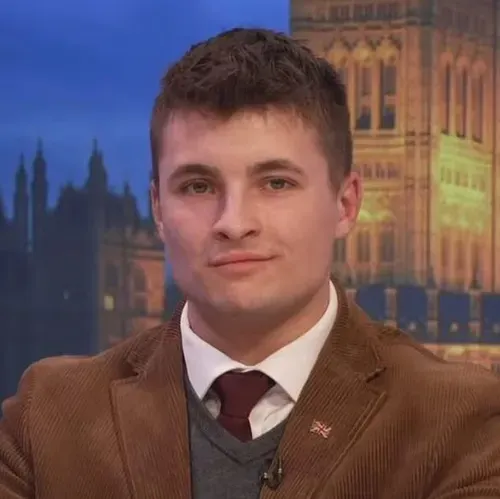
Charlie Downes is a perfect example. He’s an idiot. He obviously believes that nobody non-white can be English, but is scared to say it directly. So whenever he’s on TV, they just get a black person on to say ‘am I English?’ or ‘you would deport everyone who looks like me’ and he’s floundering.
He was even defeated by the black EU puppet Femi Oluwole, who frankly I previously thought incapable of winning an argument against anyone more intellectually developed than a lettuce.

All Femi did was rage that Restore would deport everyone black (which was an obvious lie) and Downes was lost.
The thing is we do need ethno-nationalism.
We need to say how racist it is to tell English people they don’t exist. How racist it has been for decades to teach ethnically English, Welsh, Irish and Scottish people that they were never the majority, have no prior claim on their countries, or are irredeemably wicked for their past success or for, today, wanting to still exist.
Downes could have said “we will deport illegals, crininals and people who are a threat to our decent citizens, and we do that whatever colour they are. How dare you claim racism when we are trying to protect people from rapists and terrorists”.
Or he could have said “well, there’s an ethnic group called the English. Just like there’s a group called Afro-Caribbean. I can’t say I’m ethnically Afro-Caribbean, and you can’t say say you’re ethnically English. We can both be British if we are loyal to Britain. The problem is with people who aren’t loyal, who don’t take on any British or English culture, and who hate us. If you hate us or are a threat or refuse to be integrated you should be deported. That’s pretty basic common sense.”.
Or he could have said “Femi I have no problem with your skin colour. I do have a problem with you telling me that my ethnic group doesn’t exist or that I should be ashamed of it. I do have a problem with you as an EU puppet who thinks I should be forced to accept EU rule against my will and I do have a problem with people telling me it’s racist to deport terrorists and rapists or anyone else dangeous who has no right to be in this country.”
Downes is one of the leading ethno-nationalists in Restore and he hasn’t worked this out in his head or predicted the lines of attack he’d face.
A party that depends on cosplaying eccentrics in dress up or podcasters who can’t even work out how to best express the things they support before they step in a TV studio isn’t serious. This amateurishness cripples the Right, along with lack of organisation, Tory style weakness and shame regarding genuine right wing positions, and lack of funding and support.
The same problems still apply in Reform, but to a lesser extent than in Restore. Both parties haven’t been serious about working out their policy platform and solving the civic-nationalist and ethno-nationalist split, which any nationalist or patriotic movement or party should work out before it can be exploited by their enemies.
Funnily enough one of the people I have encountered on the Right who was smartest of all in describing why we don’t win and what we need to do to change that is a woman called Donna Rachel Edmunds. She wrote a magnificent article on the fact that the Left organises and creates huge numbers of charities, representative bodies, pressure groups, lobby groups, think tanks, and malign networks like Common Purpose or the Fabian Society and the Right doesn’t do that at all. She rightly said that the Right is 150 years behind the Left in terms of organisation and creating groups like this and we need to copy their tactics. She also wrote a great piece on the realities of polling, the split in the vote on the Right and the inbuilt advantages in constituency boundaries for the Left that said that unless the Right coheres behind one party the likeliest result is more leftist victory and a leftist coalition winning the next General Election.
In Makerfield what she predicted is exactly what happened. The Left voted tactically. The Green vote vanished, the Lib Dem vote vanished. All leftists voted Labour. On the Right, we didn’t vote tactically. Reform, Restore and Tories all stood, and only the Tory vote vanished. Some say a united vote still wouldn’t have been enough. But how many people were turned off by Reform-Restore fighting each other, or by Restore letting clowns run around dressed like Oswald Moseley?
Nationally, the polls are showing exactly what she predicts, but with Resrore as a pointless rump (3% support) and Reform and the Tories splitting the vote of the Right (25% and 20%). Because of the way constituency boundaries favour the Left, their vote can split without losing effectiveness. The vote of the Right splits evenly almost everywhere, so they are always harming themselves in every constituency. The vote of the Left divides in ways that don’t reduce their overall number of wins (i.e. Lib Dems do well in areas Labour would never get in, and whether urban areas go Labour, Green or Lib Dem doesn’t ever hand those areas to Tories or Reform). Leftist votes are concentrated, and leftists increase that by voting tactically. Rightist votes are diffused everywhere, and when divided are even less effective.
We need a single right wing party to breach 30% to get a majority government. Ideally, 35% or more to get a decent majority. Otherwise, in virtually every computation, we get the Left.
So what did the Right do to a smart strategist who saw things accurately and suggested a better course?
Well she (stupidly) posted a clip laughing at some of the amateur mistakes in Lowe’s grooming gang enquiry report. That laugh was bloody stupid, and aimed at Lowe. But the response of the Right was even more stupid. We immediately shared it everywhere, called her a leftist, and said she was laughing at the grooming gang victims. She wasn’t. Almost nobody bothered checking her past record (the smart articles I’ve mentioned, the consistent presence on the Right, the fact she’d offered to help with the Report and the fact she had previously helped victims herself).
So we made memes destroying someone who had been on our side. Based on one clip and not knowing anything about her. And then some really shitty people jumped in to say the reason she ‘laughed at grooming gang victims’ (which she DIDN’T DO) was because she’s Jewish.
So we don’t construct good arguments for obvious attack lines before we go in a studio, and we savage people who are actually on our side because we don’t check anything we see in a clip. And we don’t organise effectively, don’t vote tactically, don’t manage to get the balance right between abject weakness and keeping out real nutters, and don’t know how to not destroy ourselves with in-fighting. Oh, and we don’t do the serious work of planning a policy platform and predicting how the other side and corrupt forces (like all those leftist organisations) will try to stop us.
Other than that we are doing great.
Still, there is a positive to take from all this incompetence.
Other than Count Binface, we do have the best dress up clothes and we do get plenty of clicks online whenever we talk about crazy the Left is.
Even though we still aren’t clever enough to do the basics needed to beat them.
It’s an open goal, and we are still missing.
This article (The Downes Syndrome British Right.) was created and published by Jupplandia and is republished here under “Fair Use”


Leave a Reply