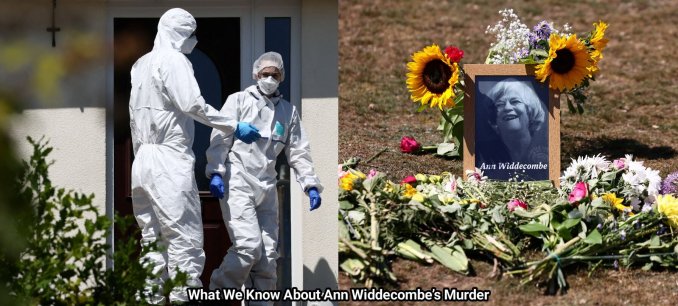
He wasn’t speculating. You might have thought that Nigel Farage, who arrived in the small village in Devon where Ann Widdecombe lived while the police were still in the early stages of investigating her suspected murder, was speculating. Before the cameras, he said:
[A] car went on to the drive at approximately 12.30pm on Wednesday. If you were a burglar, would you literally drive you car on to someone’s drive. You wouldn’t. From what I can see of it, from what I can make out, this was premeditated murder… Whether it was politically motivated, whether it was somebody with a grudge, I don’t think it pays at this moment in time to speculate, but what I do think we can say and how extraordinary, of course, that [the murdered MP] David Amess was such a very, very close friend of Ann’s… What it does say is that people now in public life, especially politics, the world is very much more dangerous than it has ever been.
That’s just the leader of a major political party wondering out loud about a woman’s death, on the scene of that death, for the benefit of the waiting media.
There are plenty of other Reform UK figures joining Farage in his not speculating. The partner of the party’s deputy leader Richard Tice, Isabel Oakeshott, is ferociously not speculating on X, posting…
What WOULD be political would be pretending a politically motivated murder is something else. I am not saying whether it is or it isn’t. I just very much hope that is not what’s happening here.
… and reposting a range of other headbangers who are definitely not speculating and are just asking questions so pointed you could use them for archery practice.
A source told the Mail on Sunday that Widdecombe’s family “don’t want her death hijacked for political purposes” and added that they were “very uneasy” about Farage’s visit to the scene. That led Telegraph columnist Allison Pearson to post on X:
Reform loved Ann and Ann loved Reform. Her family should want what Ann would have wanted.
In the newspaper, Pearson joined in with the scrupulous lack of speculation, writing:
Ann was not just a retired politician, she was the current justice spokesman for Reform UK. The murder investigation will have to ask if the alleged crime could have been politically motivated. Let’s hope not, but given some of the vile threats and assaults on Farage it can’t be ruled out.
Writing for the same opinion section, Reform UK donor and honorary treasurer Nick Candy used Widdecombe’s death as a chance to attack what he claims is the demonisation of the party and its politicians:
Ann Widdecombe’s death should remind us that political figures are not characters in an endless online argument. They are human beings with families, colleagues and friends. So too are those who campaign alongside them and the millions who vote for them. The police have now arrested a suspect and have made clear that, at this stage, they have found no evidence to suggest a political or terrorist motive, while emphasising that their investigation remains ongoing and urging the public not to speculate. That should be respected. But regardless of the ultimate motive, the wider point remains unchanged: Britain has become a far more hostile place for those in public life. We should all take this opportunity to reflect on the tone of our politics and ensure that passionate democratic disagreement never descends into personal hatred or the normalisation of intimidation and abuse.
“Regardless of the ultimate motive” this case exemplifies whatever Candy wants it to exemplify. Reform UK has briefed the press that its MPs and other prominent people are now receiving “round-the-clock protection” with the line given to The Mail on Sunday that “other party figures are living in fear of a potential copycat attack” following Widdecombe’s death.
Yes, Candy is right, Reform politicians are human beings with families, colleagues and friends. But they are politicians who expend a great deal of effort on rhetoric designed to strip other human beings of those qualities. Dehumanisation is a key part of the Reform playbook, whether its talking about ‘lefties’ or immigrants.
Over the past few days, we’ve been told time and time again that while she believed gay people were sinners, Widdecombe was very kind to her gay friends. That makes it worse, not better. It was a cruel condescension packaged up like charity. The demand that those who Widdecombe decried in life should be kind to her in death is a privilege that Reform’s loudest champions do not and will not accord to their enemies.
The free speech absolutists of the right-wing media have leapt on comments posted on Bluesky by a trans woman called Heather Herbert, which were written before it was announced that Widdecombe had been murdered. Herbert posted a link to a Sky News report on Widdecombe’s death and wrote:
Some good news for once. I hope it was an extremely painful death. I hope she was handcuffed to the bed as she screamed in agony.
The second part of her sentiments were a reference to events in 1996 when secret filming by Channel 4 News revealed that pregnant women had been shackled with handcuffs and chains in hospital. Widdecombe, who was prisons minister at the time, defended the decision in the Commons:
Some MPs may like to think that a pregnant woman would not or could not escape. Unfortunately this is not true. The fact is that hospitals are not secure places in which to keep prisoners and, since 1990, 20 women have escaped from hospitals… The Prison Service has a duty of care to the mother, but this must be balanced against the needs of the service to keep all prisoners, including pregnant women prisoners, in secure custody.
At the time, Widdecombe denied that it was policy to restrain women during labour and claimed that the woman in the Channel 4 News film, Annette Walker, had been been released from the shackles once full labour had been established. Walker was later awarded £17,000 in damages for the pain and distress caused by the use of “unnecessary, excessive and unlawful force”.
Herbert has 3800 followers on Bluesky. Her comments about Widdecombe would not have reached a huge audience without the help of the Mail, the Metro, the BBC, and Jeremy Kyle ranting on his Talk TV show that she should be jailed. The context that the posts were made before the full details of Widdecombe’s death is buried in most of the news stories; the reports exist purely to enrage the audience. Were Herbert’s post distasteful? Yes, but that was the point. She was making a political point about a political person. Reform are obsessed with snowflakes until they’re the ones with the opportunity to melt.
I nearly titled this edition, ‘Reform’s Reichstag fire” but I decided against it because I can’t be bothered with the hassle of dealing with people who’ll only read the headline. Farage and his media outriders are engaged in exploiting Widdecombe’s death right now. It is blatant and it is obvious but pointing it out will be treated as a great affront to the dignity of the dead and the feelings of her loved ones. Because, as Pearson postured, the ‘family’ that counts here is the Reform UK family and its spluttering patriarch Farage.
In The Times today, Libby Purves opened her tribute by writing:
The shocking death of Ann Widdecombe brought tributes and affectionate memories but also crass and spiteful abuse. Those who disliked her tenets on moral duty, chastity and responsibility did not stint: their malice a Hieronymus Bosch hellscape of modern public discourse. But what I can confidently assert is that Ms Widdecombe herself wouldn’t ask for a single line to be deleted or its author cancelled.





Leave a Reply