

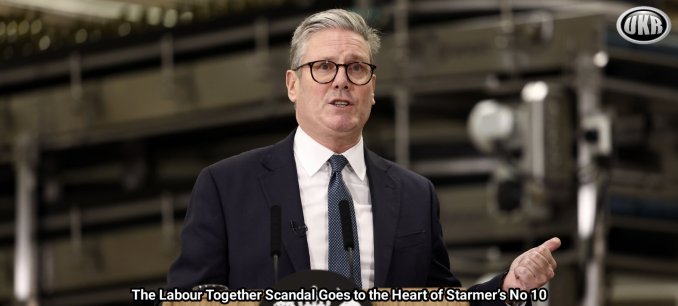
The Labour Together scandal goes to the heart of Starmer’s No 10
Inquiries have been launched in the wake of Democracy for Sale revelations – but we need a full independent investigation into how journalists were smeared.
PETER GEOGHEGAN
In late 2023, Labour Together was ascendant. Under Keir Starmer, the group’s anointed torchbearer, Labour had a double-digit lead in the polls. Morgan McSweeney, the man who built Labour Together, was preparing Starmer for government with great hopes of cleaning up politics.
Now McSweeney is out of a job, Labour Together is mired in controversy and Starmer faces urgent questions about what he knew – and when – about his allies’ smearing journalists who were investigating their funding.
Stories began appearing about Labour Together’s funding around November 2023. The most damaging, in a detailed report by Gabriel Pogrund and Harry Yorke, showed how, between 2017 and 2020, McSweeney had failed to declare £730,000 in political donations to the organisation that was used to power Starmer’s Labour leadership campaign.
But the story didn’t end there. Earlier this month, Democracy for Sale revealed that Labour Together, when it was led by now government minister Josh Simons in 2023, hired a PR firm called APCO Worldwide to investigate the “sourcing, funding and origins” of the story and to dig dirt on journalists at the Sunday Times and elsewhere who were reporting its undeclared funding.
APCO was paid £36,000 to dig up this dirt. The work was led by former Sunday Times journalist Tom Harper, who suggested, without evidence, that the journalists’ reporting may have originated in a leak orchestrated by Russia or China. Labour Together did not keep these insinuations to itself. It passed some of APCO’s material to the security services, raising serious questions about whether public authorities were drawn into an effort to discredit journalists reporting on their undeclared funding.
The story caught fire. Legacy media outlets rushed to cover it. Questions were asked. But everyone involved closed ranks. APCO, Simons, Labour Together, and the Labour party all refused to comment on the record. Noting to see here.
Then, last weekend, the Sunday Times revealed further details of APCO’s briefings. They did not merely repeat baseless claims of a Kremlin hack. They aired unfounded allegations about Gabriel Pogrund’s politics and professional relationships, and made dark references to his Jewish background. It is grim reading.
Now Labour has been forced to respond. Starmer – who had vowed to stamp out alleged antisemitism within Labour ranks – yesterday said that APCO’s work for Labour Together “absolutely needs to be looked at.” The Cabinet Office has reportedly launched an informal inquiry.
The Cabinet Office has launched an ‘informal’ inquiry. Excuse my scepticism, but this all looks a lot like marking your own homework. How can the Cabinet Office investigate Labour Together hiring a PR firm to smear journalists when the person who commissioned the work, Simons, is himself a Cabinet Office minister in Starmer’s government?
When pressed, science secretary Liz Kendall pointed out that the “relevant regulatory body” – the Public Relations and Communications Association (PRCA) – was also looking into the issue. But this is a nonsense. The PRCA will be looking into APCO, not Labour Together – and it is a voluntary industry association, not a statutory regulator. When it comes to PR firms and private intelligence contractors, meaningful oversight barely exists.
This scandal cuts to the heart of No 10. As we revealed on Democracy for Sale on Saturday, when APCO was hired, its London office was run by Kate Forrester, a Labour Together adviser whose husband was Starmer’s head of communications at the time. (Paul Ovenden was later forced to resign from government after offensive messages he had sent about Diane Abbott emerged.)
We know that Starmer’s right-hand man McSweeney was aware of APCO’s work; and that Starmer himself took a keen interest in journalists and media coverage during his ascent to power. Given all this, the prime minister’s claims on Monday that he “didn’t know anything” seem increasingly hard to square with the public record.
The journalists targeted by APCO were not simply writing negative stories. They were uncovering a crucial and largely unnoticed fact about Starmer’s rise: that his leadership campaign had benefited from hundreds of thousands of pounds in undeclared funding.
This money mattered. It paid for detailed polling and analysis of Labour members during the final years of Jeremy Corbyn’s leadership. McSweeney used this data to construct Starmer as the candidate best positioned to win. Had Labour Together’s funders – including businessman Trevor Chinn and hedge fund manager Martin Taylor – been publicly known at the time, the campaign’s carefully cultivated image of Labour unity could easily have fractured.
Senior figures now in government, including cabinet ministers such as Steve Reed and Lisa Nandy, were involved in Labour Together at the time. The Electoral Commission eventually fined the organisation £14,250 for multiple breaches of election law. But, in part because of APCO’s well-paid efforts to smear and discredit journalists, the story never fully broke through. Labour Together used the firm’s material to suggest it had been the victim of a Kremlin hack, successfully shifting attention away from its own conduct.
This episode raises broader questions. London is the global centre of the private intelligence industry, worth a reported £15bn a year. Its activities remain almost entirely opaque. APCO’s work for Labour Together only became public because of a rare leak. Without it, we would know nothing.
How many other journalists have been targeted like this? How many political organisations have quietly hired private intelligence and PR firms to dig dirt on critics, identify sources and shape narratives? As Jon Cruddas, a co-founder of Labour Together, put it to me: “This is dark shit.”
When Starmer came to power promising to clean up politics, he declared that journalism is “the lifeblood of democracy”. But we now know that the vehicle that powered his rise, populated by his key people, ran an orchestrated campaign to smear journalists. Simons – the person who commissioned APCO – is still a minister in Starmer’s government.
Simons’ position is surely untenable now. But Starmer needs to go further than just dismissing a single minister. Either he commissions an independent inquiry now – and answers urgent questions about what he himself knew, and when, about this tawdry affair – or he too becomes implicated in what will be seen as a continued, and increasingly unsustainable, cover-up. So everyone – and particularly all of us journalists – will learn much from what he decides to do next.
A version of this piece appeared on the Guardian.
This article (The Labour Together scandal goes to the heart of Starmer’s No 10) was created and published by Peter Geoghegan and is republished here under “Fair Use”


Leave a Reply