

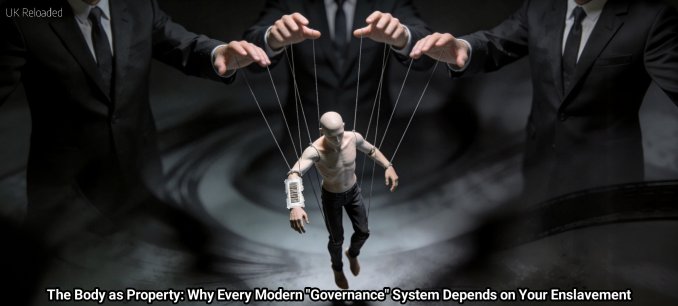
A challenge to the foundations of modern governance and the myths that keep people compliant
CONSCIENTIOUS CURRENCY
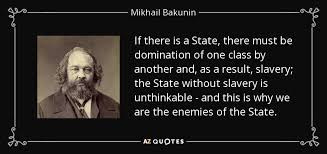
“If there is a State, then there is domination, and in turn, there is slavery” – Mikhail Bakunin
“In every State, the government is nothing but a permanent conspiracy on the part of the minority against the majority, which it enslaves and fleeces” – Mikhail Bakunin
“Men and women… do you not realize that the State is the worst enemy you have? It is a machine that crushes you in order to sustain the ruling class, your masters” – Emma Goldman
“The most absurd apology for authority and law is that they serve to diminish crime. Aside from the fact that the State is itself the greatest criminal, breaking every written and natural law, stealing in the form of taxes, killing in the form of war and capital punishment, it has come to an absolute standstill in coping with crime. It has failed utterly to destroy or even minimize the horrible scourge of its own creation” – Emma Goldman
“War is mass murder. Conscription is slavery. Taxation is robbery” – Murray Rothbard
For a long time now, I’ve been thinking about ownership of property – especially the absurd idea held by some that your own body somehow isn’t your own property. It might sound unbelievable that anyone could think this way, but honestly, it doesn’t surprise me. When you look at the sheer scale of perception management carried out across the world – psychological operations running for hundreds, maybe even thousands of years – it makes sense that people end up with a warped view of reality.
When a false reality is created and reinforced for so long, and so expertly, by external controllers, you end up with generations of people who simply accept whatever the state (the controllers’ middle‑management arm) tells them. People don’t just believe the messaging though; their entire sense of reality, rights, self‑ownership, and personal responsibility gets shaped by it, which means that their worldview isn’t really theirs at all. It’s been engineered through mass mind control, often reinforced by trauma – endless imagery of war, destruction, death, and constant messaging about scarcity, poverty, and fear.
Nothing exposed the lack of belief in ownership of one’s own body more clearly than the whole “Covid” era. People lined up to be forced – socially, economically, or through “law” – into injecting an experimental substance into their bodies just to earn back the “privilege” of going to a restaurant or taking a holiday. That alone shows how deeply the idea of not owning your own body has been normalised.
And then there’s voting. People treat voting as some sacred expression of freedom, but in practice it’s just choosing which group of middle managers gets to govern you on behalf of the (self‑styled) “elite”. Voting is basically consenting to be ruled by a master – agreeing to follow whatever edicts the successful political‑party management class hand down, while giving up a big chunk of your earnings from your own labour and somehow being expected to smile about it. Every election, people show up to pick their next master and call it “democracy,” convinced it gives them agency. The film Jones Plantation captures this perfectly. It’s an allegory showing how modern society has replaced open, violent servitude with a psychological version. Instead of chains, people are conditioned to believe they’re free while voluntarily complying with their own oppression. The plantation still exists – it’s just been rebranded.
A belief that you do not own your own body is basically acceptance that you are a slave. I understand that the word slave hits a nerve for a lot of people because of the horrific history attached to it, but avoiding the word doesn’t change the reality. People need to get past the discomfort, because until we can name the condition we are living in, we cannot even begin to challenge it.
Across the board, major dictionary definitions of slavery centre on one core idea: a person being owned or controlled as property, forced to work without freedom, and having their life and labour dictated by someone else. Here are a few examples:
- Merriam‑Webster describes slavery as the state of being held in forced servitude, often as someone else’s chattel.
- Cambridge defines it as being legally owned by another person and forced to work for or obey them.
- Oxford keeps it simple: the state of being a slave, or the practice of owning people and forcing them to work.
- Dictionary.com frames it as the condition of being enslaved or held in bondage, often as property.
All these definitions highlight the same themes: ownership, forced labour, loss of personal freedom, and domination by another person or entity.
But slavery does not only mean physically forcing someone to work. According to the most influential legal definition we have – the 1926 Slavery Convention – “Slavery is the status or condition of a person over whom any or all of the powers attaching to the right of ownership are exercised.” That definition is intentionally broad. It doesn’t require literal legal ownership, (which is now banned everywhere). Instead, it focuses on ownership‑like powers: restricting someone’s freedom, claiming their labour without consent, treating them as property, or exerting control over their life in ways comparable to ownership.
So, while the classic image of slavery is chattel slavery, the definitions – both dictionary and legal – clearly cover a much wider condition: any situation where a person’s autonomy, liberty, and control over their own life are taken away in full or in part and replaced with ownership‑like domination.
Given this, we can clearly see that taxation is forced payment of tokens earned through a person’s sweat equity. It is forced payment because if you do not pay, you are penalised and criminalised. Likewise, we can see that proposed 15‑minute cities will restrict freedom of movement at the behest of a relatively small number of bureaucrats and therefore limit autonomy, again carrying penalties for anyone who breaks the “rules”. Similarly, digital identity systems will restrict participation in society if not taken up and/or adhered to strictly – such as access to consumer goods or compliant social‑media platforms – further restricting autonomy and liberty. And many laws enacted by “government” limit freedoms, restrict liberty, and reduce autonomy.
In light of this, modern “governance” can be regarded as slavery under the broad definition noted above. In fact, any form of “authority” by one group over another can be classed as slavery, because coercive elements of governance or authority equate to the exercise of ownership‑like powers over individuals, through restrictions on labour, movement, or participation in society. While this view isn’t universally accepted (of course it isn’t – that would mean everyone was awake to the problem!), it’s substantiated in various intellectual traditions and ongoing discussions.
Below, I’ve looked more deeply at taxation, 15-minute cities and digital identity, to make the slavery point clear.
Taxation as Forced Payment for “Sweat Equity”
If we accept the broader definition of slavery outlined earlier, then taxation fits neatly into that framework. The idea that taxation amounts to a form of slavery comes from the simple fact that it forces people to hand over a chunk of the fruits of their labour under threat of punishment. That is treating individuals as partial property of the state. This line of thinking goes back to classical liberal and anarchist ideas: John Locke’s notion of self‑ownership says your labour is inherently yours, and taking any of it by force violates natural rights. Murray Rothbard pushes this further, calling taxation “theft” and even a form of “slavery” because it’s involuntary – a modern version of labour being seized without consent. If someone works 40 hours a week and the state claims 30–40% of their earnings, the argument is that this is effectively uncompensated labour – partial enslavement. Taxation without consent is therefore, in my view, the foundation of modern coercion.
Of course, there are counterarguments. Some insist taxation isn’t slavery because it’s not total ownership; they frame it as part of a “social contract” that supposedly funds collective goods like roads and hospitals. Philosophers like G.A. Cohen critique the “taxation as forced labour” idea by arguing that voluntary systems can still be exploitative, and partial taxation isn’t the same as full chattel slavery. Online, this debate gets polarised: some call it ethical theft, others say it’s the price of civilisation.
But here’s the problem: the “ethical theft” and “social contract” defence simply do not hold up. It’s not a real contract – you never signed anything, you can’t opt out, and the penalties for refusing are coercive by design. Political theorists from Lysander Spooner to contemporary critics point out that a contract without consent is just domination dressed up in nicer language. Spooner famously argued that the U.S. Constitution has no legitimate authority because no living person agreed to it, (the same could be said about the UK’s unwritten constitution), and the same logic can be applied to taxation. The social‑contract story therefore functions less as a moral justification and more as a pacifying myth – a way to make people feel virtuous about surrendering their labour under threat. It reframes coercion as civic duty, turning subjugation into something people are encouraged to celebrate. In this sense, it doesn’t rebut the slavery analogy at all; it reinforces it – it’s part of the broader perception management that shapes what people think is “normal,” even when the reality is anything but.
15‑Minute Cities and Restrictions on Freedom of Movement
The 15‑minute city concept – where essentials like work, shops, and services are supposedly accessible within a short walk or bike ride – is often presented as a harmless urban‑planning idea. But in practice, these cities will become tools for bureaucratic control, limiting movement at the whim of planners and political (self‑styled) elites. When implemented through zoning rules, traffic restrictions, digital permits, or surveillance systems (like low‑emission zones and ANPR cameras), they will clearly demonstrate “ownership‑like powers” by confining people to designated areas. This echoes one of the classic features of slavery: restrictions on mobility.
These systems will also enable and expand state surveillance, reducing personal autonomy and turning neighbourhoods into “open‑air prisons” under the banner of sustainability or climate policy. Defenders – including the concept’s originator, Carlos Moreno – insist that 15‑minute cities enhance freedom by reducing car dependency, improving health, and fostering community. But this is an inversion of reality. If you’re not free to move where you want, when you want, without being monitored or fined, then your autonomy is being curtailed. And if your movements are constantly tracked, regulated, or restricted, how is that not a form of ownership? Fifteen‑minute cities are not designed for freedom – they are designed for containment. That is a form of slavery.
Digital Identity and Restrictions on Societal Participation
Digital‑identity systems – which tie identity to online and/or biometric verification for everyday services – create the perfect infrastructure for exclusionary control. If access to banking, travel, communication, or goods can be switched off because of “non‑compliance” (whether through social‑media monitoring, behaviour scores, or bureaucratic rules), then the system mirrors one of the core features of slavery: the denial of autonomy. Centralised digital‑identity systems also magnify privacy risks. Once all a person’s data sits in one place, it invites surveillance, breaches, and misuse, paving the way for a de facto “social credit” system where dissent or non‑conformity can lead to digital exile. That’s why many critics call it a form of “digital slavery,” especially when it’s mandated from birth and tracks a person’s life without meaningful consent.
The broader risks are obvious: exclusion of marginalised groups, corporate or governmental lock‑in, and the erosion of anonymity in daily life. Yet proponents insist digital identity will boost inclusion, streamline services, and enhance security through “privacy by design.” They also claim such systems are voluntary – but this argument collapses instantly. Nothing is voluntary if you must comply to access basic services or exercise natural rights. That is coercion by the back door.
We can already see this in action in the UK: identity or age verification to access social‑media content “to prevent online harm,” or being required to provide a biometric face scan to secure a tenancy agreement or use legal services. Officials frame this as us “choosing” to opt in – but who genuinely believes this when refusal means being denied the service entirely? True voluntary participation would mean there could never be denial of service for refusal to participate. What we have instead is conditional access enforced through digital compliance. And once the ability to function in society depends on that compliance, the line between governance and ownership becomes very thin indeed.
Broader View: Any Authority Is a Form of Slavery
Anarchists like Mikhail Bakunin and Emma Goldman viewed all hierarchical authority as tyrannical, equating state power to slavery because it imposes non‑consensual rule and denies self‑sovereignty. I agree wholeheartedly.
Murray Rothbard – and many other libertarian theorists – argue that even “benevolent” authority is unjust, just as voluntary‑slavery contracts are invalid because freedom cannot be alienated. In this frame, governance’s “authority by one group over another” fits as slavery. This philosophical stance challenges the current status quo, and while it may seem radical, it echoes historical anti‑slavery thought that evolved into broader critiques of power.
If the modern definition of slavery is “the status or condition of a person over whom any or all of the powers attaching to the right of ownership are exercised,” then the word any is vitally important. By virtue of this little word, taxation and all other forms of force used by “authority” can be regarded as exercises of ownership‑like powers over the individual. One’s own body is one’s own property. Therefore, one’s sweat equity, one’s movement, and one’s decisions about what to put into or keep out of one’s body are all property rights. Any encroachment by “state authority” into any area of one’s own property – the body – therefore meets the definition of slavery.
Taxation, forced medication (adding fluoride to water, folic acid to flour, compulsory child vaccines, and many other things) can in fact only be one of two things: slavery or theft – the latter theft of free will; the former theft of earnings. Both arise because one owns one’s body as private property, and if the body is private property, then forcing substances into it or its taxing labour is an encroachment on that property, meeting the “any” threshold in the 1926 Slavery Convention as a form of partial ownership.
This is my philosophical extension of the 1926 Slavery Convention’s definition, honing in on the word any to argue that even partial or indirect exercises of ownership‑like powers over a person’s body qualify as slavery or theft. The inclusion of the word any is significant because it broadens the scope of slavery beyond full chattel ownership to include partial or de facto exercises of powers such as restricting freedom, claiming labour, or treating someone as transferable property. I believe this was intentional – to capture evolving forms of exploitation, such as debt bondage or forced marriage, without requiring literal legal ownership.
However, legal scholars and courts interpret “any” not as encompassing isolated or minor encroachments, but as requiring a threshold where the powers cumulatively amount to domination akin to ownership. In short, legally, the word any doesn’t trigger the definition for every coercive act; it’s about the nature and extent of control resembling property rights. Extending it to taxation or public‑health measures has never been upheld in courts – and why would it be? Courts are just another part of the control structure and perception‑management machinery. Even if they are not consciously aligned with the coercive power structure, they are certainly staffed by people who exist within a reality created for them – a reality in which it seems normal and just that the state can coerce you into giving up a large percentage of your labour, dictate where you can and cannot move, and demand what you do or do not put into your own body.
If we do not own our own bodies, then we own nothing. Without bodily ownership, we are effectively surrendering ourselves to the whims of others, allowing them to do as they please with and to our bodies. Any counter‑argument is ultimately claiming that we “rent” our own bodies for the mythical “greater good” to “prevent chaos” – frankly, hysterical nonsense invented by brainwashed collectivists who believe in empire, and who see the people within that empire as mere bodies to serve and enrich it. If one does not own one’s body, then one’s thoughts, inventions, ideas, and creations cannot be owned either. That makes a mockery of patents, licences, intellectual‑property rights, and countless other supposedly sacred legal constructs.
Body ownership isn’t a spectrum. It is a zero‑sum game between the individual and the state, (or any external authority). If the individual owns their body as private property, then any state infringements, whether major or minor, amount to partial theft or domination, fitting the slavery definition through the exercise of ownership‑like powers. And if the state claims even a partial right over our bodies, that is effectively a claim of outright ownership, making citizens de facto state property.
In philosophy, self‑ownership is often treated as axiomatic: you control your body and its extensions (labour, choices) exclusively, or someone else does. John Locke’s foundational idea – that “every man has a property in his own person” and in the labour of his body – underpins this, implying that any unconsented encroachment violates natural rights. Modern libertarians like Murray Rothbard and Stephan Kinsella extend this: the body is scarce and rivalrous, so ownership defaults to the self; denying this opens the door to slavery or theft by others, including the state. Anarchists like Max Stirner go further, rejecting collective claims as “mysticism” that erases the individual to justify domination.
From this standpoint, any state infringement into one’s property – the body – and the rights arising therefrom, is slavery. Any forced claim on the body (conscription, mandatory medical procedures, additives in food and water) mirrors historical slavery’s denial of autonomy. Extending this, taxation becomes “forced labour extraction,” and public‑health mandates become non‑consensual alterations – both partial claims on the body as property. State demands for “duties” treat you as an object, not a sovereign person and state denial of self‑ownership justifies slavery by default. If the body isn’t fully yours, then the state (or society) holds the title, making “rights” mere permissions that can be revoked at whim.
Anyone who accepts even partial state claims on the body – for the “public good” or “collective safety” – is endorsing a form of voluntary slavery. Our bodies are unequivocally ours. No external entity should have any claim to them without consent. If this is not so, then we are subjugating ourselves to arbitrary whims, whether from the state, collectivist ideology, or “greater good” rationalisations.
Collectivists will always argue that self‑ownership isn’t absolute, that bodies and minds exist “in society,” and that “renting” autonomy prevents chaos. They claim intellectual property is a social construct balancing individual rights with “collective progress,” not tied strictly to body ownership. Some even deny that “ownership” applies to bodies at all – we “are” them, they say, so property analogies don’t apply. But this dodges the issue entirely: if the body is not owned by the self, control defaults to others, enabling empire‑style exploitation. This is brainwashed nonsense – historically used to justify serfdom, conscription, and rogue interventions into people’s lives, meaning individuals always lose bodily sovereignty.
No self‑ownership means no true ownership of anything. This view of course challenges the foundations of modern systems and points instead toward voluntaryist alternatives where consent, not coercion, is the organising principle. In Part 2 of this article, I’ll explore voluntaryist societies – what could a genuinely self‑governing society look like and what does it actually mean to self‑govern? How do people organise without rulers? And why, in my view, natural law – grounded in absolute moral principles – is all we need to thrive without hierarchy, coercion, or imposed authority.
Thank you for taking the time to read this article. If you found it article valuable or learned something new, you can support my work by buying me a coffee—if you wish to and can afford it. The link is Buy Me a Coffee, or you can copy and paste the URL directly:
https://buymeacoffee.com/claredwillb
You can also subscribe to this Substack for free to access all my previous and future work.
This article (The Body as Property: Why Every Modern “Governance” System Depends on Your Enslavement) was created and published by Clare Wills Harrison and is republished here under “Fair Use”

••••
The Liberty Beacon Project is now expanding at a near exponential rate, and for this we are grateful and excited! But we must also be practical. For 7 years we have not asked for any donations, and have built this project with our own funds as we grew. We are now experiencing ever increasing growing pains due to the large number of websites and projects we represent. So we have just installed donation buttons on our websites and ask that you consider this when you visit them. Nothing is too small. We thank you for all your support and your considerations … (TLB)
••••
Comment Policy: As a privately owned web site, we reserve the right to remove comments that contain spam, advertising, vulgarity, threats of violence, racism, or personal/abusive attacks on other users. This also applies to trolling, the use of more than one alias, or just intentional mischief. Enforcement of this policy is at the discretion of this websites administrators. Repeat offenders may be blocked or permanently banned without prior warning.
••••
Disclaimer: TLB websites contain copyrighted material the use of which has not always been specifically authorized by the copyright owner. We are making such material available to our readers under the provisions of “fair use” in an effort to advance a better understanding of political, health, economic and social issues. The material on this site is distributed without profit to those who have expressed a prior interest in receiving it for research and educational purposes. If you wish to use copyrighted material for purposes other than “fair use” you must request permission from the copyright owner.
••••
Disclaimer: The information and opinions shared are for informational purposes only including, but not limited to, text, graphics, images and other material are not intended as medical advice or instruction. Nothing mentioned is intended to be a substitute for professional medical advice, diagnosis or treatment.
Disclaimer: The views and opinions expressed in this article are those of the author and do not necessarily reflect the official policy or position of The Liberty Beacon Project.


Leave a Reply