

CP
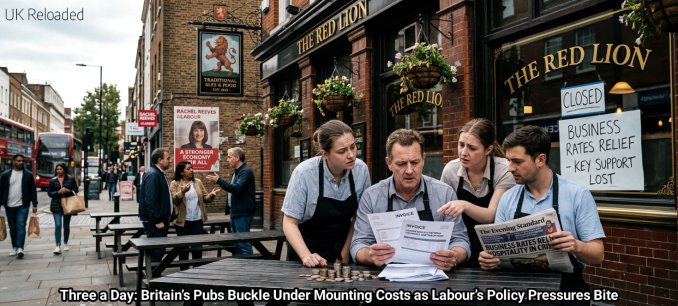
Britain’s hospitality sector is shrinking at a pace that would have been unthinkable a decade ago, with new data showing that more than three pubs and restaurants are closing every day.
While some have pointed to geopolitical instability, particularly tensions affecting global energy markets, as a contributing factor, industry figures and economists suggest the roots of the crisis lie much closer to home.
According to figures from NIQ, more than 350 venues shut their doors in the first quarter of the year alone, following 382 closures in the final months of the previous year. In total, Britain has lost 0.7% of its licensed premises in just six months, leaving fewer than 100,000 establishments nationwide. For a sector often described as the social backbone of communities, the speed and scale of decline is striking.
Operators point to a relentless accumulation of costs that has steadily eroded already thin margins. Labour costs have climbed sharply following increases to the minimum wage, while employer National Insurance contributions have also risen. At the same time, the withdrawal of pandemic-era business rates relief has added further financial strain, hitting businesses just as they attempt to regain stability.
Critics have increasingly focused their attention on the policies of Chancellor Rachel Reeves, arguing that fiscal decisions have compounded pressures on an already fragile sector. The increase in the minimum wage alone is expected to add around £1.4bn to hospitality costs, forcing employers to reassess staffing levels, opening hours and investment plans.
Industry data suggests the consequences are already unfolding. Nearly two thirds of hospitality businesses say they expect to cut staff in response to rising wage bills and higher business rates. Many firms are shortening trading hours, others are shelving expansion, and a significant minority warn they may close altogether. For a sector that provides a major source of entry level employment, particularly for younger workers, the implications are serious.
Trade bodies representing pubs, hotels and restaurants argue that the burden is not merely cyclical, but the direct result of political choices. They describe a policy mix that imposes billions of pounds in additional costs, combining higher wages, increased payroll taxes and rising property levies. Business groups have warned that this approach risks hollowing out town centres and accelerating job losses, rather than supporting recovery.
There is also frustration that external factors, such as energy price volatility linked to global conflicts, are being emphasised while domestic policy decisions receive less scrutiny. Energy costs remain a concern, but many operators say these pressures are layered on top of structural increases driven by taxation and regulation at home.
Karl Chessell of NIQ warned that many businesses are “nearing breaking point”, reflecting a broader collapse in confidence among both operators and consumers. Falling discretionary spending has compounded the problem, leaving hospitality businesses squeezed by higher costs and weaker demand at the same time.
Some relief measures have been introduced, including a partial reduction in business rates. However, these have been described by industry figures as limited when set against the scale of new costs. The broader criticism is that policy lacks coherence, offering selective concessions while increasing the overall burden.
Ministers argue that higher wages will support workers and boost demand across the economy. Employers counter that rising labour costs without meaningful offset simply force cuts elsewhere, reducing staff, limiting hours and cancelling investment. In practice, they argue, the policy shifts pressure from households onto businesses without addressing the underlying weakness in growth.
The result is a sector caught in an increasingly tight squeeze. Pubs and restaurants, long central to Britain’s social and economic life, now face a cost environment that many cannot sustain. For communities, the closures represent more than statistics, they mark the loss of local institutions and shared spaces.
As 2026 progresses, the outlook remains uncertain. While global developments may continue to influence energy prices, the trajectory of Britain’s hospitality sector will depend just as heavily on domestic economic policy, and whether it can change course quickly enough to prevent further decline.


Leave a Reply