

A Police Officer has life changing injuries following the Palestine Action attack on Elbit Systems.. but apparently that’s legitimate protest…
C.J. STRACHAN
In August 2024, four activists from the proscribed group Palestine Action Charlotte Head, Leona Kamio, Fatema Rajwani, and Samuel Corner executed a planned raid on the Elbit Systems factory near Bristol. They rammed a prison van through the gates, armed themselves with sledgehammers and crowbars, and smashed 1.2 million pounds worth of military equipment and drones while livestreaming the destruction. Samuel Corner struck Police Sergeant Kate Evans in the back with a sledgehammer, fracturing her spine. She suffered months off work, ongoing pain, panic attacks, trauma, and had to step down from her rank. The judge described the force as extreme and gratuitous against an officer doing her duty.
A jury convicted all four of criminal damage after a retrial. Corner received an additional conviction for inflicting grievous bodily harm. On 12 June 2026, Mr Justice Johnson sentenced them to between four years eight months and seven years eight months. Applying the terrorist connection aggravating factor under Section 69 of the Sentencing Act 2020 a standard post conviction enhancement when serious damage is intended to intimidate for a political or ideological cause he found the statutory test met. This is transparent sentencing based on jury findings, not a secret new terrorism charge.
This was not peaceful protest. It was coordinated violent crime that injured a police officer and caused massive damage. Yet prominent voices on the left have rushed to launder it.
Zack Polanski, Green Party leader, called the sentences gut wrenching for four young people jailed for direct action against an arms supplier to Israel and years in prison for protesting to save lives in Gaza. He described it as a truly dangerous attack on the right to protest, later adding disclaimers about not condoning violence against police while omitting the fractured spine and downplaying the raid. His framing erases the weapons, the livestreamed destruction, the joint enterprise, and the real victim Sgt Evans. Rebranding sledgehammer assaults and million pound vandalism as noble protest sets a dangerous precedent that excuses violence when the cause aligns with his ideology.
Mehdi Hasan, a prominent commentator, doubled down on the misinformation by claiming three of the four did not attack the police officer and that all four were cleared of violent intent calling the sentences a miscarriage of justice and linking them to government complicity in genocide. These assertions are flatly contradicted by the jury convictions for criminal damage across the board and Corner’s grievous bodily harm conviction. His selective framing and inflammatory rhetoric exemplify the same pattern of inverting facts to shield activists from accountability while inflaming divisions.
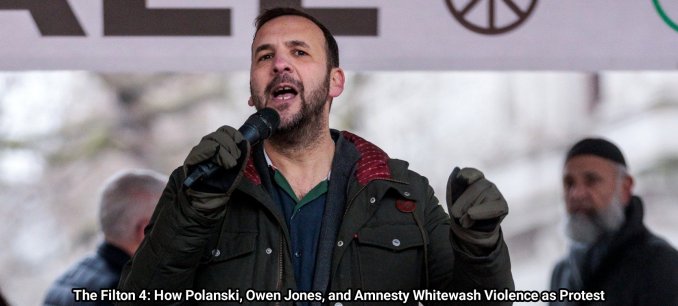
Owen Jones, once a centre left Guardian journalist whose arguments many could respectfully disagree with, has aligned with this narrative. He has criticised the sentences as overreach threatening protest rights. When invited onto GB News to defend his position, he declined substantive engagement and instead unleashed a stream of abusive insults on Twitter aimed at host Alex Armstrong calling him a hateful little man and a pathetic little man. This shift from reasoned debate to personal ad hominem attacks raises a deeper question: since when did insults become the default tactic in public discourse? If one positions arguments expecting public agreement, they should be prepared to defend them in writing or in person without resorting to abuse. Jones response exemplifies a troubling evolution where emotion and selective moral outrage replace reason.
Jeremy Corbyn has also weighed in defending the activists and criticising the use of terrorism related sentencing factors aligning with the broader left wing chorus decrying an attack on protest rights. This stance from a former party leader who has long championed certain direct action causes further illustrates how segments of the left have normalised excusing violence when it serves their ideological narrative rather than upholding consistent principles of law and order. Now Corbyn blocked me last year because I called him out for his first attempt to whitewash this crime so here’s a picture of his tweet rather than the link:

Amnesty UK issued a statement headlined Filton 4 sentenced as terrorists, opposing the use of terrorism powers and claiming it is completely disproportionate to punish protesters for criminal damage as if they were terrorists. They allege prosecutors sought to make an example and warn it signals how future direct action will be treated. This distorts reality. The activists were convicted of criminal damage and GBH for Corner by a jury. The aggravating factor reflects the political motivation, scale of damage, and intent to intimidate elements Parliament explicitly allows judges to consider. Equating this violent raid with legitimate protest minimises the assault on Sgt Evans, erodes public trust in the justice system, and weakens actual protest rights by associating them with criminality.
These responses follow a familiar pattern: selective facts, omission of violence against police, inversion of protest to include sledgehammers and ram raids, and cries of miscarriage or overreach when the law holds activists accountable. Believing Elbit supplies arms to Israel does not grant immunity to commit serious crime. The right to protest does not encompass fracturing spines or destroying private property on camera.
The jury saw the evidence and convicted. The judge applied the law. Sgt Evans and the public deserve accountability, not apologetics that romanticise vigilantism. When influencers and NGOs prioritise narrative over the fractured spine of a serving police officer and respond to scrutiny with personal abuse rather than argument they reveal whose rights they truly prioritise, and it is not the rule of law or victims of political violence.
Facts matter more than slogans. The Filton 4 chose crime. The system responded with justice. Pretending otherwise dishonours the officer they injured and undermines the very democratic norms they claim to defend.
This article (The Filton 4: How Polanski, Owen Jones, and Amnesty Whitewash Violence as Protest) was created and published by C.J. Strachan and is republished here under “Fair Use”
Featured image: The Telegraph


Leave a Reply