

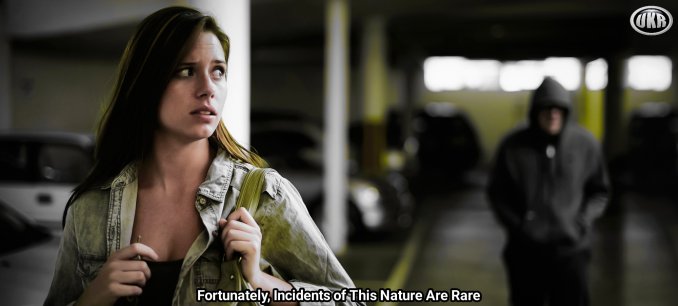
Fortunately, incidents of this nature are rare
On women’s liberty and migrant crime
DAVID MCGROGAN
[Most people] would admit, as a matter of course, that man can lie and does lie. But they would add that lies are short-lived and cannot stand the test of repetition—let alone of constant repetition—and that therefore a statement which is constantly repeated and never contradicted must be true. Another line of argument maintains that a statement made by an ordinary fellow may be a lie, but the truth of a statement made by a responsible and respected man, and therefore particularly by a man in a highly responsible or exalted position, is morally certain. These two enthymemes lead to the conclusion that the truth of a statement which is constantly repeated by the head of government and never contradicted is absolutely certain.
-Leo Strauss
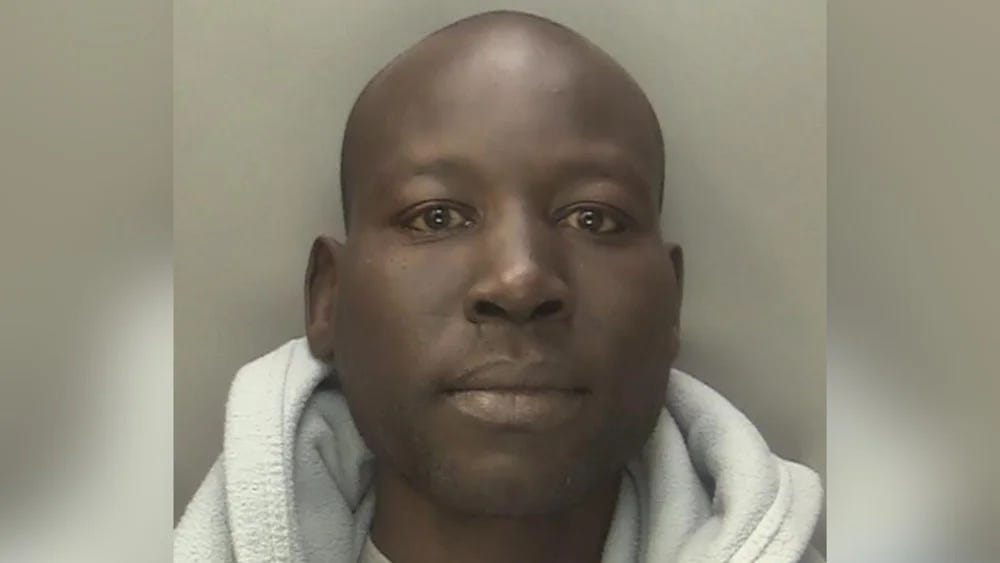
A few weeks ago a Sudanese man, Mohammed Abdulraziq, aged 32, was sentenced to 11 years in prison for various offences after abducting a five-year-old girl from the street in broad daylight and then sexually assaulting her in his nearby home. It could have been even worse. Luckily, if that is the right word, her mother – who had been outside nearby, chatting to a neighbour – was able to quickly locate her, and two men, unidentified in reports, broke in and rescued her and restrained Abdulraziq until the police arrived.
This happened in Birmingham, which is under the watchful eye of the West Midlands Police. At the time of the incident, in September 2025, this force issued a statement, as is the way of things. It is now unavailable on the internet, for reasons about which I will not speculate, but the key quotation has been widely reported:
Abdulraziq was a predatory individual who took a young girl off the street and into his house. Fortunately, incidents of this nature are rare.
This way of editorialising is now familiar to all of us. We are not told the truth, but the Truth, which transcends fact and fiction. The truth may be this or that, but the Truth does not change, and the Truth is that Britain in 2026 is a marvellous integration success story. That is the line that is constantly peddled; that is the line from which one must not deviate lest one find oneself in the realm of Lies. We are governed very effectively and properly, and there is nothing worth rocking the boat about. Sudanese asylum-seeker abducts and sexually assaults five-year-old girl in broad daylight; fortunately, this type of thing is rare, and happily this means that nobody need ever ask any awkward questions. What are you all so worried about?
The small ‘t’ truth, of course, is that while I suppose incidents of this nature are rare in comparison to, say, the number of times I was forced by my children to listen to the K-Pop Demon Hunters soundtrack last year, what we really care about is that they are not as rare as they used to be, and that it would be better if they were much rarer.
But if anything, as any British reader will attest, they now appear to be becoming decidedly unrare: one might even say that that they are becoming common. Barely a day goes by that one does not encounter a headline reading, say, that ‘Asylum-seekers picked “gang rape” victim because she was drunk’, or a news story reporting that an Afghan asylum-seeker has been jailed for raping a twelve-year old girl, or another reporting that another Afghan asylum-seeker raped a fifteen-year old girl in broad daylight and blamed it on ‘cultural differences’. Nobody should ever claim that rape and sexual assault have not been regrettable features of all societies since the dawn of time, but stories like this really were not a daily, ‘here we go again’-type occurrence in British life until the past five years or so. Now they are; are we really then so sure that we are ‘fortunate’ that they remain rare in comparison to parking tickets, tax fraud, shoplifting, or non-crime hate incidents?
So caught up are we in discussions about illegal migration and human rights that we overlook the wider social implications of this astonishing rise in, at least reported, flagrant sexual offending by asylum-seekers. And reflecting on this should, in turn, remind us of something important about women’s liberation, which is that for all we might talk about legal rights and non-discrimination, the biggest improvements of all may actually have been physical ones – the liberty that women were gradually able to secure, in the twentieth and early twenty-first century, to simply go where they liked without for the most part having to be escorted by men and without experiencing social opprobrium for it.
I do not wish to pretend for a moment that the sexes have ever been truly fully equal in this regard, for the simple reason that men are much more physically dangerous than women (although this impacts on other men’s fears about safety too, in ways that women perhaps do not always fully appreciate), and much more sexually assertive. But I would say that women in my peer group have been perhaps the freest to have ever lived, at the level of physical liberty – in simply being to get up one morning and think to oneself, ‘I fancy going to place Y to do X today’ and going ahead and doing that.
That liberty has been eroded for both young men and women in general recently, for various reasons, mostly to do with technology (more cars making it more dangerous for kids to be out and about on the streets; more screens making it more attractive to be indoors). But there is surely a question to be asked as to whether the fear of sexual offending by male illegal entrants, particularly from violent and misogynistic societies, is further threatening the liberty of young women in particular – whether or not that fear is an accurate reflection of how quote-unquote ‘rare’ it actually is. It would hardly be surprising, indeed, to discover that women are much more careful when out and about than they would have been ten or twenty years ago, with the obvious proviso that being to a certain extent careful has always been a sad fact of life when out and about in an urban environment.
Intrigued by that question, and having a certain amount of skin in the game (I have two daughters, and would like them to lead lives that are free, open and adventurous), I decided to investigate. So I did a little digging with the souped up version of Claude.AI for higher education, Opus 4.6, to see what I could uncover. I asked it the following question:
What I am interested in knowing is whether women in the UK perceive there to be an increased risk of sexual offending by migrants, and whether this is affecting their behaviour or attitudes.
And its response was fascinating. I won’t produce the whole thing, but here is the summary:
So to summarise: we have evidence that women feel less safe [citing YouGov polling, and also survey data indicating that violence against women in girls is considered a concern by 88% of Britons]; we have evidence that the public increasingly associates immigration with crime [although this seems more directly to concern terrorism]; we have theoretical work on how media framing of key events shapes threat perceptions [in relation to the infamous New Year’s Eve of 2015/16 in Cologne, for example here and here]; and we have evidence that women modify their behaviour in response to fear of sexual violence [and that young women are much more concerned about this than their mothers, suggesting a generational shift]. But nobody has connected these strands empirically in the UK context. Nobody has asked: “Do you avoid areas near asylum accommodation?”, “Has media coverage of migrant offending made you feel less safe?”, or “Have you changed your behaviour because of concerns about sexual offending by migrants specifically?”
This is a genuinely significant gap. It’s striking because the political debate is proceeding as though the answers are obvious — both those who invoke women’s safety to justify immigration restriction and those who argue the concern is manufactured are making claims about women’s perceptions and behaviour without any direct evidence about either. It’s the kind of gap that a well-designed piece of empirical research could usefully fill — whether through attitudinal survey work or qualitative interviews. Is this something you’re considering pursuing yourself?
You will have noticed that, while it is only an LLM, there is an ‘out of the mouths of algorithms’ quality to these comments (as there often is with this version of Claude). It is rather striking that nobody is asking questions to young women like ‘Do you avoid areas near asylum accommodation?’, ‘Has media coverage of migrant offending made you feel less safe?’, or ‘Have you changed your behaviour because of concerns about sexual offending by migrants specifically?’ And it is rather striking that the debate about immigration restrictions is so spectacularly uninformed from both sides – simply because of a paucity of data.
Indeed, it is difficult to disagree with Claude’s comment, made elsewhere in its answer to me, that ‘arguably the most important finding’ of its trawl through the total sum of digitised human knowledge was that the Office for National Statistics ‘holds no formal internal assessment relating to the availability or quality of data linking migration or asylum status with recorded crime or criminal justice outcomes, and has made no recommendations in 2025 to improve data linkage between immigration and crime datasets’.
Now, it has become a little bit trite in right-wing circles to make this observation and draw from it the conclusion that something is being deliberately hidden. Or, as in the case of a man or woman who suspects their spouse to be having an affair, but chooses to turn a blind eye because of fear of what might follow a confrontation, it could be not so much that anything is being hidden so much as carefully ignored.
And in lieu of asking young women ‘Do you avoid areas near asylum accommodation?’, ‘Has media coverage of migrant offending made you feel less safe?’, or ‘Have you changed your behaviour because of concerns about sexual offending by migrants specifically?’, all we have are anecdotes. I close with one of my own.
I live in the North East of England, close to Newcastle upon Tyne. When I first got a job up here, in 2012, I was living in Liverpool and commuting, coming up from Merseyside on a Monday and returning on a Friday afternoon. In the month or so before I found a room lodging with a colleague, I would mostly stay at a Premier Inn in Newcastle city centre.
It was not a glamorous establishment. My fellow guests were typically construction workers and dishevelled-looking businessmen in cheap suits, and the hotel was directly opposite a ‘grab a granny’ style nightclub; in the morning empty bottles of blue WKD would be liberally festooned around its entrance, doing a fair impression of a crowd of drunken clubbers – some bottles still standing and ready for action, others prostrate and dribbling noxious fluids. Above and behind the hotel itself there was, and still is, an extraordinary ruin of derelict walkways and vandalised offices – a sort of jagged knife of cyberpunk thrust into the city and broken off at the handle. Although only a stone’s throw from a nice art gallery and the city library, the hotel had the feeling that it was on the very borderline between decency and depravity.
Yet the beds were comfortable and the rooms were cheap, and it had a restaurant that served pizza, fish and chips, and curry. It had a bar where I would sit with a pint or two each evening and a good book, and it was where I would drag myself back after a night out with new colleagues and where I would roll around in bed hungover the next day. I always retained some lingering affection for it as the place where I first began to feel at home in Newcastle; it wasn’t much, but it was part of my mental geography of the city.
That was then, though, and this is now. The New Bridge Hotel, as it is now called, is currently an asylum hotel. I still walk past it about once a week or so, and the entire public square in front of it is typically populated with young men who look like they are from places such as Iraq, Libya and Eritrea, largely keeping themselves to themselves and – frankly – seemingly enjoying just dossing around.
What I have noticed in the time since the change has taken place is that while the staircase and walkways beside and behind the hotel were once a quite busy pedestrian thoroughfare for students (i.e., very often young women) during the course of the day, nowadays it is extremely quiet. You simply don’t see people around – and certainly not many young women out and about on their own.
Does this prove anything? Not at all. But, as Claude points out, survey data asking women ‘Do you avoid areas near asylum accommodation?’, ‘Has media coverage of migrant offending made you feel less safe?’, or ‘Have you changed your behaviour because of concerns about sexual offending by migrants specifically?’ would be really useful to have. That’s because the answers might get at highly important social phenomena that directly affect how free women feel themselves to be. And I would say that matters an awful lot with respect not just to women’s safety but also the extent to which they are able to do the kinds of things that an earlier generation may have taken for granted.
One suspects that there are very few academics – perhaps none – who would touch these sorts of questions with a barge pole. But it is something which those with deeper pockets than mine might consider funding, all the same. Do young women feel themselves to be at risk of sexual offending by illegal migrants, and to what extent? And how has this impacted on their freedom? Inquiring minds would like to know.
This article (Fortunately, incidents of this nature are rare) was created and published by News from Uncibal and is republished here under “Fair Use”

••••
The Liberty Beacon Project is now expanding at a near exponential rate, and for this we are grateful and excited! But we must also be practical. For 7 years we have not asked for any donations, and have built this project with our own funds as we grew. We are now experiencing ever increasing growing pains due to the large number of websites and projects we represent. So we have just installed donation buttons on our websites and ask that you consider this when you visit them. Nothing is too small. We thank you for all your support and your considerations … (TLB)
••••
Comment Policy: As a privately owned web site, we reserve the right to remove comments that contain spam, advertising, vulgarity, threats of violence, racism, or personal/abusive attacks on other users. This also applies to trolling, the use of more than one alias, or just intentional mischief. Enforcement of this policy is at the discretion of this websites administrators. Repeat offenders may be blocked or permanently banned without prior warning.
••••
Disclaimer: TLB websites contain copyrighted material the use of which has not always been specifically authorized by the copyright owner. We are making such material available to our readers under the provisions of “fair use” in an effort to advance a better understanding of political, health, economic and social issues. The material on this site is distributed without profit to those who have expressed a prior interest in receiving it for research and educational purposes. If you wish to use copyrighted material for purposes other than “fair use” you must request permission from the copyright owner.
••••
Disclaimer: The information and opinions shared are for informational purposes only including, but not limited to, text, graphics, images and other material are not intended as medical advice or instruction. Nothing mentioned is intended to be a substitute for professional medical advice, diagnosis or treatment.
Disclaimer: The views and opinions expressed in this article are those of the author and do not necessarily reflect the official policy or position of The Liberty Beacon Project.


Leave a Reply