

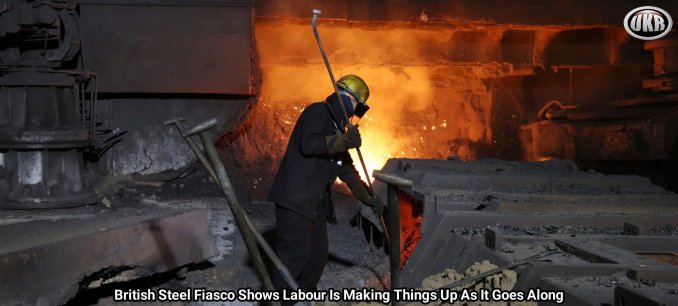
British Steel fiasco shows Labour is making things up as it goes along
Nationalisation is unavoidable only because all chances to save the industry have been squandered
While Ed Miliband is adamant that his unbending green mission is critical to creating a more sustainable 21st-century economy, critics and steel industry figures have rightly argued that the speed and cost of the transition have put the turbo-boosters under deindustrialisation.
As Sir Jim Ratcliffe has repeatedly pointed out, environmental taxes and high energy bills that kill off British manufacturing just make us more reliant on foreign imports that come with an even heavier carbon footprint.
It is nonsensical self-harm in the extreme, as well as outrageously disingenuous to pretend that shipping raw materials and goods halfway round the world is any better for the planet.
The Government should also have been more alert to the fate of a company that has been loss-making for as long as I can remember, but had clearly slid even further backwards under the ruinous ownership of Chinese outfit Jingye.
Jonathan Reynolds, the then business secretary, allowed fruitless negotiations with the Jingye bosses to drag on for far too long. This meant the damage to British Steel’s finances and operations was more severe by the time ministers plucked up the courage to step in, making it even harder to sell the company to new investors.
Even now, a year on from the special measures bill that paved the way for de facto nationalisation, ministers are no closer to finding a white knight willing to take on a business that is costing the public purse extraordinary sums.
The Government spent a staggering £377m between April and the end of January keeping British Steel afloat. By June, the sum is expected to have soared to £615m. By 2028, it is estimated that the bill will have reached a scarcely believable £1.5bn.
Andrew Griffiths, the shadow business secretary, characterised the deal as a “botched nationalisation”. It’s hard to argue with this sentiment, yet the Tories shouldn’t pretend they’re blameless in this sorry saga.
The Telegraph: continue reading
Featured image: The Telegraph


Little encapsulates Labour’s muddled industrial strategy more than plans to take British Steel under complete state ownership.
Almost a year on from deploying emergency powers to take operational control of the failing steelworks, ministers are reportedly exploring legislation that will allow it to be fully nationalised.
If and when such a deal takes place, we can expect it to be portrayed as a bold move from a Government serious about safeguarding vital parts of the country’s heavy industrial base and protecting the national interest.
But don’t be fooled. No amount of spin can disguise what a desperate move this is from a Cabinet that is making up economic policy as it goes along – bailing out some critical assets but allowing many others to vanish without so much as a second thought for what it does to the country’s dependency on foreign imports.
It’s not just British Steel. Why, for example, was Ineos’s ethylene plant in Grangemouth deemed worthy of a taxpayer bailout but not its oil refinery that sits next door? Or how about the Prax refinery 300 miles away in Lincolnshire that was considered expendable despite producing 10pc of the UK’s fuel?
What are the criteria that ministers apply when deciding which of our struggling manufacturers to save and which to turn their backs on? The answer is there aren’t any. This is industrial strategy on the hoof.
Nor can some panicked, 11th-hour intervention make up for the catalogue of truly catastrophic errors that have left the Government with little choice but to end up owning an uneconomic steel plant in Scunthorpe.
The story of British Steel’s slow and sorry decline has many villains, starting with a Labour Government obsessed with enforcing net zero policies regardless of the resulting destruction.