

NIALL MCCRAE
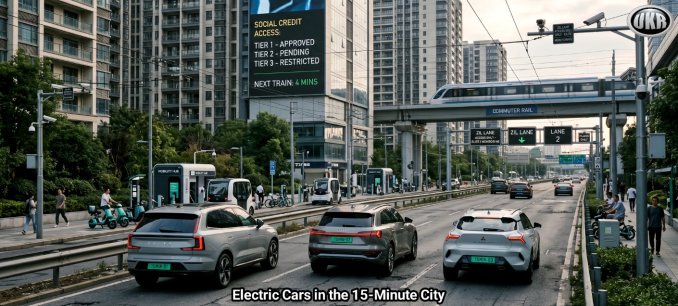
Identified by their green square on the registration plate, imposing electric Volvos, Audis and Mitsubishis coast along the dual carriageways, after starting in silence on some affluent residential avenue. Impressively powerful, these enormous vehicles have huge batteries giving enough distance to relieve the range anxiety of earlier ‘green’ motorists.
But these lithium beasts are so heavy that they are blamed for the metastasis of potholes on our roads (which councils give less attention to fixing).
Undoubtedly, electric cars have improved since they first appeared on Tomorrow’s World and (decades later) on driveways, where they are charged overnight. Their big selling points are freedom from the refuelling chore at the petrol station, and a potentially significant reduction in running cost – an appeal heightened by the blockage of the Strait of Hormuz and consequent escalation in fuel prices. The ecological benefits are dubious to anyone who does a little research.
But if you foresee a future when the electric cars as driven today will become the norm, after mandatory withdrawal of the internal combustion engine, think again…
We are in a transitional phase, but the intended outcome is not a straightforward swap of petrol to electric power, in cars that basically appear the same. Instead, your four wheels will be more like the mobility scooter used by the elderly (and some fatties who need exercise).
Fifteen-minute cities are gradually emerging in urban centres, with lofty apartment blocks lacking any parking space (if you haven’t heard of this element of the global agenda, you have some catching up to do). The design is intended for a mobility-limiting matrix. Go beyond your designated zone, and the power for your conveyance will be disabled remotely. Longer journeys will be made by train, while the motorways will be reserved for the elite, emergency services and armed forces. ‘Zil lanes’ will not need the signage, and all orientating and distance signs will be removed.
Safe and effective mobiles will be charged at apartment blocks, for communal use, but with the person’s journey cost varying by social credit score. Not that there will be rewards or punishments for good or bad driving, as al electric vehicles will be automatically directed to the destination. Whether you’re in a driverless taxi or your little Noddy car, you just sit there.
All very dystopian, but consider the present misery of the motorist. Extortionate tax and insurance. Parking restrictions and fines. Speeding limits and penalty points. Bus and cycle lanes. Road closures for invisible roadworks. Deepening potholes damaging your tyres and suspension. And now the government, compounding concerns about fuel, is introducing pay-per-mile and imposing new rules such a ban on overtaking.
This is happening by design, because the authorities are following the UN Agenda 2030, as propounded by the World Economic Forum and ‘net zero’ zealots. They want you to be so exasperated by the driving experience that you give up your car. Every week, more older people decide that it’s much easier and cheaper to get about in a mobility scooter. Soon you will be making that choice too.

This article (Electric cars in the 15-minute city) was created and published by Niall McCrae and is republished here under “Fair Use”


Indeed, a just city problem. Imagine the farmer going about on his mobility scooter? Move to the country; additional benefit – avoid all politicians.