

C.J. STRACHAN
In the summer of 2025, a group of Scottish schoolgirls in Dundee, aged between 12 and 14, faced harassment, sexual propositions, and physical assault from a Bulgarian migrant brother and sister. Ilia Belov, 22, made lewd comments such as “Hello sexy, I’ll show you a good time” before grabbing and pushing a 12 year-old to the ground. His sister Nadjedzha Belova, 20, dragged a 13 year-old by the hair, pulled her down, and punched her in the head. The terrified girls produced weapons in self-defence. A viral video emerged. Media outlets and authorities spun it as evidence of feral youths menacing innocent migrants.
Police Scotland issued a statement that portrayed the Bulgarian couple as the victims approached by youths. They charged a 12 year-old with offensive weapons possession and warned against misinformation. Many outlets, including centre-right conservative media, joined in. They condemned the girls and their supporters as racists or far-right agitators. Basic checks such as CCTV footage, witness statements, and the girls’ injuries gave way to the preferred narrative of migrant vulnerability vs native aggression.
Now in June 2026, Belov and Belova have been convicted. The court heard the evidence. It rejected the perpetrators’ self-defence claims and delivered justice. Police Scotland later admitted their initial information did not fully reflect the situation. Some apologies followed. Yet the damage remains. The girls suffered public vilification on top of their trauma. Public trust in institutions that should protect the vulnerable without fear or favour has taken another hit in a week where, frankly, it could not be lower.
What stands out is the default reaction of the media and establishment commentators when the story initially broke. It reveals much about our society and its biases that needs to be confronted. Many need to take a good, honest look at themselves. As I wrote in a tweet to Iain Macwhirter, it took me, an amateur journalist, about an hour of research to see that the narrative from the media and police did not match events. I argued this stemmed from class bias and contempt that the educated class in Britain holds for the working class.
Outlets and commentators known for incisive work and for challenging the centre-left consensus failed here. Iain Macwhirter in the Times, the Dundee Courier, Freddie Sayers of UnHerd, Julie Bindel (who have all subsequently apologised for their error) and Fraser Myers of Spiked (who has yet to apologise as of June 13th 2026)… all fell into line with the police account to varying degrees. Anyone questioning it, even if not overtly using it for their own narratives, was accused of spreading misinformation. These voices usually push back against establishment shibboleths. Some like Bindel have seen their careers suffer for doing so. Yet in this case they did not apply the same scrutiny.
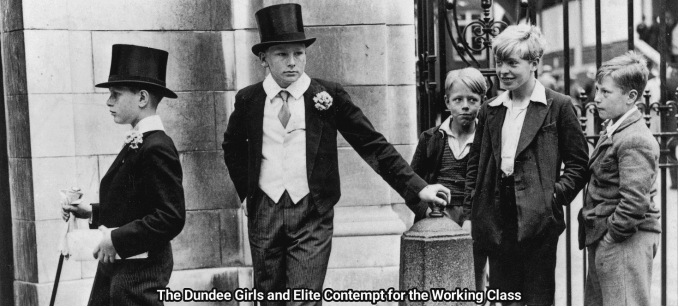
Why did they fail? I suspect this comes down to good old-fashioned British classism. Now, I’m sure some who I’ve including on this list will claim to be members of the working class. What does a privileged son of the Scottish Establishment with his public school education mean by this? The thing about the class system is that it no longer reflects the old social class norms. The hereditary aristocracy has very little power compared to the comprehensively educated head of a government department. Our class system is rooted in education and in whether or not you are a member of the British nomenklatura. Michael Young, the sociologist and father of Toby Young, identified this emerging class in his 1958 satirical essay the Rise of the Meritocracy. To them I would say that your father may have been a toolmaker, but you’re a member of the meritocracy nonetheless.
Members of the meritocracy, myself included, would do well to spend actual time in the working-class communities torn apart by demographic tensions they never signed up for. How many of us have walked the streets of North and East Belfast, the estates of Glasgow, Newcastle, or Sunderland? These places are rapidly becoming dumping grounds for undocumented foreign men. The realities there differ sharply from the insulated worlds of university towns, London bubbles, and professional networks. We are all great at commenting on the situation, but we do so from our own ivory towers. Much of this happens because of the metro/urban/netizen-centric nature of our media. I note a distinct difference in default takes on scenarios from those who live outside these bubbles and those who don’t. Conversations with colleagues often require me to explain the situation outside, in the towns, estates and regions. I note how my perspective has changed since I moved to one of the poorest rural postcodes in England, here in upper Tynedale. Rod Liddle, for example, left the south for his native Teesside, in part to regain perspective.
This episode shows class contempt dressed up as sophistication. Our chattering classes are isolated from the gritty daily struggles outside the meritocratic oasis. They withhold the benefit of the doubt from working-class families dealing with rapid change, strained services, and a justice system quicker to charge a terrified child than to pursue the adults who provoked her. Instead, the instinct is to side with the approved victim group and attribute base motives to the natives.
In the Rise of the Meritocracy, Young coined the term ‘meritocracy’ as a caution, not praise. In his dystopia, society sorts people by IQ plus effort. The successful form a new elite convinced their status reflects how much talent and virtue they have. They create a classless society in name only. In practice, it becomes a pitiless hierarchy where the losers are not merely unfortunate but unworthy. Kindliness, courage and sympathy yield to a single metric of cognitive sorting. The elite’s arrogance grows complete. They look down with pity mixed with disgust.
Young predicted this new order would fracture society sometime around 2030. The underclass, stripped of dignity based on birth, community, or simple human decency, would grow resentful. He warned that this new aristocracy, mostly made up of those who inherited their status in the meritocracy, would lack the learned respect the old aristocracy had for the underclasses – a lesson learned by periodic revolts where the consequences of treating the commoners with contempt usually involved a mob, pikes and your head. The satire is brutal. It forces us to confront our own privilege.
The only reason why I am a member of the meritocracy is because my great grandfather restored the family fortunes, lost when Clan Gregor was proscribed in 1604. He went to night school and got a degree and left the grinding labour of the Clackmannanshire steel mills behind for a stellar career in adult education, all before the First World War. I might kid myself that my career and education is merit – some of it is – but I had a serious leg up thanks to the social and financial capital acquired by my family. The opportunities I have are due to them. Yes I capitalised on them but like many, my membership of the meritocracy was by default. I learned 20 years ago that the accident of your birth, your qualifications and education does not give you the right to assume moral superiority over others and it is a lesson in humility others would do well to learn.
However, this moral hubris is rife in the UK and across the modern west. We see it in the distrust of those who voted for Brexit, Trump, populist surges, and in the feeling that elites apply one rule to themselves and another to everyone else. In the Dundee case, the girls became disposable in service of the diversity narrative. From Hillary Clinton sneering at the ‘deplorables’ to Professor AC Grayling arguing that those without a degree should be denied the vote after his side lost the Brexit referendum – since 2016, whatever mask of decorum and latent manners once displayed by such was discarded in favour of open contempt. The working-class reality in places like Lochee clashes with elite stories of harmonious multiculturalism. Doubting the victims proved easier than questioning policy failures. Disgracefully, the police as well as politicians like Humza Yousaf and First Minister of Scotland John Swinney were front and centre here – the latter two have yet to apologise for hanging the girls and their families out to dry.
The centre-Right’s role here disappoints most. Conservatives should defend ordinary citizens against bureaucratic excess and cultural fads. Too many swallowed the police line without question. This appeared to be their default reaction, revealing how deeply meritocratic thinking has spread even into conservative opinion. Class bias poses as anti-racist and pro-migrant. Contempt for the less lettered appears as enlightened cosmopolitanism. The educated withhold sympathy from those less fortunate in life’s lottery. For the establishment Left, acknowledging their grievances would require examining the open-borders and technocratic consensus that props up elite status – the policies they enact that rarely impact them or their families. It is rather less easy to explain when it comes to those of us on the Right who should know better, and it holds up a mirror to our own assumptions and biases.
The convictions of Belov and Belova bring a small victory for truth, but the broader scandal persists. How many more incidents stay unreported or misreported because victims know the script: native equals aggressor, migrant equals victim? Police forces that prioritise optics over facts lose public confidence. Media that choose narrative over evidence forfeit credibility. A ruling class that views fellow citizens through a lens of meritocratic superiority risks fulfilling Young’s darkest warnings.
Apologies after the fact cannot restore trust. We need a reckoning with the classism embedded in our institutions. We must grant the working class the same presumption of good faith we extend to favoured victim groups. Until then, the Dundee Girls remain a stark parable. In our meritocratic society, some victims count more than others. The wrong sort of British child stays forever suspect… as these girls have, and as Henry Nowak tragically experienced at the hands of Hampshire Constabulary.
C.J. Strachan is the pseudonym of a concerned Scot who worked for 30 years as a Human Resources executive in some of the UK’s leading organisations. Subscribe to his Substack page.
This article (The Dundee Girls and Elite Contempt for the Working Class) was created and published by The Daily Sceptic and is republished here under “Fair Use” with attribution to the author C.J. Strachan
Featured image: Getty Images


Leave a Reply