

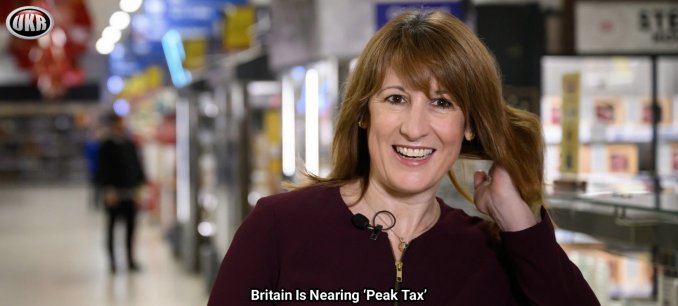
Britain is nearing ‘peak tax’
Workers are starting to notice the reductions in their pay packets – and are fighting back
Today, the question for Rachel Reeves’s Treasury is no longer whether taxes will rise. Instead, it is how much higher they can go.
Britain is on track for some of the fastest tax increases in the world following repeated raids by the Chancellor. Forecasts from the International Monetary Fund (IMF) show that total government revenues will reach 42.1pc of GDP by the start of the next decade.
It reflects a sustained squeeze on both households and businesses. In 2024, when Labour took office, the figure stood at 37.6pc.
Higher taxes appear to be here to stay. However, a growing chorus of voices in Washington and beyond warns that Labour’s approach may be approaching its limits.
Concern is mounting that incentives to work, save, and even stay in the UK have already passed a tipping point. This raises a central question: has Britain reached “peak tax”?
Figures from the Office for Budget Responsibility (OBR) suggest the overall tax burden will have climbed from around 32pc of GDP in 2010 to an estimated 38.5pc by 2031.
On the IMF’s broader measure – which includes additional revenues such as student loan interest and profits from state-owned companies – this burden is set to exceed 40pc of GDP for the first time since the Second World War.
Experts argue that the key issue is not only the overall level of taxation, but the so-called marginal tax rates faced by people on their next £1 of income.
It is these rates that have a significant influence on incentivising people to work.
As one senior international official puts it: “You could have a tax burden that is not too high overall, but still have very large marginal tax increases at certain income levels, which are problematic and have adverse effects on growth.”
Warnings are already being issued at the highest levels.
Following Reeves’s decision to extend a six-year stealth raid on incomes into the next decade, the UK’s fiscal watchdog, the OBR, cautioned that the policy was reaching its limits.
Last month, it said the “higher level of the tax take increases the risk that incentives within the tax system distort or constrain economic activity by more than expected”.
This policy – known as “fiscal drag” – will bring an additional five million people into higher and additional tax bands. These are nurses, teachers and supermarket managers who may not otherwise be paying these higher rates.
In other words, by the start of the next decade, the average worker should have been able to take home £17,440 of their wages before they started paying tax on it. Instead, that threshold will be frozen at £12,570.
Higher earners would have only started paying the 40p rate at £70,000. Instead, that will stay at £50,270, costing these taxpayers an extra £4,000 by the start of the next decade.
The Telegraph: continue reading


Leave a Reply