

How Britain’s water supply spiralled into chaos – and put your bills up again
Privatisation in the 1980s made sense, but the mess that followed has left us, the consumers, paying the price
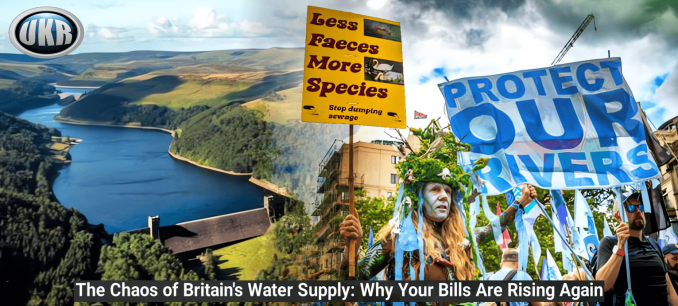
Sounds lovely, doesn’t it, clean water? Who could possibly be against it? Certainly not the thousands who thronged Parliament Square a few weeks ago to call on the powers that be to restore a lost Eden of spotless beaches and fast-flowing streams. The March for Clean Water drew 15,000 wild swimmers, new-agers, Barbour-clad country folk, and plenty of middle-class suburbanites angered by the failures of the privatised water industry to fix leaks and avert spills. On the Albert Embankment, a druidically robed protester carrying a papier-mâché otter was explaining his theories about what had gone wrong with our water and how to put it right.
Conditioned by plentiful rain to assume water itself was naturally plentiful, he mused, we British squandered it. ‘We just take the stuff for granted,’ he said. ‘We assume it’ll always be there on tap for our convenience, and we just pour it down the drain.’ The public needed shaking out of its complacency, by higher prices, compulsory metering – or both.
Whatever happens next, the otter-bearing druid seems likely to get at least part of his wish. We will soon no longer be able to afford – quite literally – to take water for granted.
The Environment Secretary Steve Reed recently tabled new legislation aimed at ratcheting up the punishments for water companies that dump sewage and other nasties into the waterways. At the end of October, he launched an independent commission to conduct what he said would be the biggest review of the industry since its privatisation in 1989.
Threatened with escalating fines, the water companies are scrambling to make some of the necessary investments to increase supply and reduce pollution. The industry has just gone through a five-year price review with its regulator Ofwat and, while the two sides had their differences, they have agreed on one thing: prices will go up – a lot. Ofwat has announced that companies will be allowed to raise their bills by 36 per cent by 2030.
This increase means the average household bill will hit £597 a year; a level that will increase the number of households in ‘water poverty’ – defined as those that spend more than five per cent of their disposable income on water bills. (According to the Consumer Council for Water, some two million households already fall into this category.) Basic water services will become noticeably more expensive, even for the better off. Just a daily bath for the occupants of an average-sized household could go from around £215 a year to £301, while sprinkling the garden for an hour each day in summer could rise from £281 to £393. Luxuries like a private swimming pool will swallow £351 for a single fill, as against around £251 now.
‘The public simply has no idea the incredible sum it would cost to make every stretch of river perfect for any wild swimmer who fancies taking a dip,’ says one former chief executive of a water company. He predicts hard choices lie ahead between investment and restraining consumption; as in actually persuading us all to use less of the stuff. ‘We are going to have to change our relationship with water in years to come,’ he says.
The Environment Secretary Steve Reed recently tabled new legislation aimed at ratcheting up the punishments for water companies that dump sewage and other nasties into the waterways. At the end of October, he launched an independent commission to conduct what he said would be the biggest review of the industry since its privatisation in 1989.
Threatened with escalating fines, the water companies are scrambling to make some of the necessary investments to increase supply and reduce pollution. The industry has just gone through a five-year price review with its regulator Ofwat and, while the two sides had their differences, they have agreed on one thing: prices will go up – a lot. Ofwat has announced that companies will be allowed to raise their bills by 36 per cent by 2030.
This increase means the average household bill will hit £597 a year; a level that will increase the number of households in ‘water poverty’ – defined as those that spend more than five per cent of their disposable income on water bills. (According to the Consumer Council for Water, some two million households already fall into this category.) Basic water services will become noticeably more expensive, even for the better off. Just a daily bath for the occupants of an average-sized household could go from around £215 a year to £301, while sprinkling the garden for an hour each day in summer could rise from £281 to £393. Luxuries like a private swimming pool will swallow £351 for a single fill, as against around £251 now.
‘The public simply has no idea the incredible sum it would cost to make every stretch of river perfect for any wild swimmer who fancies taking a dip,’ says one former chief executive of a water company. He predicts hard choices lie ahead between investment and restraining consumption; as in actually persuading us all to use less of the stuff. ‘We are going to have to change our relationship with water in years to come,’ he says.
At first, privatisation seemed to succeed in this objective. Armed with a regulatory settlement that ‘depoliticised’ price setting and made it – in theory – both rational and focused on funding agreed investment goals, the new private companies started tackling the decades of underspending, fixing leaky pipes and cleaning up Britain’s notoriously polluted beaches. This put an end to the bizarre 1980s pantomime where the government claimed the beaches of Brighton, Blackpool, Skegness and many other resorts weren’t used for bathing simply to avoid dealing with the sewage that fouled their shores.
But politics proved hard to banish, especially when water bills rose by 40 per cent in real terms in just six years. The customers read in their morning papers about surging profits at the newly private water companies – and huge pay increases for executives. These individuals – most of whose working lives had been spent in the public sector – proved spectacularly inept at handling the PR fallout. During the drought of 1995, Trevor Newton, whose pay as managing director of Yorkshire Water had risen by 141 per cent since privatisation, suggested his customers might help out by not washing. ‘I personally have not had a bath or shower for three months,’ he said.
By the late 1990s, with Tony Blair’s new government accusing the industry of abusing its private monopoly status and threatening it with a windfall tax (later imposed), the regulator changed tack. ‘I inherited a plan which showed prices going up above inflation year after year,’ says Sir Ian Byatt, who ran Ofwat from 1989 to 2000. ‘And I thought this was mad. This was not in the real world.’ He first stopped prices rising and then, in 2000, cut them by 12 per cent.
The move was understandable; politically astute, even. But it was also the original sin of privatisation: prices essentially plateaued in real terms after Byatt’s intervention (albeit with a renewed rise, later reversed, in the mid- 2000s). Last year, average water bills in England and Wales were £445 according to Ofwat estimates. Remarkably, that is a two per cent real terms fall on where they had been 20 years before.
Investment went on, of course, and at a much higher rate than when water was in the public sector, but not at levels that would meet the growing demands of a system that was adding both environmental duties and customers at an alarming rate. The population of England and Wales, some 50 million at privatisation, was relentlessly climbing. By last year it was almost 61 million. Much of that growth was clustered in the water-stressed south-east.
Leakage rates, which had fallen by almost 40 per cent in the first decade of privatisation, then stagnated with no further material improvement until recently. According to a 2018 report from the National Infrastructure Commission, Ofwat and the companies had concluded that ‘it would be cheaper to use more water than to reduce leakage’. It was a similar tale with waste water. A recent study by two academics at Imperial College found that between 2000 and 2008, the 10 water companies in England and Wales replaced or rehabilitated just one per cent of sewers. Considering that much of this infrastructure was built with a lifespan of 60-80 years, the pace was lacking. ‘At that rate of replacement, it would take 800 years for this to happen for all the sewers in England and Wales,’ the academics wrote.
As they eased back on real engineering, water companies turned more to the financial kind to beef up their returns. Although all 10 privatised businesses had started out as listed companies, many of their original ‘H2Owner’ shareholders had cashed in as the shares soared in the 1990s – a consequence of having been privatised on the cheap. Now the companies began to attract take-over interest from private equity firms.
In 2006, an Australian investment fund called Macquarie bought Thames Water for £8 billion (more than eight times its value at privatisation). A year later, a consortium of investment firms led by the US bank JP Morgan purchased Southern Water, and Yorkshire Water was snapped up by a group led by Citigroup and HSBC.
These investors weren’t attracted to the water industry by the chance to do some plumbing. What interested them was the security of the companies’ income streams (customers have no choice but to use the water supplier in their area) and the length of their licences – switched in 2002 from a fixed to a rolling 25-year term to encourage investment. There was another juicy lure too: the way Ofwat set prices.
The regulator calculated allowable returns for companies for each five-year regulatory period based on its assessment of their cost of capital (ie the returns they had to offer investors to finance their activities). This number was then set in stone at the start of the five-year period. If the companies could raise capital more cheaply than Ofwat thought they should be able to, they got to pocket the windfall gain.
For the financially savvy owners, this was easy. They simply did what private equity firms always do: they geared up with debt, cutting down on the amount of expensive equity. Until Macquarie came along, most water companies had financed themselves no more than 50-60 per cent with debt. Now the ratios went much higher – up to 80 per cent in some of the businesses that had been taken off the stock market, which soon was the great majority: by 2024 only three remained listed. Leverage across the sector ballooned, and by last year the 10 water and waste companies in England and Wales, all of which had been privatised debt-free in 1989, had clocked up £64 billion in borrowings.
The policy of maximum leverage allowed the private equity owners to make higher financial returns on their stakes. Macquarie earned around 12-13 per cent a year from its 11-year ownership of Thames Water between 2006 and 2017 – around twice the normal return an investor might expect on a conventional ‘boring’ utility investment. Ofwat didn’t seem to mind: as interest rates plummeted, these fed into their five-yearly price calculations. They were another tool to help keep prices down.
But the whole strategy carried a risk that sat uncomfortably with firms supplying such an essential service. It made the companies much more vulnerable to failure. Were there ever to be a shock that drove down their value, it would not take much for the owners’ stakes to be wiped out.
In the autumn of 2018, I paid a visit to some chalk streams in Hertfordshire with Feargal Sharkey. A keen angler, the formerfrontman of The Undertones had become deeply concerned about the state of many of the local rivers on which he and his friends fished. Their levels had been dropping, making them more prone to pollution and rampant algae bloom, which could starve the water of oxygen, exterminating all aquatic life. Several had simply dried up altogether.
We stood by the River Beane, once a thriving waterway and now reduced to a muddy trench despite recent healthy rainfall. Sharkey explained that the problem lay underground: the water table was dropping as the local water company tapped it for ever more supplies – a process known as abstraction. ‘Little by little, the aquifer has been reduced and reduced until there’s no water left,’ he said.
Its leisurely pace of investment had started to catch up with the industry. The last large reservoir to be built in England, at Carsington Water in Derbyshire, had been completed in 1992. Since then, the companies had resorted to cheaper fixes when it came to getting more water – abstracting it from rivers and groundwater sources, a practice licensed by the compliant regulator, the Environment Agency. Now the pressure was starting to tell, especially in the south-east, as rivers visibly dried up and pollution levels rose. Some abstraction licences were being withdrawn.
In 2018, the National Infrastructure Commission came up with a plan to deal with looming water shortages. It recommended adding the capacity to produce an extra four billion litres a day by 2050 – around a quarter of the current daily supply of 15 billion litres – which could be done partly by building new reservoirs and pipelines to carry water from more plentiful districts to those where it was needed. This would not only relieve pressure on stressed water sources; it would also provide resilience in the event of extreme drought – an eventuality that climate change was making more likely.
While it all sounded sensible, there was a big snag: at between £21 billion and £40 billion, the proposed fix was also costly. This was especially true for an industry that had weakened itself financially and was already borrowing money to pay interest on existing debt. Water bosses questioned whether it was even necessary. ‘There was suddenly this desire to build it to a higher standard, so instead of a one in 200 years’ tolerance, it had to be one in 500 years,’ says the former chief executive. ‘We were being asked to ensure that even in an extreme drought, we didn’t cut off supply by rota or put standpipes in the street like we did in the great drought of 1976.’
As customers, our expectations had transformed since the days of nationalised ownership. People now baulked at the idea of trudging out with buckets to communal taps on residential streets to collect water when the mains were cut off – or sharing ‘a bath with a friend’ as the National Water Council cheerfully urged them to do in 1976. ‘They said the public would no longer accept that,’ said the former chief executive. ‘It seemed like overkill.’
And it wasn’t just the water supply that was under pressure. Complaints were mounting about pollution from sewers and sewage treatment plants seeping into the rivers. In 2017, England’s largest water company, Thames Water, was fined £20 million for venting 4.2 billion litres of raw sewage into rivers near Henley and Marlow west of London. The fine was a record and caused a big stir, not least because the infuriated judge dubbed the company’s actions ‘borderline deliberate’.
The privatised industry now faces a great investment catch-up, which will have to be paid for. Irate customers see the imminent price hikes as punishment for the water companies’ failures. ‘We have provided all the funding to water companies for more than three decades for them to provide a proper functioning sewage system,’ said Feargal Sharkey. ‘The question we should be asking is, “Where has the money gone? – and when can we get a refund?”’ While a comforting thought, it doesn’t hold water. There was never enough money to deliver the system that a growing population and changing environment needed – at least to the standards politicians claimed they were upholding. Fearful about the consequences of hiking prices on the public, the water companies and their regulators combined in a game of make do and mend.
Now the bills are rolling in in the form of environmental failure. Mass deaths of fish in England’s rivers have increased almost tenfold since 2020. Last year, sewage spewed into the rivers for 3.6 million hours, according to the Environment Agency, a 54 per cent increase from the year before. The signs of water stress are growing: this summer, Southern Water was revealed to be in discussions about tanking in water from the Norwegian fjords as a backstop against potential shortages.
The full scale of Ofwat’s neglect in allowing companies to borrow excessively is glaringly apparent. The most leveraged are urging the regulator to grant them the resources to lure back equity investors – one of the many tensions in the price-setting negotiation. Several are on the verge of bankruptcy and recently one of the most vulnerable, Thames Water, received a takeover bid from an investment fund that could dismantle the company, handing many of its operations to the French giant Suez. Some of the sector’s £64 billion of debt probably should be written off.
In testimony to parliament last year, Ofwat’s chief executive, David Black, admitted the regulator’s relaxed approach had contributed to the massive debt overhang. More recently though, he averred, Ofwat had changed its approach and was ‘using the tools we have at our disposal as a regulator to encourage companies to have more prudent structures’. He still didn’t see it as a huge error not to have set limits on debt financing sooner: ‘A principle of regulation has been that it is up to companies to make the choices as to the level of debt and equity that they choose to finance at, subject to the provisions in their licence about minimum-grade credit rating.’ On the same day they announced the water bill price hike, Ofwat also fined Thames Water £18m for a breach of the rules over two dividend payments to shareholders totalling £130m.
Whatever the costs of patching up their balance sheets, these pale against the likely bill for patching up the system. In their negotiations with Ofwat, the companies claimed they need to spend £50 billion in capital expenditure between 2025 and 2030 – up from the £11 billion they signed up to in the last regulatory period. Whether or not the industry continues with a form of private ownership, there’s a limit to how much can be reasonably financed.
Granted, some big investments in water storage are unavoidable. Portsmouth Water is close to opening the first post-privatisation reservoir at Havant in Hampshire, while Anglian Water is building two; one in the fens and the other in south Lincolnshire. But these are hugely expensive: Anglian’s pair, which will take a decade to complete, will cost more than £6 billion in total.
Whatever amount is spent, though, it will never be enough. Customers will also have to shoulder some of the burden by cutting back. According to Eureau, the European water trade federation, Britons are big users, consuming 142 litres per head daily against 109 in Denmark and just 85 in Belgium (the European average is 124).
Reducing this will require more metering. But, again, despite 35 years in private ownership, the tools are barely to hand: only 60 per cent of households have meters, of which just 14 per cent are ‘smart’; meaning they allow householders to monitor their usage proactively. While studies show that meters reduce consumption by 10-20 per cent, they are only compulsorily installed in new-build properties.
Water’s status as a fundamental necessity means there are limits to jacking up prices wholesale. So, companies are devising innovative tariffs aimed at curbing demand. Pennon, a water company based in the southwest of England, wants to raise prices in the water-stressed summer months, then drop them in the off-season. Affinity, a small water-only company (it doesn’t do sewerage) based just north of London, is trialling a ‘fairer’ tariff, which charges on a sliding scale for higher users.
‘The majority of us will experience the effects of water scarcity in future,’ says Andy White, who heads up social policy at the Consumer Council for Water, the official body that looks out for customer interests. ‘The good news is the vast majority of us now recognise our use of water impacts the environment, but we need to empower people to change their behaviour so valuing water and using it wisely becomes second nature.’
Feargal Sharkey offers some practical suggestions to prevent us from regarding water as a disposable resource. In addition to implementing higher tariffs and mandatory water meters, he advocates for the installation of ‘grey water’ systems in homes, which would allow the reuse of water for purposes like garden irrigation and toilet flushing. While these systems are commonly found in hotels and university accommodations, they are seldom adopted by homeowners, and there are very few manufacturers catering to the domestic market.
For Sharkey, this situation underscores our lack of commitment to conservation. He remarked on the absurdity of using drinking water to flush away waste: “Our rivers have nothing left to give.”
The Telegraph: continue reading
Featured image: including Getty

••••
The Liberty Beacon Project is now expanding at a near exponential rate, and for this we are grateful and excited! But we must also be practical. For 7 years we have not asked for any donations, and have built this project with our own funds as we grew. We are now experiencing ever increasing growing pains due to the large number of websites and projects we represent. So we have just installed donation buttons on our websites and ask that you consider this when you visit them. Nothing is too small. We thank you for all your support and your considerations … (TLB)
••••
Comment Policy: As a privately owned web site, we reserve the right to remove comments that contain spam, advertising, vulgarity, threats of violence, racism, or personal/abusive attacks on other users. This also applies to trolling, the use of more than one alias, or just intentional mischief. Enforcement of this policy is at the discretion of this websites administrators. Repeat offenders may be blocked or permanently banned without prior warning.
••••
Disclaimer: TLB websites contain copyrighted material the use of which has not always been specifically authorized by the copyright owner. We are making such material available to our readers under the provisions of “fair use” in an effort to advance a better understanding of political, health, economic and social issues. The material on this site is distributed without profit to those who have expressed a prior interest in receiving it for research and educational purposes. If you wish to use copyrighted material for purposes other than “fair use” you must request permission from the copyright owner.
••••
Disclaimer: The information and opinions shared are for informational purposes only including, but not limited to, text, graphics, images and other material are not intended as medical advice or instruction. Nothing mentioned is intended to be a substitute for professional medical advice, diagnosis or treatment.
Disclaimer: The views and opinions expressed in this article are those of the author and do not necessarily reflect the official policy or position of The Liberty Beacon Project.


Leave a Reply