

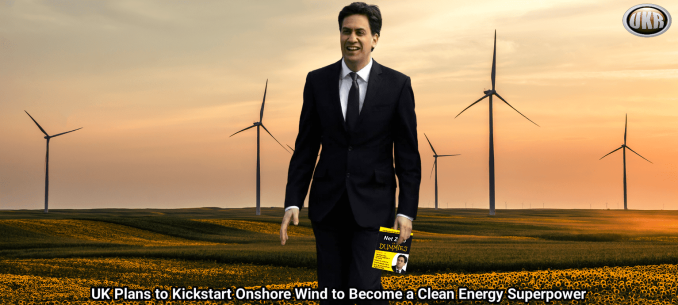
Net Zero will lead to a finacial collapse.
STU TURLEY
The United Kingdom is setting its sights on becoming a global leader in clean energy, with a bold new strategy to revolutionize its onshore wind sector. Announced on July 4, 2025, the UK government’s Onshore Wind Strategy aims to nearly double the country’s onshore wind capacity from 14.8 gigawatts (GW) to 27-29 GW by 2030. This ambitious plan, detailed on the government’s official website, is a cornerstone of the UK’s mission to decarbonize its electricity sector, boost energy security, and reduce reliance on volatile fossil fuel markets.
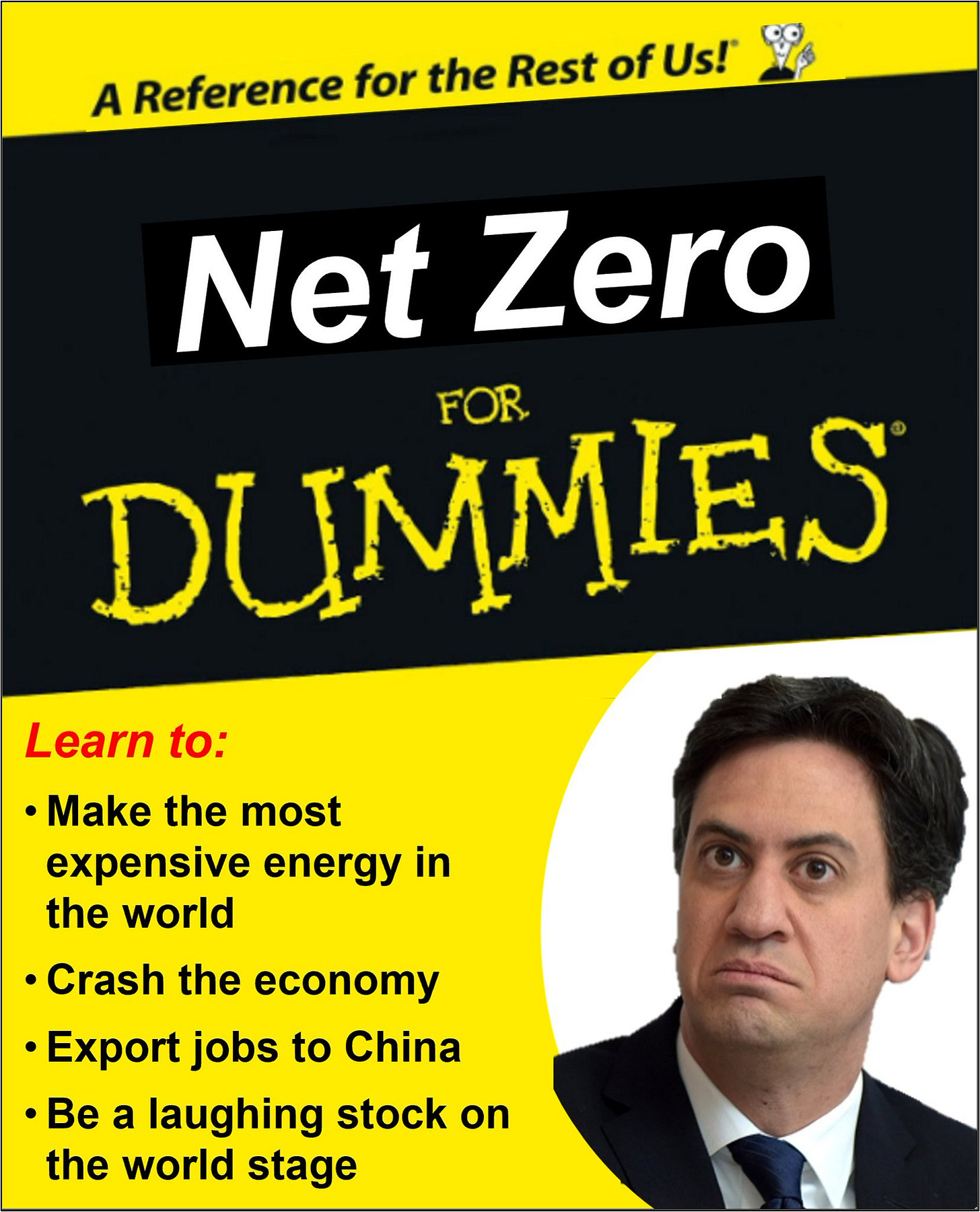
As I have mentioned before, there are two types of countries. Those that will be successful, and those that will go broke and be deindustrialized. All countries following the Net Zero path will likely be deindustrialized as their industrial factories relocate to China, ultimately leading to fiscal collapse.
This raises a larger conversation about the new trading blocs I have mentioned previously. The new trading blocs will redefine the G7, including those that are not following Net Zero and those that have bought into the narrative of Clean Energy fiscal decline. I will go into more details in a future article on this.
But how does this fit into the global energy landscape, particularly when comparing electricity costs in high-cost countries and their adoption of wind and solar energy? Let’s dive into the details.
The UK’s Onshore Wind Revolution
The UK’s new strategy, developed by the Onshore Wind Industry Taskforce, outlines over 40 actionable steps to accelerate the deployment of onshore wind. Key initiatives include:
- Planning Reforms: Large onshore wind projects are now classified under the Nationally Significant Infrastructure Projects (NSIP) regime, streamlining approvals through a centralized process rather than local authorities. This follows the lifting of a de facto ban on onshore wind in England in 2024, which had stifled development since 2015.
- Grid and Supply Chain Enhancements: The strategy addresses grid connection bottlenecks and boosts domestic supply chains, with incentives like the Clean Industry Bonus to encourage UK-based manufacturing.
- Economic and Job Growth: The plan is projected to create up to 45,000 skilled jobs by 2030, doubling the current onshore wind workforce, and attract over £40 billion in private investment since July 2024. (This is funny)
- Community Benefits: Rural communities hosting wind farms could see up to £70 million annually in funding for local initiatives, such as sports facilities or bill discounts. (This is even funnier)
- Cost Efficiency: Onshore wind is touted as one of the UK’s cheapest electricity sources, with levelized costs of £30–£40 per megawatt-hour (MWh), competitive with solar and often more affordable than gas. This was evident in the 2024 Contracts for Difference (CfD) auction, where onshore wind cleared at prices similar to those of solar PV. (Their words, and you can call wind the “cheapest” when you use fuzzy math. I would like to know if one single wind turbine has had land reclamation included in the project. If you know of one, let me know. They leave that out because it turns the project negative from day one.)
Energy Minister Michael Shanks called the rollout a “no-brainer,” emphasizing that onshore wind is quick to build, supports jobs, and delivers clean energy to local communities. They say the strategy also addresses barriers such as aviation and radar interference, aiming to unlock up to 10 GW of stalled projects. I do not believe for a moment that they have even taken their crayons out of the box to figure this out.
They claim this push aligns with broader clean energy goals, as renewables generated 51% of the UK’s electricity in 2024, with wind overtaking natural gas as the most significant power source for the first time. This was probably for a one-time period of about 15 minutes, and almost broke their grid. I will verify their claim. By 2030, the UK aims to generate 95% of its electricity from low-carbon sources, positioning itself as a clean energy superpower. They will be a clean energy superpower, totally broke, destitute, and all of their factory workers will be in China, and their factories will be closed.
Electricity Costs: Top 10 Highest Countries
To contextualize the UK’s strategy, let’s examine the countries with the highest electricity prices for households (based on available 2024–2025 data, converted to USD per kilowatt-hour, kWh). High electricity costs often drive investment in renewable energy sources like wind and solar, but the relationship is complex. Below is a list of the top 10 countries with the highest electricity prices, alongside their reliance on wind and solar energy:
- Denmark: $0.53/kWh
- Wind and Solar: Denmark is a global leader in wind energy, with wind power generating 61% of electricity in 2024. Solar contributes around 5%. High prices reflect heavy taxes and grid investments, but renewables keep wholesale costs low.
- Germany: $0.43/kWh
- Wind and Solar: Wind (onshore and offshore) and solar account for 37% and 12% of electricity, respectively. High prices stem from grid upgrades and the “Energiewende” transition, though renewables reduce fossil fuel dependence.
- Belgium: $0.38/kWh
- Wind and Solar: Wind provides 10%, solar 7%. High costs are due to taxes and distribution fees, with moderate renewable growth.
- Ireland: $0.36/kWh
- Wind and Solar: Wind generates 34%, solar less than 2%. Prices are high due to reliance on imported gas, but wind expansion is reducing this.
- Italy: $0.34/kWh
- Wind and Solar: Solar contributes 10%, wind 7%. High prices reflect gas imports and grid costs, with renewables growing steadily.
- Netherlands: $0.32/kWh
- Wind and Solar: Wind (12%) and solar (10%) are expanding. Prices are high due to taxes, but renewables are lowering wholesale costs.
- United Kingdom: $0.31/kWh
- Wind and Solar: Wind (onshore and offshore) generates 30%, solar 5%. Prices are elevated due to gas price volatility and grid balancing costs, but onshore wind’s low cost could help stabilize bills.
- Spain: $0.30/kWh
- Wind and Solar: Wind (22%) and solar (14%) are significant. Prices fluctuate with gas markets, but renewables mitigate spikes.
- Austria: $0.29/kWh
- Wind and Solar: Wind (9%) and solar (5%) complement hydropower. High prices are due to taxes and grid fees.
- Portugal: $0.28/kWh
- Wind and Solar: Wind (22%) and solar (7%) are key. Prices are moderated by renewables, but taxes keep costs high.
Sources: Data compiled from the International Energy Agency (IEA), Eurostat, and national energy reports for 2024–2025. Percentages are approximate based on 2024 generation mixes.
Wind and Solar in High-Cost Countries
Nine of the ten countries with the highest electricity prices are European, and all have significant wind and/or solar penetration. Key observations:
- High Wind Adoption: Denmark, Ireland, Germany, Spain, and the UK lead the way in wind energy, with onshore wind being touted as a cost-competitive backbone. These countries utilize wind energy to reduce their reliance on imported gas, although grid balancing and taxes keep retail prices high. How did that work out for Spain this year? There is a limit to the amount of wind and solar energy that can be placed on a grid, and in my opinion, that maximum was reached years ago.
- Solar Growth: Germany, Spain, and the Netherlands have robust solar sectors, often paired with wind in hybrid projects to maximize land use. Solar’s role is minor but growing, especially in southern Europe.
- Price Drivers: High electricity prices are less about renewable costs and more about taxes, grid infrastructure, and legacy fossil fuel dependence. Countries with significant renewable energy investment (e.g., Denmark, Germany) incur upfront costs but benefit from lower wholesale prices over time. This never works out as advertised. Oh, sure, we will lower your rates after the equipment is paid for. Right, by then they need to “upgrade” the panels or wind turbine, and don’t give the money back to consumers.
- UK Context: The UK’s electricity price ($0.31/kWh) is among the highest, driven by gas price spikes and grid constraints, as seen in 2024’s $3.7 billion balancing costs due to wind curtailments in Scotland. And Scotland is not a good reference for wind and solar. They cut down millions of trees and installed wind farms everywhere, only to be caught using diesel generators to power the wind turbines, which in turn generate power for the grid from diesel.
Critical Analysis: Can Onshore Wind Deliver?
The UK’s strategy is far from promising and faces challenges. Onshore wind’s low levelized cost (£30–£40/MWh) makes it a strong contender to claim and reduce bills, but grid bottlenecks and local opposition could slow progress. The 2024 curtailment issue, where wind farms were paid to switch off due to transmission limits, highlights the need for grid upgrades. These fees to curtail production need to be evaluated, and a review should be conducted on how they are accounted for in consumer rates. Additionally, while the strategy projects 45,000 jobs, critics argue that over-reliance on wind-heavy regions could concentrate economic risks.
Compared to high-cost countries, the UK’s wind expansion mirrors other models, such as Denmark and Germany, where renewables have successfully deindustrialized the entire country. However, the UK must avoid pitfalls like Germany’s grid delays and ensure community buy-in to prevent backlash, as seen in objections to solar farms and the closure of all of their nuclear plants.
Conclusion
The UK’s Onshore Wind Strategy is a bold step in its marketing programs toward clean energy leadership and deindustrialization. They claim that by aiming for 27-29 GW of capacity, creating jobs, and attracting billions in investment, the UK is poised to strengthen energy security and reduce bills. In the context of high-cost electricity countries, the UK’s push aligns with global trends, where wind and solar energy don’t mitigate fossil fuel reliance.
We have been tracking it for years, and the more money spent on wind, solar, and hydrogen, the more fossil fuels will be used. Oh, that pesky Turley’s Law keeps popping up. I am grateful for
coining the term when he was a guest on the podcast.
As mentioned above, new trading blocs are forming. The UK, the EU, and Canada are set up to fail, as they offload their manufacturing jobs to China, roll out more “renewable, non-sustainable, wind and solar,” and claim that it will impact the environment positively.
For more details, read the full strategy at: https://www.gov.uk/government/news/new-plan-to-kickstart-onshore-wind-revolution
This article (UK Plans to Kickstart Onshore Wind to Become a Clean Energy Superpower) was created and published by Stu Turley and is republished here under “Fair Use”
See Related Article Below
Miliband’s eco zealotry is destroying the beauty of rural Britain
The thorny truth of it is that there’s nothing natural about the countryside. Rural Britain is a drained and deforested landscape where industrial food production is the order of the day. Iconic species like the turtledove are all but gone and our hedgerows, or what remains of them anyway, will be quieter in decades to come.
And yet, that doesn’t mean there’s no point in trying to protect the countryside. In spite of it all, this summer has seen extraordinary amounts of fly life and consequently chicks of species like the English partridge are doing relatively well.
In May, I found myself, in a real fury, running down the lane outside my house to ask a tractor driver who had been sent by the council why he was mowing the verge? “There are birds nesting there”, I shouted over the roar of the diesel engine.
He shrugged, in a friendly sort of way, and said he didn’t know really – the grass wasn’t causing any sort of issue in terms of visibility, but he was seemingly just doing it because he’d been told to. In a sense, fair dos. He was only doing his job but at the same time I find it maddening. The unthinking willingness with which we humans destroy the countryside in pursuit of either “tidiness” or “growth” is horrendous.
The news that Ed Miliband is planning to further relax planning rules around new wind turbines in an attempt to double onshore wind generation by 2030 has caused a stir. Some of the turbines will be of the giant and immensely ugly bird of prey and bat-killing sort and others will be smaller turbines that will appear in people’s gardens. Planning restrictions, which previously made it difficult to put a turbine up next to that patio of yours, are set to be lifted.
Clearly, the pursuit of energy independence and clean power is a good thing. It’s also worth noting that income farmers generate from energy companies putting turbines on their ground is often much needed but are the downsides really being thought about?
It’s estimated that turbines kill up to 100,000 birds a year. Often birds of prey, like the hen harrier, are lured in by the carcasses of previously-killed birds and are struck by the blades. It’s also believed that the number of bats killed by turbines might be massively underestimated.
Due to being so small the remains don’t tend to get found but remarkably, sniffer dogs are now being used to detect little shredded pieces of bat. It is worth noting that if you or I killed a bat, we could be hit with a fine of up to £5,000 pounds.
The drive to send turbines marching across the land is all part of a pattern that the RSPB picked up on when Kevin Austin, their director of policy, noted that: “the Government’s Planning and Infrastructure Bill currently risks weakening existing nature protections.” He went on to say that “urgent amendments to the Bill are needed to ensure it enables development in a way that does not threaten our most precious habitats and wildlife.”
Part of me worries that Labour’s take is that the British landscape is now so degraded and wildlife is doing so badly that it frankly doesn’t matter anymore. Why not just tarmac it all? Angela Rayner has explicitly said building must come above all else but where does that end? In the British Isles in 1500 there were just 2.5 million people – we are now at almost 70 million and rising.
Quite a number of species that were flourishing in the 16th century, like the corncrake and the black grouse, are all but gone – our growth and their disappearance are not a coincidence. What is Labour’s vision for the future? Are we going to have some of Miliband’s turbines on every hill, Rayner’s new builds in every meadow, and not a bird or a bat in sight?
The Telegraph: continue reading

••••
The Liberty Beacon Project is now expanding at a near exponential rate, and for this we are grateful and excited! But we must also be practical. For 7 years we have not asked for any donations, and have built this project with our own funds as we grew. We are now experiencing ever increasing growing pains due to the large number of websites and projects we represent. So we have just installed donation buttons on our websites and ask that you consider this when you visit them. Nothing is too small. We thank you for all your support and your considerations … (TLB)
••••
Comment Policy: As a privately owned web site, we reserve the right to remove comments that contain spam, advertising, vulgarity, threats of violence, racism, or personal/abusive attacks on other users. This also applies to trolling, the use of more than one alias, or just intentional mischief. Enforcement of this policy is at the discretion of this websites administrators. Repeat offenders may be blocked or permanently banned without prior warning.
••••
Disclaimer: TLB websites contain copyrighted material the use of which has not always been specifically authorized by the copyright owner. We are making such material available to our readers under the provisions of “fair use” in an effort to advance a better understanding of political, health, economic and social issues. The material on this site is distributed without profit to those who have expressed a prior interest in receiving it for research and educational purposes. If you wish to use copyrighted material for purposes other than “fair use” you must request permission from the copyright owner.
••••
Disclaimer: The information and opinions shared are for informational purposes only including, but not limited to, text, graphics, images and other material are not intended as medical advice or instruction. Nothing mentioned is intended to be a substitute for professional medical advice, diagnosis or treatment.
Disclaimer: The views and opinions expressed in this article are those of the author and do not necessarily reflect the official policy or position of The Liberty Beacon Project.


Leave a Reply