

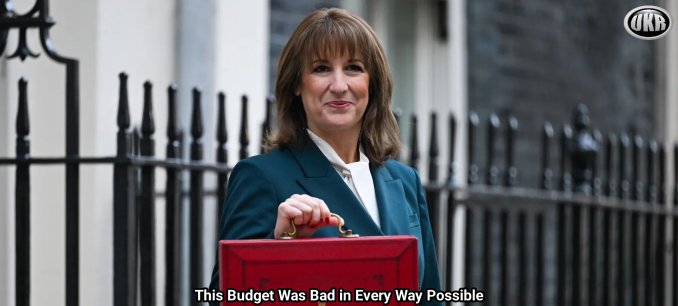
This Budget was bad in every way possible
DR. GERARD LYONS
One word describes this Budget: bad, but it can be used three times, bad, bad, bad. Bad in terms of its fiscal consequences, economic impact and the incentives it embeds.
Because so much of the Budget was trailed in advance, the initial impact of it may be seen as neutral. It’s not. The Red Book confirmed that Britain is a high public spending, high tax and high borrowing economy – and with no appetite ever to reform.
The Budget provided a decisive shift away from a focus on economic growth to redistribution as a driver of fiscal policy. Tax hikes, not trimming public spending. Hitting work, not incentivising it. And saddling businesses with higher costs. The unintended consequences of the Chancellor’s 88 fiscal measures will be hard to quantify, but is unlikely to be economically beneficial.
First, the fiscal numbers remain in poor shape. Yet despite the pre-Budget speculation, the fiscal gap was not as bad as we had been led to believe, largely because higher inflation had fed higher tax revenues. This suggests that people and firms had been misled in recent months, which did not help confidence.
There is a veneer of stability, in that markets were relieved by the increase in the fiscal headroom from £9.9 billion to £22 billion. This is the buffer for the Chancellor to meet her main fiscal rule, reducing the possibility of Groundhog Day next year. The Office for Budget Responsibility (OBR) says there is a 59% future possibility of now meeting her self-imposed fiscal rules.
Despite this, the direction of travel for the fiscal numbers is poor. The OBR laid it bare. To stabilise debt, the Government needs to run a primary surplus (which excludes interest payments) of £47bn per year on average over the next five years. Instead, it currently has a primary deficit this fiscal year of £46bn. This is, ‘£100bn away from its debt-stabilising level’.
Public spending is not under control and will rise more than previously planned in every year of the forecast. So much so that, contrary to expectations, the Budget will provide a fiscal stimulus in the next three years: £4.1bn (2025/26), £9.3bn (2026/27) and £7.1bn (2027/28). Then, from 2028/29 onwards, the contractionary impact of today’s Budget measures will hit, as higher taxes bite. Taxes are expected to fall by £1.9bn in 2026/27, then rise by £2.9bn (2027/28), £10.7bn (2028/29), £23.2bn (2029/30) and a whopping £26.6bn in 2030/31.
In her speech, the Chancellor proclaimed that borrowing would likely fall sharply. I doubt it. The medium-term reduction in borrowing has already been shifted back a year in today’s Budget forecasts. Rachel Reeves expects borrowing to fall sharply at the end of the decade. It won’t. This has often been referred to as an Augustinian approach, of make me chaste but not just yet. Expect even more spending ahead of the next election. Debt will remain high.
Second, in terms of the economy, there was little in this Budget to boost growth. The OBR cut its growth projections, as it lowered its productivity forecasts as expected, but raised its near-term inflation forecasts too. This is not a good mix. Inflation is now expected by the OBR to be 0.5% higher but is still trending down. Growth is expected to average 1.5% over the next three years. This forecast of modest growth is achievable but may still prove optimistic. The OBR expects future hourly earnings to grow more slowly than productivity as firms will need to ‘rebuild their squeezed rate of return on capital’. There are pressures across the economy.
Third, the incentives within the Budget are not good for the economy. Work is not rewarded. Taxes are rising, including income tax thresholds. This stealth tax was put in place under the Conservatives, pulling more people into higher tax brackets through fiscal drag. By 2030/31 the overall impact of freezing allowances will have been £67 billion, of which £13 billion is due to the freeze announced today. Today’s freezing of allowances will drag 780,000 more into paying basic rate, 920,000 into higher rate and 4,000 additional rate. Pensions are also being hit by a tax change to salary sacrifice.
Welfare spending is not controlled. Total welfare spending was £314.7bn in 2024/25, rising to £389.4bn in 2029/30, £16bn higher than expected as recently as March. But it could be higher.
The OBR allocated a ‘very high’ or ‘high’ degree of uncertainty to 13 of the Budget measures, reflecting the uncertainty in behavioural response. Small taxes often grow and have negative and unintended consequences. The Treasury has always argued in favour of taxes where there is a clearly identified income stream, making them easier to collect and harder to avoid. The danger is that today we now start to deviate from this, as reflected in the ‘Mansion Tax‘. The UK taxes housing more than any other than country but does it badly, with high stamp duty that deters turnover. Stamp duty remains high, and now there is a disincentive through a mansion tax to renovate or improve properties. A significant number of tradesmen work on upgrading properties, so such taxes could hit a wider group of people than advocates expect.
Overall, the UK will remain a low productivity and modest growth economy, and living standards will continue to stagnate.
Click here to subscribe to our daily briefing – the best pieces from CapX and across the web.
CapX depends on the generosity of its readers. If you value what we do, please consider making a donation.
This article (This Budget was bad in every way possible) was created and published by CapX and is republished here under “Fair Use” with attribution to the author Dr. Gerard Lyons
See Related Article Below
Reeves Breaks Manifesto Pledge as She Raises Taxes by £30 Billion
Rachel Reeves is to breach Labour’s election manifesto pledge as she raises taxes by £30 billion in her Budget, according to official forecasts accidentally published before her speech in the Commons. The Telegraph has more.
The tax burden will hit a new all-time high of 38.3% of GDP by 2031 as the Chancellor puts up taxes by £29.8 billion by the start of the next parliament, according to the Office for Budget Responsibility (OBR).
The documents showed the Chancellor will raise £8.3 billion by freezing income tax thresholds for another three years until the 2030-31 financial year.
The document also confirmed that a new tax raid on £2 million houses would go ahead, a £4.7 billion raid by scrapping National Insurance relief on pension contributions above £2,000 and the end of a long-standing freeze on fuel duty.
There will also be a £2.1 billion increase in taxes on income from dividends, savings and property as well as a £900 million hit from limiting capital gains tax relief.
Andrew Griffith, the Shadow Business Secretary, said: “This budget process has been a fiasco from start to finish and the unprecedented leak of the OBR’s report is just the final embarrassment.”
The OBR documents showed the Chancellor has raised her Budget headroom to £22 billion while also raising the bill for sickness and disability benefits by £109 billion by the start of the next Parliament.
The cost of servicing the national debt dropped sharply and the pound rose as the leak showed that borrowing is projected to fall from 4.5% of gross domestic product (GDP) in 2025-26 to 1.9% in 2030-31.
In a chaotic leak before the Chancellor addresses the Commons, it was reported that debt would rise as a share from 95% to 96% by the end of the decade.
Eir Nolsøe summarises the headlines thus:
- Personal tax thresholds will be frozen until end of decade, raising £8 billion. This will pull 780,000 more people into paying the basic rate of income tax and create 920,000 more higher-rate tax payers.
- National Insurance on salary-sacrificed pension contributions will bolster the public coffers by £4.7 billion.
- Increasing tax rates on dividends, property and savings income by two percentage points, raising £2.1 billion.
- A new mileage-based charge on electric and plug-in hybrid cars from April 2028, at around half the fuel duty paid by petrol drivers. This will raise £1.4 billion.
- A reduction in writing down allowances in corporation tax that will cost firms £1.5 billion. These allowances allow big companies to deduct a percentage of the value of certain items from their profits each year.
- An overhaul of gambling taxes that will bring in £1.1 billion while changes to capital gains tax reliefs on employee ownership trusts raising £0.9 billion.
- The trailed ‘mansion tax’ will hit owners of properties over £2 million from April 2028. It will be implemented as a council tax surcharge and raise £0.4 billion a year by the end of the decade.
- Borrowing to fall from 4.5% of GDP in 2025-26 to 1.9% by 2030-31.
- Meanwhile, debt as a share of GDP will end the decade at 96% of GDP, up from 95% this year. This is two percentage points higher than anticipated in March and twice the debt level of the average rich country, according to the OBR.
- The fiscal watchdog predicts growth will be 1.5% on average a year until the end of the decade, a downgrade of 0.3 percentage points from March. The OBR blamed this on a weaker outlook for productivity gains.
- Welfare U-turns and ending the two-child benefit are poised to cost the taxpayer £9 billion a year by the end of the decade.
Reeves defended her choices, saying there would almost be £22 billion of headroom in the public finances as a result of her Budget.
I said there would be no return to austerity, and I meant it. This Budget will maintain our investment in our economy and our National Health Service. I said I would cut the cost of living, and I meant it: this Budget will bring down inflation and provide immediate relief for families. I said that I would cut debt and borrowing, and I meant it: because of this Budget, borrowing will fall as a share of GDP in every year of the forecast.
Our net financial debt will be lower by the end of the forecast than it is today and I will more than double the headroom against our stability rule to £21.7 billion – meeting our stability rule and meeting it a year early.
These are my choices. Not austerity. Not reckless borrowing. Not turning a blind eye to unfairness. My choice is a Budget for fair taxes, strong public services, and a stable economy. That is the Labour choice.
Follow the Telegraph‘s live coverage here.
James Baxter Derrington says the Budget “has broken the deal the Labour Party made with the nation and breached its manifesto”.
The extension of the income tax threshold freeze – Rishi Sunak’s invidious invention – is a direct increase in the taxes that working people pay, to the tune of more than £8 billion. Every penny of this will be swallowed up, not by improved public services for us all but by increased benefits payments to a select few. In fact, it will barely cover half of that cost.
For a Chancellor so dedicated to targeting those with the “broadest shoulders”, she has picked one of the most regressive taxes possible. This stealth tax will not target the wealthiest but disproportionately affect those working desperately hard on lower salaries. A party founded on the principle of supporting the working man has just betrayed him.
Continuing in the spirit of prioritising state reliance over rewarding work, Reeves has slashed the amount employees can put into their pensions via salary sacrifice schemes. Don’t worry about funding your own retirement through prudent saving, this government is keen to create a generation of pensioners reliant on the state.
The Telegraph highlights that Reeves has now raised taxes by £70 billion across her two Budgets, more than seven times the £8.5 billion mentioned in the manifesto. Meanwhile the national debt will rise to £3.5 trillion by 2031, more than double the £1.6 trillion before the pandemic (on the measure of public sector net debt excluding the Bank of England, the metric used under the Conservatives) as Rachel Reeves’s borrowing mounts up.
The Office for Budget Responsibility has also said that estimated costs for asylum accommodation are more than triple the amount previously thought. From the Telegraph:
The forecast said that demand for asylum accommodation had grown and is “expected to cost £15.2 billion over the next 10 years, revised up from the Home Office’s previous estimate of £4.5 billion”.
Nick Timothy, a Conservative MP, said: “Labour said they’d smash the gangs, stop the crossings and close the hotels.
“Now they plan to more than triple accommodation spending for illegal immigrants.”
***
Labour’s victory is total. Socialism is back
In Rachel Reeves’s brave new world, meritocracy is out – redistribution, welfarism and enforced equality are in
This is it, the day we all dreaded, a milestone in Britain’s descent into collectivism of the most repugnant kind.
We have just witnessed a monstrous Budget delivered by the worst Chancellor in living memory, an obscene mix of untruths and delusion, a farrago of bile, envy and nastiness that will vandalise our economy and ruin our society.
Rachel Reeves and Sir Keir Starmer evidently lied their way to power, pledging to keep tax rises to £8.5bn and to govern as centrist technocrats; instead, they have unleashed full-blooded socialism on a country that never voted for it, raised tax by about £68bn a year over two budgets (according to the Resolution Foundation) and declared war on property rights and the productive class.
Reeves’s socialism may well be reluctant, forced upon her by her own weakness, incompetence and inability to control her backbenchers, but this is no excuse.
Labour promised not to put up income tax, and yet she is upping rates to 22p, 42p and 47p on income from interest, rents and dividends. Reeves swore that she wouldn’t introduce any kind of wealth or mansion tax, and yet she is launching a devastating attack on those who own expensive properties. She is hammering salary sacrifice pension schemes, raiding employee ownership funds, increasing fuel duty and taxing milkshakes.
These levies have one thing in common: they sever the connection between effort and reward, between work and success, between thrift and wealth. Meritocracy and incentives are out in Reeves’s brave new world; redistribution, welfarism, randomness and enforced equality of outcomes are in.
Reeves increased spending by another £11bn by 2029-30, primarily to pay for her about-turn on welfare cuts and to lift the two child limit in universal credit. Society’s net contributors will pay a debilitating price. She is taking tax from 34.7 per cent of GDP last year to a record high of 38.3 per cent by 2030-31, with total government receipts hitting 42.4 per cent. The share of taxpayers paying the 40p or 45p rate will have jumped from 15 per cent in 2021-22 to 24 per cent in 2030-31, normalising extortionate marginal taxation.
Yet it is Labour’s taboo-breaking tax on expensive homes that is the most dangerous of all: it is tantamount to a quasi-authoritarian reopening of settled property rights and fundamentally reorders the relationship between citizen and state. Her scheme begins to abolish freehold property, turning yeoman-owners into leaseholders, with politicians the ultimate landlords. Her “high value council tax surcharge” is best understood as a rent, to be paid to Reeves for the right to stay in one’s own home. Labour hates ordinary landlords, but is desperate to turn the state into the most exploitative of rent collectors. It’s sub-Marxist nonsense, a form of legalised theft.
Her cash grab – £2,500 a year for homes worth £2m, £7,500 a year for those over £5m – is the thin end of the wedge: just as hardly anybody paid the 40p tax rate in the late 1980s, the threshold at which the “surcharge” kicks in will be lowered over time, snaring many more. Just as obviously, the levy will eventually be made even more punitive, as with the introduction of the additional rate of income tax.
[…]
This is the final death of Thatcherism, of the British dream, of the idea that ordinary people, through hard work, can climb the property ladder: Reeves is the most anti-capitalist and anti-aspiration Chancellor since Denis Healey. She will destroy incentives to extend or refurbish high-end properties – woe betide anybody whose home rises too much in value – cripple the top of the property market and chase away yet more successful people from the UK.
Many on the radical Left believe they are entitled to confiscate privately owned assets, for any reason, and are finally getting their way. They believe that it is “unfair” people don’t pay more tax if they own an expensive home. But why should anybody pay any tax on their property at all, other than a basic fee for local services? It’s legally theirs, so they should not have to hand over any money to keep hold of it. In a conservative and capitalist society, property is a foundational, natural right, not a privilege. Where are the human rights lawyers when we need them?
The logical extension of Reeves’ property tax grab is that the state will eventually start to expropriate a percentage of bank accounts and pension pots too, at least those deemed “too large”.
The Telegraph: continue reading

••••
The Liberty Beacon Project is now expanding at a near exponential rate, and for this we are grateful and excited! But we must also be practical. For 7 years we have not asked for any donations, and have built this project with our own funds as we grew. We are now experiencing ever increasing growing pains due to the large number of websites and projects we represent. So we have just installed donation buttons on our websites and ask that you consider this when you visit them. Nothing is too small. We thank you for all your support and your considerations … (TLB)
••••
Comment Policy: As a privately owned web site, we reserve the right to remove comments that contain spam, advertising, vulgarity, threats of violence, racism, or personal/abusive attacks on other users. This also applies to trolling, the use of more than one alias, or just intentional mischief. Enforcement of this policy is at the discretion of this websites administrators. Repeat offenders may be blocked or permanently banned without prior warning.
••••
Disclaimer: TLB websites contain copyrighted material the use of which has not always been specifically authorized by the copyright owner. We are making such material available to our readers under the provisions of “fair use” in an effort to advance a better understanding of political, health, economic and social issues. The material on this site is distributed without profit to those who have expressed a prior interest in receiving it for research and educational purposes. If you wish to use copyrighted material for purposes other than “fair use” you must request permission from the copyright owner.
••••
Disclaimer: The information and opinions shared are for informational purposes only including, but not limited to, text, graphics, images and other material are not intended as medical advice or instruction. Nothing mentioned is intended to be a substitute for professional medical advice, diagnosis or treatment.
Disclaimer: The views and opinions expressed in this article are those of the author and do not necessarily reflect the official policy or position of The Liberty Beacon Project.


Leave a Reply