

Friday’s Absurd Story from all things Westminster.
THE RATIONALS
Ah, Labour’s brave new world of public health, where the government vows a “prevention-first revolution,” only to trip over its own shoelaces and land face-first in a pint of zero-alcohol beer. Picture this, in the midst of skyrocketing alcohol-related deaths, record NHS waiting lists, and a taxpayer bill for booze harms that could fund a small country, Keir Starmer’s lot decides the real villain is… non-alcoholic drinks for teenagers.
Yes, you read that right. The proposal to ban sales of NoLo (no- and low-alcohol) beverages, those harmless fizzies mimicking beer or wine but with all the kick of a damp sock, to under-18s has been floated as a cornerstone of their grand 10-Year Health Plan for England. But why stop the kids from sipping a 0.05% ABV lager when you could, oh we don’t know, actually tackle the real stuff that’s killing us?
It’s a question that cuts to the heart of this farce. Why ban zero-alcohol alternatives for teens while subsidising industry profits with public funds? The answer lies not in some noble crusade against “gateway” tipples, evidence for which is about as solid as a politician’s promise, but in a sly diversionary tactic.
This NoLo nonsense is nothing short of a smokescreen, designed to distract from Labour’s wholesale capitulation to Big Alcohol’s lobbying machine. And as taxpayers footing the £27 billion annual bill for alcohol harms, we ought to be furious. So, let’s peel back the layers of this policy onion? It might make your eyes water, but at least it’ll be more honest and fun to read than the government’s spin on the matter.
First, let’s set the scene with the NoLo proposal itself. Tucked away in the July 2025 release of Labour’s much-hyped 10-Year Health Plan, this gem suggests treating zero-alcohol beers and wines, products with less booze than a ripe banana, like the hard stuff. Health Minister Ashley Dalton trots out the line about “emerging evidence” that these mimics could normalize drinking among the youth, potentially acting as a gateway to proper pints. Emerging evidence? That’s code for “we’ve got a few studies that hint at it, but nothing conclusive.”
The Portman Group, that self-appointed watchdog of the drinks industry, has been quick to pat themselves on the back for voluntary Challenge 25 policies on NoLo sales. But Labour wants to make it law, banning under-18s from buying what is, essentially, fancy pop.
Critics like Shadow Business Secretary Andrew Griffith have called it “utterly bonkers,” and for once, the opposition has a point. Why the heavy hand on something that could actually encourage moderation?
The absurdity deepens when you zoom out to the full Health Plan. Billed as a seismic shift from sickness to prevention, it promised to tackle the root causes of ill health. Yet, when the document landed, key measures to curb actual alcohol harm had vanished like a magician’s rabbit. Minimum unit pricing (MUP) extensions? Gone. Comprehensive bans on alcohol advertising? Scrapped. Stricter controls on where and when booze can be sold? Not a whisper.
These aren’t pie-in-the-sky ideas, they’re evidence-based winners. Scotland’s MUP, introduced in 2018, has saved lives and reduced hospital admissions, with studies showing a 13.4% drop in alcohol-specific deaths. Wales followed suit with similar success. But in England? Nada. The plan instead opts for tinkering with labelling, mandating health warnings on bottles and vague nods to supporting the NoLo market for adults. It’s like promising to fix a leaky roof and then just handing out umbrellas.
So, what happened? Enter the alcohol lobby, stage left, with all the subtlety of a pub brawl. Fresh reporting from The Guardian in September 2025 laid it bare, Big Alcohol’s front groups, like the British Beer and Pub Association (BBPA), mounted a ferocious campaign against the plan’s draft proposals. They voiced “extreme concern” over advertising restrictions, warning of doom for investment and sports sponsorships. Lo and behold, those measures were axed.
Movendi International, a global alcohol policy watchdog, didn’t mince words, “Alcohol industry lobbying leads to UK government rejection of evidence-based alcohol policy.” Their September 2025 analysis spotlighted how the BBPA and others derailed reforms, putting “private profits before public health.” The Institute of Alcohol Studies (IAS) echoed this in their July and August 2025 bulletins, noting that MUP and advertising bans were in early drafts but stripped out due to “industry lobbying and political decisions from No.10.” Now there’s a surprise.
Such lobbying finds willing ears in Parliament, where declared interests reveal troubling ties that may contribute to diluting reforms. For instance, Lord Ed Vaizey tabled an amendment in May 2025 to delay the ban on heated tobacco products in the Tobacco and Vapes Bill, weeks after Philip Morris International funded his trip to its Swiss research facility (covering flights and accommodation). Similarly, Lord Strathcarron proposed amendments in October 2025 to replace the generational smoking ban with a simple raise in the legal purchase age to 21, a position that would soften the bill’s core provision.
In a Labour context, former MP Virendra Sharma authored a sponsored piece for Labour List in March 2024, funded by Japan Tobacco International, advocating for raising the smoking age to 21 rather than a generational ban. Broader patterns emerge from parliamentary registers, with numerous MPs and Lords accepting hospitality or gifts from health-harming industries (often just below declaration thresholds), including former Health Secretary Thérèse Coffey accepting £922 in hospitality from Greene King in 2022 before opposing certain public health measures.
These examples underscore how financial incentives or relationships may shape efforts to water down reforms, contributing to the policy paralysis seen in Labour’s health plan.
It’s a tale as old as time, or at least as old as the last Tory government. Under the Conservatives, the Public Health Responsibility Deal of 2010 was a masterclass in letting foxes guard the henhouse. Voluntary partnerships with booze barons promised harm reduction but delivered zilch. Alcohol deaths climbed 40% post-pandemic, yet reforms stalled.
Labour lambasted this as weakness, vowing to “steamroller” industry interference. Health Secretary Wes Streeting thundered pre-election about forcing food firms to reformulate junk. Yet here we are, with his own plan retreating faster than a teetotaller from a brewery tour.
His department’s own Alcohol Health Alliance (AHA), a coalition of over 60 organizations, fired off a letter in August 2025 to Streeting, decrying the omissions as a “dereliction of duty.” They warned that without MUP and advertising curbs, England faces 147,000 extra alcohol-related diseases and 9,000 premature deaths by 2035. And who picks up the tab? You and me, the taxpayers of course.
Oh yes, the taxpayer angle – that’s where the hypocrisy really bites. Alcohol harm costs England £27.4 billion a year, per IAS estimates. £4.9 billion to the NHS, £14.6 billion in crime and disorder, and the rest in lost productivity. That’s more than 1.2% of GDP, equivalent to funding the entire police force twice over. Yet Labour’s plan ignores the big levers that could slash this bill.
Instead, it fixates on NoLo, a market that’s booming precisely because it’s a healthier alternative. Half of young adults now opt for these drinks, up from a quarter in 2018, driven by health motivations. Banning sales to teens might sound tough, but it’s window dressing, especially when enforcement gaps mean kids could still snag them from corner shops, while adults face needless hassle in pubs.
Compare this to other vices, and the double standards scream. Take sugary drinks for example, the Soft Drinks Industry Levy (SDIL) has been a quiet success, cutting sugar by 47% since 2018 without banning cola outright. Yet obesity costs £126 billion annually, far more than alcohol, and harms hit harder with 1 million hospital admissions yearly linked to excess weight.
Labour’s extending the levy to milk-based drinks from 2028, but no outright bans for minors, despite cola’s proven metabolic mayhem. Why? The beverage lobby, led by Coca-Cola and PepsiCo, secured concessions through consultations, framing the tax as an incentive rather than a hammer. It’s effective, sure, but why not apply similar logic to alcohol pricing?
Then there’s vaping. No full ban, despite nicotine’s addictive grip and evidence of it gatewaying to smoking among youth. Disposables are out since June 2025, and a new duty kicks in from October 2026, but refillables remain for adults as a “95% less harmful” alternative to fags. Fair enough – harm reduction makes sense.
But apply that to NoLo, these are literal harm reducers, swapping real booze for fakes. Yet here we are, championing nicotine clouds for grown-ups while fretting that a sip of near-water beer might turn teenagers into lifelong alcoholics. Truly, the pinnacle of public health wisdom, protect the kids from harmless fizz but let the adults chase clouds of “safer” poison. Absurd, isn’t it?
Labour though, slaps on age restrictions, ignoring the industry’s voluntary safeguards. The Tobacco and Vapes Bill, revived by Labour, faced its own lobbying onslaught, think Philip Morris funding trips for peers like Lord Ed Vaizey, who then pushed delays. But at least tobacco lobbies operate under WHO scrutiny, alcohol’s Wild West, with APPGs on beer and spirits providing cozy platforms for influence.
This patchwork reeks of propaganda. Labour’s “shift to prevention” is sold as bold, yet it’s riddled with retreats. The plan’s executive summary trumpets labelling reforms as a win, but IAS warns industry will water them down to “weak, hard-to-read labels or QR codes few will scan.” Reuters’ September 2025 exposé on global lobbying shows Big Alcohol battling the WHO over health warnings, disputing stricter language on addiction risks.
Heineken and Mexican tequila makers lobbied against U.N. rules, mirroring their UK playbook. In Britain, the narrative is “supporting moderation”, you guessed it, code for letting profits flow while harms fester. Alcohol Change UK’s July 2025 blog nailed it, “Policies with the greatest potential for preventing harm… have once again been sidelined.” Their CEO, Richard Piper, called it a “gift to Big Alcohol,” failing the British people.
And fail it does. Record 10,473 alcohol-specific deaths in 2023, up from pre-pandemic levels. Seven types of cancer linked to booze, liver disease ravaging the deprived. Women and children bear the brunt of others’ drinking – domestic violence, fetal alcohol syndrome.
Yet the lobby spins it as “responsible enjoyment,” with campaigns reaching over politicians’ heads. The Guardian’s June 2025 editorial urged ministers to counter this with accurate risk info, but Labour’s plan ducks the fight. Instead, we get NoLo bans – a sop to appear tough without upsetting the £40 billion industry that claims reforms threaten jobs and sponsorships. US trade concerns even factored in, per Telegraph leaks: alcohol giants warned advertising curbs could breach UK-US deals.
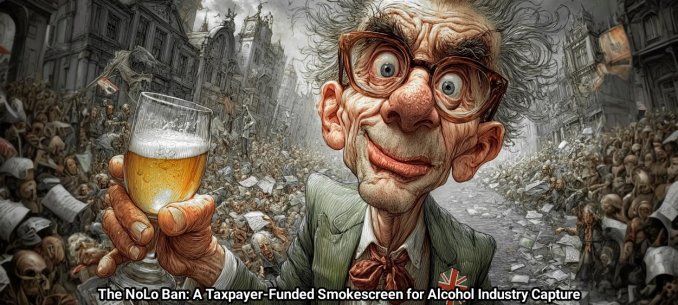
The irony is compounded by the broader political culture surrounding alcohol. Politicians, including the Prime Minister, are frequently photographed enjoying a pint in local pubs, Starmer has even described his favorite Kentish Town spot as “the best pub in the land” and has been seen pulling pints during constituency visits, while advancing policies that restrict harmless alternatives and leave the most harmful consumption patterns largely unchecked.
This is not about individual choices, it is about the inconsistency of crafting restrictions for the public while the architects of those policies participate in the very social norms they selectively regulate.
The irony? NoLo’s growth could undercut traditional sales, making it a subtle threat to Big Alcohol. By restricting it under the guise of youth protection, Labour inadvertently protects the status quo. Pubs, already reeling from £150 million in rate hikes, face more red tape Nigel Farage’s “death knell” for rural boozers. Opposition voices like Reform UK decry it, but Labour presses on, perhaps to virtue-signal amid internal rows.
So, where does this leave us taxpayers? Shelling out for a system that prioritizes profit over prevention. The alcohol lobby emerges as the “worst” offender here more insidious than tobacco’s regulated realm or sugary drinks’ taxed tweaks. Its successes in gutting Labour’s plan dwarf the others, perpetuating £27 billion in costs that rival tobacco’s declining burden and trail obesity’s £126 billion behemoth. Obesity harms most, 64% of adults affected, diabetes epidemics but alcohol’s cultural embedding makes its lobby stealthier.
In the end, this isn’t mere policy wonkery, it is a profound betrayal. Labour promised a transformative shift toward prevention, yet delivered more of the same, hypocrisy cloaked in propaganda, with taxpayers left as the unwitting punchline.
Picture the irony, politicians who proudly raise pints in their favorite locals, extolling the virtues of the British pub, while quietly abandoning evidence-based measures that could curb genuine harm and instead fixating on restricting harmless alternatives. Time to raise a glass—of water—and demand better. Why subsidise preventable death while banning the harmless? Ask your MP. The answer might just sober you up.
The Rational Forum is entirely reader-supported. If you value what we do, please share the piece, leave a comment, or consider a free or paid subscription. All contributions — whether a subscription or a one-off gift — are gratefully received and keep the lights on.
This article (The NoLo Ban: A Taxpayer-Funded Smokescreen for Alcohol Industry Capture in Labour’s Health Agenda) was created and published by The Rationals and is republished here under “Fair Use”
Featured image: The Rationals (modified)


Leave a Reply