

PAUL HOMEWOOD
With the ban on the sale of new petrol and diesel cars less than four years away now, there remains one seemingly insurmountable obstacle: nobody wants to buy electric cars.
Last year, sales of EVs achieved a market share of just 23.43%. Newly released figures for last month show this fell to 20.6%. The Government has set a target this year of 33%, rising to 66% in 2029.
Once petrol and diesel cars (known as ICE vehicles, short for Internal Combustion Engine) are banned in 2030, zero emission cars must make up at least 80% of the market, with the rest filled with hybrids. However, the latter will also be gradually phased out by 2035. Zero emission essentially means battery-electric, although hydrogen fuel-cell vehicles would also qualify.
To enforce the switch to EVs, the government introduced the ZEV (Zero Emission Vehicle) mandate. Motor manufacturers who fail to hit their ZEV target for the year must either buy credits from manufacturers who have exceeded targets or pay a fine of £15,000 for every car below target.
There are certain allowances available, but these are not significant. The only other option open to manufacturers who fall short is to carry forward their deficit, in the hope they are in surplus in a year or two time. Understandably, this has been likened to taking out a payday loan!
The first year of the ZEV mandate was 2024, when the target was 22%. Actual EV sales that year only reached 19.6%, leaving an effective shortfall of 47,000 cars. At £15,000 a time, that means a fine of around £700 million. The Department for Transport will publish its full analysis next month, which will list surpluses and shortfalls by manufacturer and the actions they have taken to comply, e.g. pay a fine, buy allowances or carry forward.
Last year, EV sales increased to a share of 23.9%, but this was still well below the target of 28%. Motor manufacturers it seems are building up massive deficits in EV sales, which sooner or later will have to be paid for.
Worse still, most EV sales go to fleet and business sectors, driven by generous tax breaks. It is estimated that only about 10% of private buyers go for electric.
The reasons are well known. EVs cost much more to buy, and most models don’t have the range that drivers need. On top of that, buyers face massive losses when trading them in because second hand prices are so low.
But there is one other factor which is often overlooked.
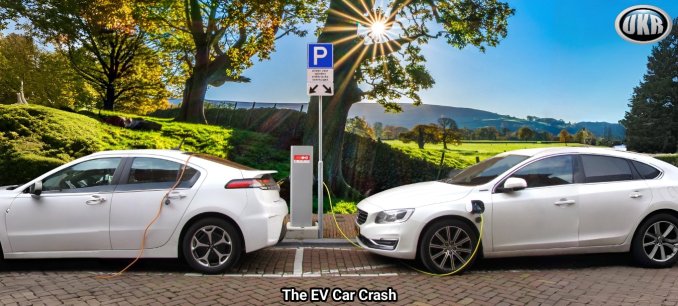
It is reckoned that four in 10 households don’t have off-street parking, so cannot easily charge at home. Using a public charger means that running costs would typically be triple those of a petrol car when fuel duties are excluded. That is, I should point out, if you can actually find one on the way home from work that is not already in use.
Local councils such as my own have already made it clear that trailing cables across the pavement is not permitted and that enforcement action will be taken. Where then will EV drivers be able to charge their cars?
There are plenty of fine words from central and local government about installing more public chargers. But the simple reality is that there will never be enough – local councils don’t have the money, and it is not their job anyway to waste taxpayer money in this way.
Cardiff City Council are a case in point. It is estimated that there are about 200,000 cars in Cardiff, about half of which don’t have access to off street parking. The City Council has just announced plans to install 80 new EV charging stations, plugged into lampposts outside residents’ homes.
The plan won’t make the slightest difference when there are 100,000 cars which all need charging. But it will create real difficulties for the poor beggars who happen to live next to one and will have to find somewhere else to park. The thought of all the other motorists on the street competing to get to that lamppost first every night and the aggro which will undoubtedly follow is frightening.
It is hard to avoid the conclusion that the objective of successive governments and council planners all along has been to force us out of our cars and onto public transport.
dailysceptic.org/2026/02/06/the-ev-car-crash/

••••
The Liberty Beacon Project is now expanding at a near exponential rate, and for this we are grateful and excited! But we must also be practical. For 7 years we have not asked for any donations, and have built this project with our own funds as we grew. We are now experiencing ever increasing growing pains due to the large number of websites and projects we represent. So we have just installed donation buttons on our websites and ask that you consider this when you visit them. Nothing is too small. We thank you for all your support and your considerations … (TLB)
••••
Comment Policy: As a privately owned web site, we reserve the right to remove comments that contain spam, advertising, vulgarity, threats of violence, racism, or personal/abusive attacks on other users. This also applies to trolling, the use of more than one alias, or just intentional mischief. Enforcement of this policy is at the discretion of this websites administrators. Repeat offenders may be blocked or permanently banned without prior warning.
••••
Disclaimer: TLB websites contain copyrighted material the use of which has not always been specifically authorized by the copyright owner. We are making such material available to our readers under the provisions of “fair use” in an effort to advance a better understanding of political, health, economic and social issues. The material on this site is distributed without profit to those who have expressed a prior interest in receiving it for research and educational purposes. If you wish to use copyrighted material for purposes other than “fair use” you must request permission from the copyright owner.
••••
Disclaimer: The information and opinions shared are for informational purposes only including, but not limited to, text, graphics, images and other material are not intended as medical advice or instruction. Nothing mentioned is intended to be a substitute for professional medical advice, diagnosis or treatment.
Disclaimer: The views and opinions expressed in this article are those of the author and do not necessarily reflect the official policy or position of The Liberty Beacon Project.


Leave a Reply