

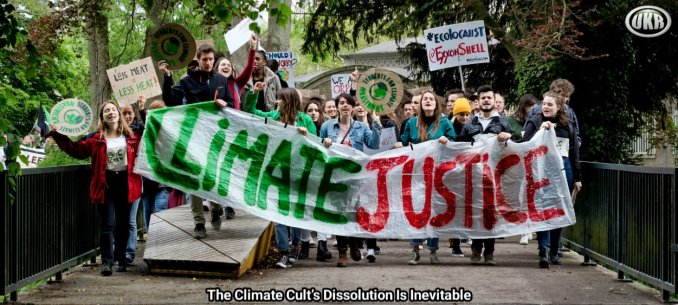
The climate cult’s dissolution is inevitable
VIJAY JAYARAJ
The collapse of the Paris Agreement and the unmasking of the net zero illusion were never hard to predict — not for anyone with a shred of intellectual honesty. It didn’t take a fancy research title or an advanced degree. The writing was carved deep into the stone of energy reality, which no press release, no activist lobby and no billionaire-backed foundation could erase.
Most nations — particularly those early in the process of building their futures — offered only empty nods to their climate targets. Their participation was a transparent quest for political leverage. The climate crusade survived by hijacking the political class, manipulating data through compliant scientists, and converting media empires into megaphones of fear.
Bill Gates stepped away from the front lines of climate alarmism in a recent essay timed for the United Nations’ COP30, an annual gathering of jet-setting moralists. Gates admits — and the recent U.S. Department of Energy report on carbon dioxide supports his view — that the world will not collapse because of climate change.
Gates has called for a shift in focus to more immediate needs. He says that “we will still rely on fossil fuels for decades,” that “no single technology can decarbonize the global economy,” and that “the pace of change will be slow.”
He is reacting to the wreckage of ideology from its collision with the laws of physics.
In recent New York election campaigns, some of the Green New Deal’s most famous apostles, Alexandria Ocasio-Cortez and Bernie Sanders, saw their climate gospel sidelined, no longer commanding the stage. Voters heard more about housing, jobs, and public safety than decarbonization, offshore wind or carbon credits.
These are signals of a larger shift underway, both in the U.S. and abroad.
In the U.K.’s North Sea and off the U.S. East Coast, massive wind projects are being canceled. “Green steel” is struggling to compete with fossil fuel-based conventional steel. Oil companies, after spending years and billions of dollars on “green” branding and virtue signaling, are quietly backtracking on ambitious climate goals.
In 2025, Argentina shocked global institutions by saying it will reconsider its membership in the Paris Agreement. President Javier Milei declared that his nation would no longer “kneel before climate bureaucrats.” China continues its rapid construction of coal-fired power plants, adding more coal capacity than the rest of the world combined. India’s coal consumption is at an all-time high, and its government is aggressively auctioning new blocks of coal mines.
Developing economies in Asia and South America know that survival requires coal, oil and natural gas. African leaders are also seeking to tap their continent’s reserves of hydrocarbons to power economic development.
The fragile structure of global decarbonization depended on financing from its chief patron, the U.S. When that flow of dollars ceased with the incoming Trump administration, the fading of an already moribund climate narrative accelerated. What remains now is to utterly unmask the 21st century’s most malignant fraud and to educate a generation propagandized in public schools and woke universities.
The truth has emerged bit by bit. We were once told that wildfires were unprecedented, yet historical data show fire frequency has declined globally. We were told the Arctic would be ice-free, yet it remains frozen. We were told of a “climate-driven” food crisis, but the mild warming and increased carbon dioxide — a vital plant food — have contributed to global greening and record crop harvests. The food supply is becoming more secure, not less.
The gap between alarmist predictions and observed reality is no longer possible to hide. Scientists deliberately misled the public with cherry-picked data, tortured computer models until they produced the “correct” scary result and misrepresented natural weather events as proof of climate change. What masqueraded as “consensus” was nothing more than a cartel of profiteers feeding on public guilt and taxpayer money.
This was not good-faith scientific inquiry but rather a narrative designed to frighten, to control consumer choices and to justify a massive political and economic reorganization. Much of the public, sensing this dishonesty, no longer listens. The authority of the climate “experts” has been damaged, perhaps irrevocably. Their incessant cries of “wolf” failed to produce the climate beast.
The climate cult declared war on the very engines that lifted humanity from hunger and hardship. Its legacy is economic vandalism and moral decay.
But the spell is breaking, and what’s emerging from the rubble is not despair, but liberation — a long-awaited return of reason to a world held hostage by fear.
Vijay Jayaraj is a Science and Research Associate at the CO2 Coalition in Fairfax, Virginia. He holds an M.S. in environmental sciences from the University of East Anglia and a postgraduate degree in energy management from Robert Gordon University, both in the U.K. He served as a research associate with the Changing Oceans Research Unit at University of British Columbia, Canada.
This article (The climate cult’s dissolution is inevitable) was created and published by The Hill and is republished here under “Fair Use” with attribution to the author Vijay Jayaraj
See Related Article Below
Most countries don’t give a hoot about greenhouse gas emissions: Part 1
THE main reason why, despite countless scientific warnings about dangerous consequences, greenhouse gas (GHG) emissions continue to increase is rarely mentioned. Yet it’s been obvious for several years.
It’s this: most countries outside Western Europe, North America and Australasia are either unconcerned about the impact of GHGs on the climate or don’t regard the issue as a priority, focusing instead for example on economic growth and energy security.
Yet these countries, comprising about 84 per cent of humanity, are today the source of about 77 per cent of emissions; 88 per cent if the United States, which has now joined their ranks, is included.
Therefore, unless they change their policies radically – and there’s no serious evidence of their so doing – there’s no realistic prospect of the implementation of the urgent and substantial cuts in GHG emissions called for by many Western scientists.
To understand how this has happened, I believe it’s useful to review the history of environmental negotiation by focusing in particular on six UN-sponsored conferences: Stockholm in 1972, Rio in 1992, Kyoto in 1997, Copenhagen in 2009, Paris in 2015 and Belém (Brazil) last month.
Stockholm 1972
In the 1940s, 1950s and 1960s many Western environmentalists were seriously concerned that technological development, economic growth and resource depletion risked irreversible damage to humanity and to the environment. Clearly a global problem, it was agreed that it had to be tackled by international, i.e. UN-sponsored, action.
The result was the UN Conference on the Human Environment held in Stockholm in 1972. From its outset it was recognised that, if the conference was to succeed, an immediate problem had to be solved: the perceived risk was almost exclusively a Western preoccupation, so how might poorer countries be persuaded to get involved?
After all, technical and industrial development were essentially the basis of the West’s economic success and that was something the rest of the world was understandably anxious to emulate, not least to alleviate the desperate poverty of many hundreds of millions of people. The diplomatic manoeuvrings needed to resolve this seemingly irreconcilable conflict set the scene for what I will refer to as ‘the Stockholm Dilemma’ – the conflict between Western fears for the environment and poorer countries’ aspirations for economic growth. It was resolved, or more accurately deferred, at the time by the linguistic nightmare of the conference’s concluding Declaration which asserted that, although environmental damage was caused by Western economic growth, it was also caused by the poorer world’s lack of economic growth.
After 1972, Western environmental concerns were overshadowed by the struggle to deal with successive oil and economic crises. However two important European reports, the Brandt Report in 1980 and the Brundtland Report in 1987, dealt with the economic gulf between the West and the so-called Third World. In particular, Brundtland – echoing Stockholm – concluded that, because poverty causes environmental problems, the needs of the world’s poor should be given overriding priority; a principle to be enshrined in the climate agreement signed in Rio. The solution was the now familiar ‘sustainable development’.
Rio 1992
Western environmental concerns were hugely re-energised in the late 1980s when the doctrine of dangerous (possibly catastrophic) global warming caused by mankind’s emissions of GHGs, especially carbon dioxide (CO2), burst on to the scene. As a result, the UN organised the landmark Conference on Environment and Development (UNCED) – the ‘Earth Summit’ held in Rio in 1992. It was the first of a long series of climate-related international conferences that led for example to the so-called ‘historic’ Paris Agreement in 2015.
A key outcome of the 1992 Earth Summit was the United Nations Framework Convention on Climate Change (UNFCCC). Adopted in 1992 and commonly known as ‘the Convention’, it’s an international treaty that came into force in 1994. It remains to this day the definitive legal authority regarding climate change.
Article 2 sets out its overall objective: ‘The ultimate objective of this Convention and any related legal instruments that the Conference of the Parties may adopt is to achieve . . . stabilisation of greenhouse gas concentrations in the atmosphere at a level that would prevent dangerous anthropogenic interference with the climate system.’
It’s an objective that’s failed. Far from being stabilised, after 1992 emissions accelerated and by 2025 had grown by over 65 per cent. This is essentially because the Convention attempted to solve the Stockholm Dilemma by dividing the world into two blocs: Annex I countries (essentially the West and ex-Soviet Union countries – the ‘developed’ countries) and non-Annex I countries (the rest of the world – the ‘developing’ countries).
This distinction has had huge and lasting consequences, arising in particular from the Convention’s Article 4.7: ‘The extent to which developing country Parties will effectively implement their commitments under the Convention . . . will take fully into account that economic and social development and poverty eradication are the first and overriding priorities of the developing country Parties.’
In other words, developing countries were, in accordance with Brundtland’s conclusion, expressly authorised to give overriding priority to economic growth and poverty eradication – even if that meant increasing emissions. And that’s why the Annex I/non-Annex I bifurcation has plagued international climate negotiations ever since; for example, it’s the main reason for the Copenhagen debacle in 2009 and for the Paris failure in 2015 (see below).
Western countries had hoped – even expected – that the Rio bifurcation would in time be modified so that, in line with their development, major developing countries would eventually become members of the Annex I group. But such hopes were dashed at the first post-Rio climate ‘Conference Of the Parties’ (COP) held in Berlin in 1995 (COP1) when it was agreed that there must be no new obligation imposed on any non-Annex I country.
This principle, ‘the Berlin Mandate’, meant that the bifurcation and its associated ‘common but differentiated responsibility’ principle were institutionalised as tenets of the Convention. And, before the next climate conference in 1996 (COP2 in Geneva), G77+China made it clear that this should not be changed.
Kyoto 1997
The impact of this was made harshly apparent at the next conference, COP3 in Kyoto in 1997. Kyoto was supposed to be critically important – the original hope had been that negotiations would result in all countries accepting commitments to reduce their GHG emissions. But because the US decided that it wouldn’t accept obligations that didn’t apply to other major countries and because of the Berlin Mandate, in the event the agreed Kyoto Protocol reduction obligations applied only to a few, largely Western, countries. As a result and because developing countries refused even to acknowledge that they might accept some future obligation, it was becoming obvious to some observers that the UN process was getting nowhere. Somehow the developing countries had to be persuaded that emission reduction was in their best interests.
But how? The passage of 25 years hadn’t resolved the Stockholm Dilemma – difficult enough in 1972, the UNFCCC bifurcation and the Berlin Mandate had made it worse. Yet it was recognised that, without these, developing countries might simply refuse to be involved in climate negotiations, making the whole process meaningless – something the UN and Western countries were unwilling to contemplate. So, if Kyoto was a failure, it was arguably a necessary failure if there was to be any prospect of emission reduction in due course. And that was the story for the next 12 years: at successive COP conferences the major developing countries, ignoring increasingly dire climate warnings from Western scientists, refused to consider amending the UNFCCC bifurcation.
A result of that refusal was that many developing countries’ economies continued their spectacular growth, resulting in rising living standards and unprecedented poverty reduction. Inevitably emissions also continued to grow: in just 12 years, from 1997 (Kyoto) to 2009 (Copenhagen) and despite 12 COPs, they increased by over 30 per cent.
Copenhagen 2009
In 2007 the UN’s Intergovernmental Panel on Climate Change (the IPCC), a body that reports every seven years on the current physical scientific understanding of climate change, published its fourth report (AR4). It intensified the West’s insistence that urgent and substantial emission cuts were essential.
A result was an ‘Action Plan’ agreed at the 2007 climate conference (COP13) in Bali. It set out how it was hoped all countries would come together at Copenhagen in 2009 (COP15) to agree a comprehensive and binding deal to take the necessary global action. Many observers regarded this as hugely significant.
At Copenhagen the then UN Secretary General Ban Ki-moon said: ‘We have a chance – a real chance, here and now – to change the course of our history.’
As always, dire warnings were issued about the consequences of failure: UK Prime Minister Gordon Brown declared that if the conference failed to achieve a deal, ‘it will be irretrievably too late’.
There was one seemingly encouraging development at Bali: developing countries accepted for the first time that emission reduction by non-Annex I countries might at least be discussed – although they insisted that developed countries were not doing enough to meet their Kyoto obligations.
But the key question of how far the developing countries might go at Copenhagen remained obscure. For example was it at least possible that the larger ‘emerging economies’ such as China and India and major OPEC countries such as Iran and Saudi Arabia might cease to be classified as ‘developing’?
The EU and US not unreasonably thought that should happen, especially as it was by then obvious that unless all major emitting countries, including big developing economies, were involved, an emission-cutting agreement would be neither credible nor effective. Some Western negotiators hoped that the bifurcation issue might at last be settled at Copenhagen.
But it wasn’t. In the event, developing countries refused to budge, insisting for example that developed countries’ historic responsibility for emissions was what mattered. As a result, the West was humiliatingly defeated, with the EU not even involved in the final negotiations between the US and the so-called BASIC countries (Brazil, South Africa, India and China).
One commentator noted: ‘There was a clear victor. Equally clearly, there was a side that lost more comprehensively than at any international conference in modern history where the outcome had not been decided beforehand by force of arms.’
The Copenhagen failure was a major setback for the West. It was now established that, if the developing countries (including now powerful economies such as China, India, South Korea, Brazil, South Africa, Saudi Arabia and Iran) rejected a suggestion that their economic development be subject to emission control, that position would prevail. Yet by 2010 these countries were responsible for about 60 per cent of global CO2 emissions; without them, major global emission cuts were clearly impossible.
The years following Copenhagen, from Cancún (COP16) in 2010 to Lima (COP20) in 2014, reinforced the West’s concerns as developing countries continued to insist they would not accept binding commitments to reduce their emissions.
Paris 2015
It was becoming obvious that, if there was to be any prospect of emission reduction, there had to be some fresh thinking. So the UN proposed a new methodology for the summit scheduled for 2015 in Paris (COP21): instead of an overall global reduction requirement, a new approach should be implemented whereby countries would individually determine how they would reduce their emissions and that this would be coupled with a periodic review by which each country’s reduction plans would be steadily scaled up by a ‘ratcheting’ mechanism – a critically important development.
But, when countries’ plans (then described as ‘Intended Nationally Determined Contributions’ (INDCs)) were submitted to the UNFCCC secretariat prior to Paris, it was clear that little had been achieved: hardly any developing country had indicated any intention of making absolute emission cuts. Instead their INDCs spoke merely for example of reducing CO2 emission intensity in relation to GDP or of reducing the percentage of emissions from business-as-usual projections.
It had been hoped that NDCs (as they became known) would be the vehicle whereby major emerging (‘developing’) economies would at last make emission reduction commitments. Yet they turned out to be a problem that undermined the Paris Agreement. And, in any case, other provisions of the Agreement in effect exempted developing countries from any obligation, moral, legal or political, to reduce their emissions. For example, the Agreement was described in its preamble as being pursuant to ‘the objective of the Convention [and] guided by its principles’ and further described in Article 2.1 as ‘enhancing the implementation of the Convention’.
In other words, the developed/developing bifurcation remained intact and developing countries could continue to give overriding priority to economic development and poverty eradication. Moreover, under Article 4.4 of the Agreement, developing countries, in contrast to developed countries, were merely ‘encouraged to move over time towards economy-wide emission reduction or limitation targets’. Hardly an obligation to reduce their emissions.
It was not an outcome many wanted. For example, when former UN Secretary General Kofi Annan was asked in early 2015 what he would expect to come out of the Paris summit, he replied: ‘Governments have to conclude a fair, universal and binding climate agreement, by which every country commits to reducing emissions of greenhouse gases.’
Western negotiators had intended that Paris should have a very different outcome from that achieved. Hence this 2014 statement by Ed Davey, then UK Secretary of State responsible for climate negotiations: ‘Next year in Paris in December . . . the world will come together to forge a deal on climate change that should, for the first time ever, include binding commitments to reduce emissions from all countries.’
But it didn’t happen. Developing country negotiators, led by China and India, ignored the West’s (in the event feeble) demands. Western negotiators, determined to avoid another Copenhagen-like debacle, didn’t press the issue. Hence the Paris agreement’s failure to achieve the West’s most basic aim: that powerful ‘emerging’ economies should be obliged to share in emission reduction.
The Stockholm Dilemma was still unresolved. Might that change in the near future? Events since 2015 indicate that that’s most unlikely.
A major post-Paris example was a climate ‘action summit’ convened by UN Secretary General António Guterres for September 2019, calling for national plans to go carbon neutral by 2050 and new coal plants to be banned from 2020. But, just before the summit, the environment ministers of the so-called ‘BRICS’ countries (Brazil, Russia, India, China and South Africa) effectively undermined it by reaffirming their commitment to ‘the successful implementation of the United Nations Framework Convention on Climate Change (UNFCCC), its Kyoto Protocol and its Paris Agreement’.
In other words, these five countries (the source of about 45 per cent of emissions) were indicating that they continued to regard themselves, under the UNFCCC and Paris framework, as exempt from any binding reduction obligation. As a result the summit was a failure.
So it was not surprising that COP25 (December 2019 in Madrid) ended with no substantive agreement on emission reduction and was widely described as another failure.
Might that change? For example might major developing countries enhance their NDCs as required by the ‘ratchet’ provision of the Paris Agreement? The test would be the next UN conference (COP26) to be held in Glasgow in November 2021 – postponed from 2020 because of the covid event.
But COP26 failed that test. And that was despite it being rated by the Guardian in July 2021 as ‘one of the most important climate summits ever staged’, despite COP26’s president Alok Sharma stressing that leaving ‘Glasgow with a clear plan to limit global warming to 1.5C’ would ‘set the course of this decisive decade for our planet and future generations’ and despite the now King Charles giving another of his familiar warnings: ‘Quite literally, it is the last chance saloon. We must now translate fine words into still finer actions.’
The second part of this article shows that the ‘Stockholm dilemma’ will never be resolved – that, believer or non-believer, climate action is pie in the sky.
This article first appeared on Climate Scepticism on December 8, where its full notes and references can be found, and is republished by kind permission.


The late great David Bellamy warned us decades ago of these climate fanatics and their lunatic schemes. Thankfully they have failed; the writing has been on the wall for some time – only difference is some of their loons-in-chief like Gates have started reading it. I do remember in University having to write an essay suggesting ways to “mitigate” “climate change”; thinking back now this was all part of the ideological capture of universities by the cult of woke. I should have demurred and written a robust defence of energy realism and a paean to fossil fuels etc, but instead – to my shame – accepted their false premise somewhat unquestioningly. Luckily though, I did wake up at around this time, so I was a lost soul according to the cosy mainstream consensus – but I always think that “conspiracy theorists” are really just Critical Thinkers – and therefore anathema to the powers that (shouldn’t) be. It seems that the reality is that the truth has been hiding in plain sight this whole time – that any and all COP summits were really just one big COP-out!