

Why banning social media won’t save children
JOHN MAC GHLIONN
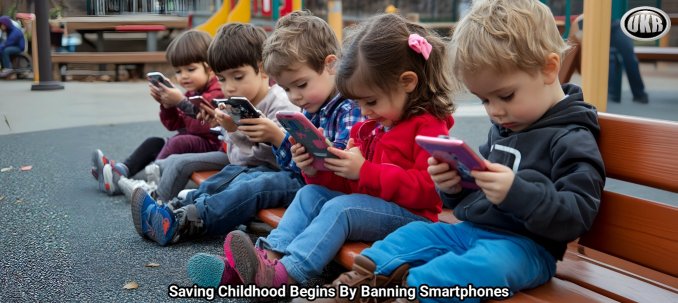
More and more studies show what parents have long suspected. Smartphones are damaging young people in ways we still barely grasp. They shorten attention spans and disrupt sleep. They heighten anxiety and drag children into a digital world they’re nowhere near mature enough to handle. Every year, more predators reach children through devices handed to them by well-meaning adults. The phone is modern parenting’s Trojan horse — attractive on the surface, ruinous once it’s welcomed in.
Actress and campaigner Sophie Winkelman has put it bluntly. She calls today’s online world a “horror film”, and she isn’t being melodramatic. In interviews, she describes teenagers navigating a landscape where judgment never ends, and classroom politics snap and crackle twenty-four hours a day. What used to be private adolescent angst is now a broadcast event. What used to be a stupid mistake is now a digital tattoo. Winkelman’s warning is powerful because it comes from a mother watching the insanity in real time. “It’s a different planet,” she says, and she’s spot on. The coordinates have shifted under our feet. The world our kids are growing up in is nothing like the one we knew.
Governments are finally waking up, though in the usual clumsy, slow-motion way. Australia recently banned social media for young teens, a step now being echoed elsewhere. France is openly weighing a similar restriction, while the UK’s terrorism watchdog has gone further, calling for a ban on social media use for under-16s on national security grounds. The impulse is understandable. The damage is no longer abstract. But the execution remains detached from reality. Australia’s ban, which I argued from the outset was doomed, rests on a fantasy of enforcement. Teenagers aren’t intimidated by digital barriers. Many already possess the technical instincts of Rusian cyber operatives. They will download VPNs, as millions already do, and step around the rule without breaking stride. What we are seeing is not a lack of concern from governments, but a lack of seriousness.
Banning social media alone is pointless, and it’s why the classroom phone bans already adopted in several countries barely scratch the surface. The real problem isn’t only what happens during school hours, but what happens in bedrooms, on buses, after midnight, and in the moments when no adult is watching. The only measure that would actually work is the one no government has yet dared to attempt: an outright ban on smartphones for anyone under sixteen. No endless committees. No half-steps. No timid talk about “balance” or “digital literacy”. A basic dumb phone is more than enough for safety and communication. A supercomputer in a child’s pocket is not.
Treat it like alcohol. Treat it like cigarettes. Treat it like any addictive substance that reshapes the brain. The comparison isn’t dramatic. When an object rewires the prefrontal cortex, drives compulsive behaviour, spikes dopamine, distorts self-worth, and exposes children to risk, it belongs in the same regulatory category as anything else that can maim or poison.
Critics insist this sounds authoritarian. But what, exactly, is the alternative? To keep doing what we’re doing? To let another generation grow up half-alive, permanently plugged in, socially stunted, and spiritually anaesthetised? Look around. The harm isn’t hypothetical. It’s happening right now.
We now have twelve-year-olds with burnout. Ten-year-olds with panic disorders. Teenagers who struggle to hold a conversation without glancing at a glowing rectangle every eight seconds. Children who experience reality through a lens and themselves through a filter. Human beings who can’t cope with boredom, silence, solitude, or stillness — the very ingredients that create imagination.
The objection that phone bans are “too extreme” would carry weight if the status quo weren’t already extreme. When classrooms fall apart because WhatsApp wars erupt between pupils; when online mobs form in minutes; when abuse circulates among minors with the speed of a sneeze; when predators glide through gaming platforms like sharks in shallow water — what is “moderation” supposed to mean?
Only the most naive or the most disingenuous could argue that children will grow sturdier as AI becomes more embedded in their lives. We already ask young minds to compete with algorithms engineered to hijack attention and maximise addiction. Now, we are adding AI companions, personalised content funnels, and hyper-targeted psychological manipulation into the mix. Does anyone seriously believe children will emerge more grounded, more resilient, or remotely well-balanced?
We can’t pretend we don’t see where this leads. When a six-year-old is consuming the most graphic pornography imaginable regularly, we have a duty to act. Sophie Winkelman is right. We’ve let a kind of everyday horror take hold, and it now shapes the soundtrack of modern childhood.
Parents sigh and say, “What can we do?” But the answer is staring us in the face. The most effective protections are often the simplest ones. Remove the device. Remove the dopamine slot machine. Remove the portal that delivers strangers into your child’s pocket. The dumb phone, mocked by some as primitive, might be the most humane technology we still possess.
Politicians fear backlash from Big Tech. They fear accusations of overreach. But what they should fear far more is the cost of another decade of digital childhood.
A society that can’t protect its young is a society mid-collapse. A culture that hands devices built for addiction to children who still need help crossing the street has already lost the plot. The smartphone is more than a tool. It’s an accelerant — of anxiety, isolation, self-harm, and predation.
A ban may never come, but it should. Children deserve a world where their minds can rest. A world where their sense of self can grow without constant comparison, and where their inner lives can stretch beyond the algorithm’s reach.
See Related Article Below
Against the social-media ban for under 16s
Claire Fox spoke in the House of Lords about the rush to clamp down, the very mixed evidence that a ban would protect children and the impacts of a ban on adults’ civil liberties.
CLAIRE FOX
On Wednesday evening, the House of Lords voted heavily to ban under 16-year-olds from accessing user-to-user social media platforms. This drastic measure was added very late in the day to the Children’s Wellbeing and Schools Bill, after a rapid if intense – even histrionic – campaign led by Tory Lord Nash and supported by three other peers from different parts of the political spectrum: Labour’s Baroness (Luciana) Berger, cross bencher Baroness (Hilary) Cass and the Lib Dem’s Baroness (Floella) Benjamin.
This is a popular issue. For three hours, the contributions became more and more OTT, with social media blamed for every conceivable ill. There was little balance and, despite the word evidence being used throughout, actually far more advocacy and assertion than facts or evidential findings. A similar (although more limited) ban has just become law in Australia. Why not wait and see how it goes there? No, we MUST act NOW or else there will be CATASTROPHE!
The demands for urgent action at all costs, and regardless of the bigger picture, created a mood of No Debate. I wasn’t having that, of course, but it was quite nerve-wracking when I broke the consensual love-in. When I argued against, there were many groans and much eye-rolling. How dare I defy this fait accompli? I ended up voting against alongside a few independent-minded peers such as Baroness (Kate) Hoey, (and therefore voting with Labour!), but the amendment won convincingly.
One reason for this: Kemi Badenoch decided (only recently) that this was THE popular issue to champion, so there was a three-line whip on Conservative peers. Labour’s only objection seems to be the need for a consultation, but have conceded – under pressure from their own back-bench MPs – that some sort of a ban will be necessary soon. The Lib Dems have qualms, but voted for a ban regardless.
Let me tell you, when parliamentarians declare a consensus and that ‘Something must be done for the sake of the children’, it is always worth pausing. Here is a written transcript of my speech and the film of my speech is above. Let us know what you think.
Claire
My Lords, once upon a time, in a previous moral panic about children’s safety, parents reacted to the media and politicians catastrophising by stopping their offspring playing outside unsupervised. The unintended consequence was the creation of what became known as ‘cotton-wool kids’, prone to risk aversion, anxiety, lack of resilience and social isolation. Ironically, to compensate, many of those children were forced to cultivate their activities online. Their social interactions became virtual, and here we are.
I worry that we risk similar unintended consequences now if we rush to pass a social-media ban for under-16s, so I will be opposing Amendment 94A. I know it has become normalised that, whatever social, cultural or moral panics we encounter, we believe that we can legislate to make them go away. I fear that this sort of lawmaking can lead to avoiding tackling difficult problems and to attempts at quick-fix solutions that too often create a whole new raft of difficulties down the line.
I noticed that the noble Lord, Lord Nash, blamed social media for eating disorders, radicalisation, terrorism, the mental-health epidemic, ADHD, poor behaviour in the classroom, misogyny, violence against women and girls, and on and on. At this rate, all that Parliament would have to do is ban the internet for everyone and all problems would be solved. There is a danger of looking for easy answers and scapegoating social media for all society’s ills.
I worry about attempts to push this through too quickly or to fast-track it. It is interesting that the three-week fast-track consultation put forward by the government minister in the other place [The House of Commons] has been discussed as though it is holding things back. The leader of the opposition, Kemi Badenoch, calls it more ‘dither and delay’. But this proposal is new; it has only just arrived here late in the day, at Report stage, despite the fact that it’s an amendment that would fundamentally change every citizen’s relationship with social media, not just children’s.
I worry about attempts at steamrolling it through, with an assumption that everyone agrees; it is so obvious and inevitable that there is no point opposing it. I am therefore grateful to the Liberal Democrats and the noble Lord, Lord Mohammed of Tinsley, for an attempt at proportionality, even though I do not think it goes far enough.
We are hectored that this is what parents want. Yet there has not been a referendum of all parents, even if there are polls. It is true that many parents are pulling their hair out and will be tempted by a ban. It is so much easier to say, ‘You can’t because it’s against the law’, than it is to assert adult authority.
Teenagers’ and children’s pester power can be the bane of all our lives. If only the law could be extended to ban other things and make them illegal. No, you cannot wear that hoodie; no, you cannot spend hours gaming; no, you cannot go to that sleepover; no, you cannot gorge on junk food; no, you cannot go to that party. It’s against the law!
In truth, this approach encourages parents to outsource their authority and shifts responsibility from parents to the state. All families ultimately are being told that they are incapable of managing their children’s habits, and that is itself a dangerous precedent. It can disarm parents in the name of empowerment. Is there really a consensus among parents on this? Many of my friends are split down the middle, so I do not think we can claim the evidence is in.
What about the incontrovertible scientific evidence that backs a ban that we keep hearing about? The jury is out. The causal relationship between social media and mental well-being in teens and young people is much more contested than has been implied. Recent extensive research by academics at Manchester University found no evidence that social media has increased teenagers’ symptoms of anxiety or depression. The chair of the National Suicide Prevention Strategy Advisory Group, Professor Louis Appleby, points out that the evidence is, at best, circumstantial, noting that self-harming in the young began well before social media took hold in that age group. That reflects what I know from my own work in relation to mental ill-health and young people; I do not think it can totally be blamed on social media.
An Oxford University study of nearly 12,000 children showed no correlation between screen time, including social media, and mental health. Instead, the way in which children engage with social media is what determines its impact and – shock horror – in many instances, evidence shows the positive impact of social-media use. The noble Lord, Lord Bethell, said that no more research is needed. That is anti-scientific and complacent, and I do not think it is true.
Let us be clear about what this amendment as drafted would do in relation to user services. The noble Lord, Lord Knight, pointed out the dangers to, for example, WhatsApp, websites such as Wikipedia, and so on. That needs clarifying at the very least.
Despite histrionic headlines, social media can be used for self-educational ends. There is a new generation of autodidacts who are teaching themselves coding, video producing, editing and even musical instruments, languages and chess. I know that sounds rose-tinted and a bit glib, but social media often is a tool for connections – finding your tribe, making new friends – and a place where you can cultivate solidarity and autonomy as a young person. It can be a counter to the social trend towards fragmentation.
What about allowing the young to explore diverse political perspectives? On the eve of 16-year-olds being given the vote, surely it is important, if not essential, that we do not narrowly restrict soon-to-vote teens to state-sanctioned media channels. We want them to broaden their horizons, and explore and develop a democratic curiosity about the world, and they are going to do that online.
When talking to school pupils, as I do often, I recommend that they find out about their peers around the world as part of them learning about international relations. What civic lessons might British children learn by looking at those brave protesters in Iran, whose commitment to freedom has given them the courage to take on a theocratic Islamic regime and whose stories we know because they used social media to organise and to connect with each other and the rest of the world? That was, of course, before the ayatollah shut down the internet. Oh, the irony.
As for safety and whether this ban will throw children off a cliff edge, it risks not equipping youth with the skills to safely and responsibly navigate the online world, to know how to identify problems, spot dodgy red flags and apply strategies to deal with them. As the noble Lord, Lord Mohammed of Tinsley, pointed out, in all likelihood, many pre-16-year-olds will find ways of migrating to even riskier unregulated platforms or the dark web without guardrails and zero moderation. Our teenagers and children are clever and, dare I say it, devious. They will find a way. They will use VPNs – but it is okay, because noble Lords are going to ban those too. I hear that there is already a roaring trade in fake IDs among pre-teens.
Finally, how will over 16-year-old adults be affected by this ban? Whereas the Online Safety Act age-gated only certain types of harmful content, Amendment 94A would age-gate entire platforms, even when the content is child-friendly or harmless. According to Big Brother Watch, a 70-year-old accessing the neighbourhood news, a 50-year-old looking up the history of golf on Wikipedia, a 30-year-old small-business owner responding to customers on Instagram and a 17-year-old wanting to message parents on the way home from school would all require age-verification measures.
That is the threat to adult civil liberties and the right to privacy and, in effect, it means that we will have to digitally verify to participate in the public square. I do not necessarily think that young people will gain from this, despite the hyperbole.
This article (Against the social-media ban for under 16s) was created and published by Claire Fox and is republished here under “Fair Use”


This article (SAVING CHILDHOOD BEGINS BY BANNING SMARTPHONES) was created and published by Courage Media and is republished here under “Fair Use” with attribution to the author John Mac Ghlionn