

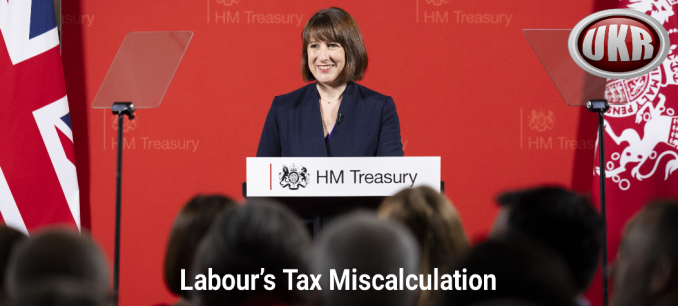

(Photograph: Kirsty O’Connor / Treasury, OGL 3 <http://www.nationalarchives.gov.uk/doc/open-government-licence/version/3>, via Wikimedia Commons)
ALASTAIR MACMILLAN
You cannot help the poor by destroying the rich, you cannot strengthen the week by weakening the strong. You cannot bring about prosperity by discouraging thrift. You cannot lift the wage earner by pulling the wage payer down…. (Abraham Lincoln)
Money was created as a means of exchange, and as humankind’s social structures have evolved, so the use of money as a means of exchange and measure of value has grown and developed.
Nowadays we quantify the output of individuals, businesses and whole countries by using money as the measure. To live life requires us to have money: from simply paying for the clothes we wear to the food we eat and drink, and the roof over our heads. A substantial proportion of humans hope to be more comfortable in the future, to be able to afford a holiday, a better car, a house with a bit more space, or simply to be able to accumulate the funds to repair the roof. To do this we sell our labour and time, and hope that we can find something that we also get some satisfaction or enjoyment from doing.
Over the years we have delegated to the State, sometimes voluntarily sometimes not, things that we would either have had to do ourselves or at least pay for; such as care of the sick, law and order, health, defence, education, and for this we pay a proportion of our income in taxation.
The problem we have is that it is extremely easy, for those in power, to spend other people’s money and find ways to justify it. In addition, all the incentives in the public sector encourage the maximisation of budgets as senior civil servants and politicians love to be able to show off the number of people their department employs, what their budget is, and all the wonderful things they do with it. The problem is that there comes a point where the taxpayer has had enough and can’t really see why he should bother being a tax slave any longer; that point was reached in the UK some time ago. However, our politicians refuse to get the message, and instead think they can keep cranking at the rack of taxation.
Last week we had the long awaited Budget from the Labour government that was meant to be designed to encourage growth. It will achieve the exact opposite, because it disincentivises anybody working in the private sector – the part of the economy upon which the entire public sector relies on for its very existence. The net cost of the public sector after receipt of taxes levied on those that work in it is borne entirely by the wealth generating, capital accumulative private sector. It is therefore vital that the private sector grows and the financial incentives encourage it to grow and develop. I am spelling this out because it appears to have been forgotten by our leaders, as most changes made over the last few years seem to have been designed to discourage the taking of risk and generation of profit.
Small businesses employing less than 50 people account for 5.1million out of the 5.6 million active firms. Many of these are family owned, and there the ambition lies to build a business for a better future and accumulate capital to pass on. Applying Inheritance Tax is therefore a massive disincentive. We may be told that it is only 20%, but this is cash that has to be extracted from either the rest of the estate or the beneficiaries. Most business owners are capital rich but cash poor, having ploughed everything back into their business. A relatively small business may be worth £2 million with a tax rate of 20% over £1m, would mean tax due of £200,000. I understand that heirs will have ten years to pay it, while interest accumulates at the rate of 9.5%. Pay for it out of taxed income on top of all the other things that they might have to worry about. One way or another, passing your family business to the next generation is passing on a millstone, and so perhaps one should sell out and leave them free to do their own thing.
You and your family may have taken an idea and turned it into a successful business, but when you come to sell it as the capital gain will be probably approaching 100%, you will be liable for Capital Gains Tax. If the gain in your share value is over £1 million then you will face a rate of 18%; if you have EIS or VCT shareholders they won’t be, and nor will your employees if you have generously given them share options. However, you who may have remortgaged your house to raise the initial capital, may have worked for years for almost nothing whilst you got it going will have to cough up.
One has to remember that the mindset of an entrepreneur is that they want to get on without interference, and whilst you might say that these levies doesn’t seem too big it is more that they are yet more obstacles being thrown in the way. Another common aspiration of entrepreneurs is to be able to afford to put their children or grandchildren through independent education, and here again Labour seems intent on making the UK even more unattractive, through their application of VAT on independent school fees, to set up a business. It is all about the reward being worth the risk, and a desire from those prepared to take the risk to be given the freedom to get on with it, and to be able to benefit from the fruits of their ideas and labour.
Not only have the disincentives to growth been felt by the business owner through CGT and IHT changes, but also through changes to employer’s NI, the UK’s tax on jobs. In increasing this from 13.8% to 15% and reducing the threshold at which it becomes payable, the Chancellor is looking to extract substantially more from business than would otherwise be spent within the business, making it more expensive to increase wages. Reducing the threshold from £9100 to £5000 alone means an increase in tax to the Government of £615.00 for every employee (before one takes into account the extra 1.2% levied on the salary paid above £9000), which equates to another £120 for every £10,000 of salary.
These costs have to come out of the profit margin and can only be mitigated by doing more with less, through improved productivity, a reduction in headcount, or shorter hours – all of which have a detrimental effect on growth. I can’t see how it won’t lead to a further compression of wages, at the lower end we have a minimum wage increased by diktat rather than market forces. This now means that an adult working a 42.5 hour week will be paid just under £27,500 which is not far away from a typical graduate’s starting salary.
This is far from the only disincentive within the income tax system, but is just the latest – and means that every additional £1.00 spent in paying an employee will only give them 63p if a basic rate tax payer, a higher rate one earning less than £100,000 will only get 50p of every Pound of the pay rise, the rest going to the government. This already completely blunts the incentive of higher pay and between £100,000 and £125,000 the amount the employee will receive for every extra £1.00 spent in higher pay is only 33p. In other words 67p of the extra £1.00 the employer spends goes straight to the government – what is the point of bothering?
I believe that our lack of growth can be traced back to Gordon Brown’s policy of removing the personal allowance from those earning over £100.000. It sent out a message that aspiration was to be punished.
I am afraid that we are never going to get out of our stagnant economic malaise until we as a people get serious, and realise that we have to cut public expenditure substantially whilst reducing taxes on the private sector. Growth has to come first before more public spending, and growth will only happen when the reward is such that it is worth entrepreneurs taking the risk.
As I watch my own children and those of my friends leaving these shores to live and work, making Britain once again an attractive place to start and run a small business becomes ever more urgent. Without a reversal of the recent changes and many of those enacted by previous governments, we as a nation are dooming ourselves to longterm impoverishment and decline.
Alastair MacMillan runs White House Products Ltd, a manufacturer, distributor and exporter of hydraulic components to over 100 countries. He is a supporter of the Jobs Foundation.
This article (Labour’s Tax Miscalculation) was created and published by The New Conservative and is republished here under “Fair Use” with attribution to the author Tom Armstrong

••••
The Liberty Beacon Project is now expanding at a near exponential rate, and for this we are grateful and excited! But we must also be practical. For 7 years we have not asked for any donations, and have built this project with our own funds as we grew. We are now experiencing ever increasing growing pains due to the large number of websites and projects we represent. So we have just installed donation buttons on our websites and ask that you consider this when you visit them. Nothing is too small. We thank you for all your support and your considerations … (TLB)
••••
Comment Policy: As a privately owned web site, we reserve the right to remove comments that contain spam, advertising, vulgarity, threats of violence, racism, or personal/abusive attacks on other users. This also applies to trolling, the use of more than one alias, or just intentional mischief. Enforcement of this policy is at the discretion of this websites administrators. Repeat offenders may be blocked or permanently banned without prior warning.
••••
Disclaimer: TLB websites contain copyrighted material the use of which has not always been specifically authorized by the copyright owner. We are making such material available to our readers under the provisions of “fair use” in an effort to advance a better understanding of political, health, economic and social issues. The material on this site is distributed without profit to those who have expressed a prior interest in receiving it for research and educational purposes. If you wish to use copyrighted material for purposes other than “fair use” you must request permission from the copyright owner.
••••
Disclaimer: The information and opinions shared are for informational purposes only including, but not limited to, text, graphics, images and other material are not intended as medical advice or instruction. Nothing mentioned is intended to be a substitute for professional medical advice, diagnosis or treatment.


Leave a Reply