

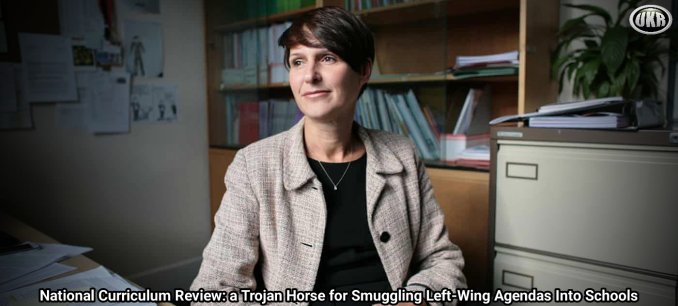
AMANDA SPIELMAN
Finally, the Curriculum and Assessment Review is out. The general take from the sector seems to be that it is much better than feared – clearly many people want to lock down the wins and avoid leaving too much open for debate. But there are negatives as well as positives, and above all a great deal of uncertainty about what will materialise when the subject and qualification review work is done.
To start with the wins. The principle of “a knowledge-rich approach, ensuring skills are developed in conjunction with knowledge in ways that are appropriate for each subject discipline” is explicitly stated. The curriculum should be constructed to help children master core concepts, build knowledge and deepen understanding. Curriculum coherence should be an organising principle and inform the selection and prioritisation of content. This is good, and a relief to many heads and teachers, though the “in conjunction with” wording is a trifle blurry.
Similarly the review is robust on assessment, recognising all the problems with using non-exam forms of assessment for high stakes tests. It does not suggest switching to coursework models, which history shows simply cannot withstand the poor incentives they create for both individuals and schools, and which would be even riskier in a world where almost every pupil can make use of AI.
The recommendation that all schools should offer triple science is also positive, though putting it into practice won’t necessarily be straightforward. Nevertheless, I doubt this will lead to a big shift from double to triple science.
The recommendation about a national curriculum for RE is controversial but in my view a positive one. In a multi-faith society, learning about other religions as well as one’s own matters a lot, so I don’t agree with those who would like to see RE removed from schools. Nevertheless, the current locally agreed curricula are very variable in quality and in some places have fallen under the influence of people who I would not want to see controlling aspects of any child’s education. This change will need careful navigation by government, and I hope it takes the challenge seriously.
Real thought has gone into lower achievers post-16 – in particular the idea of stepped qualifications for low achievers could be a good one, to create a framework for progression and make sure that even quite modest achievements get certification with labour market value.
A final big positive lies in what is not in the report. There are no panegyrics to learning styles or generic critical thinking – many of the misconceptions that have wrought havoc in education in the past, here and elsewhere, have rightly been given no quarter. The sections on media literacy do at least acknowledge that domain knowledge is essential to identifying misinformation, though I think the review is over-optimistic about schools’ ability to compensate for the influence of social media-disseminated content. In too many schools teaching will run along the lines of “trust the Guardian or the BBC but don’t trust the evil right-wing Telegraph”.
Similarly the language of decolonisation or anti-racism or gender identity doesn’t feature, though the politically controversial notion of ‘climate justice’ does get a look in. Overall, well done to the review group for not overtly embracing these highly politicised agendas.
But there are clear losses too.
One of the most obvious is the recommendation to allow languages to be abandoned in state schools post-14. This is disguised as a recommendation to remove the English Baccalaureate performance measure, long unpopular with schools because it did exert a push to have a proportion of pupils take a language GCSE as well as one of history or geography. It was always a certainty that this concession would be made – current ministers clearly want to give the sector what it wants as far as possible.
While the principle of a knowledge-rich curriculum is retained, the principles for selecting content are very different. The principle of ‘the best that has been thought and said’ is abandoned in favour of the fluffier “an aspirational, engaging and demanding offer that reflects the high expectations and excellence our young people deserve, irrespective of background”. Among other things, this opens the door to ‘relevance’ as a selection principle – please, let’s not have schools building curriculum around (say) football ‘because that’s what black boys find engaging’.
Alongside this sits the statement that the National Curriculum “should reflect our diverse society and the contributions of people of all backgrounds to our knowledge and culture” and a recommendation that “every subject’s curriculum and GCSE content should be updated to include stronger representation of the diversity that makes up our modern society”. This kind of shoehorning will clearly create distortions and problems.
There’s a strong signal of reduction in demand in maths and science: “When updating the maths and science GCSEs, subject experts [should] evaluate each formula and equation to determine whether students should be required to memorise and recall it or whether assessment should focus on their ability to apply it when provided.” This recommendation ignores the relentless accumulation of conceptual knowledge in maths and science. At the margin, there isn’t much loss of demand in being able to look up the formula for the most recently taught scientific law. But if you have to look up five different formulae to tackle a further-maths calculus problem, because you have relied on formula reference sheets all the way through school, your progress will be slow and painful. It would have been good to see the review take a stronger line – that it is good and ultimately rewarding for children to learn hard stuff, and that we do them no favours by assuming that they won’t be able to cope with what their counterparts elsewhere are busy learning.
The recommendation about cutting exam time is also poor. Exams are designed to be only as long as needed to assess the subject matter as reliably as is needed, not as puritanical endurance challenges. Forcing Ofqual to remove an arbitrary 10% could have the opposite of the intended effect. Reduced exams will necessarily sample less of the syllabus, so there will be more uncertainty about how likely you are to encounter your strongest (or weakest) topics, potentially leading to higher anxiety. Slightly shorter exams will do little if anything to shorten the over-long exam period which leaves 16 (and 18) year-olds sitting around worrying for far too long. Reduced exams will also inevitably make grades slightly less good indicators of a students true level of performance, and the sector will seize on and attack Ofqual relentlessly for this.
Lastly, this review document does leave an enormous amount resting on the shoulders of the subject groups that take these recommendations forward. The recommendations by subject are oddly variable: some are clear, objective and focused (e.g. Art and Design), while others are blurry and tantamount to a Trojan horse for a total curriculum rewrite, contrary to the overall recommendations (e.g. Design & Technology). Some of the overarching recommendations will be hard to reconcile with each other and with the subject recommendations. Watch this space.
Baroness Spielman was Chief Inspector of Education and head of Ofsted from 2017 to 2023. She is a Conservative member of the House of Lords.
This article (Labour’s National Curriculum Review Risks Being a Trojan Horse for Smuggling Left-Wing Agendas Into Schools) was created and published by The Daily Sceptic and is republished here under “Fair Use” with attribution to the author Amanda Spielman


Leave a Reply