


.
JACK WATSON
As a teenager who has just finished school, I don’t yet pay tax, rent, or utility bills, nor do I have a regular income. But I am acutely aware that the country I am growing up in is deteriorating day by day. Our ineffective and dishonest Labour government is rapidly running the United Kingdom into the ground. And yet, I have no say in it—I can’t even vote. I am legally permitted to learn to drive and even raise a family—responsibilities far greater than placing a cross on a ballot paper. I will be able to vote in a couple of years, but like many others, I fear that by then it may no longer matter.
In 2024 people voted for change. The Tories, after their 14-year tenure, had run out of steam. On 4 July 2024, Keir Starmer’s Labour Party was elected to government. They promised to support working people, pensioners, children and the poor. The economy was going to ‘boom’, NHS waiting lists were going to come down, the level of illegal immigration was going to be cut, and public spending was going to be effective. Their words, not mine.
They had a reasonably good first few months in office. But after a year the country is now in a worse state than when they took over. Inflation has risen by 3.4% and prices are rising (a bar of chocolate is at its highest price ever), despite their aim of keeping it below 2%. Taxes are going to soar with the new budget set out by Rachel (Thieving) Reeves, £13 billion is going overseas to countries, many of which squander it.
The absurd Chagos Island giveaway is going to cost £101 million a year to lease them back. Inevitably, the British people are feeling the pinch. Very little of their money is being invested in the country. In my own hometown Hull, for example, there is abundant run-down infrastructure and potholes in the roads.
The NHS continues to deteriorate. In their manifesto, Labour planned to provide the country with an extra 40,000 operations, cancer scans and appointments—an estimated two million a year— with the return of the family doctor, by introducing more weekend services, employing more staff, investing more money and involving the private sector, which all could reduce waiting lists. We are still waiting. As of early 2025, the NHS waiting list has reached 6.2 million patients. Over 3.1 million people have waited more than 18 weeks for treatment, and nearly 250,000 have been waiting over a year. This is above the pre-COVID level.
Illegal immigration was going to be controlled and the people smuggling gangs were going to be ‘smashed’. Why then, from year to date, have over 16,000 migrants crossed the English border, which is 42% more than the same period last year? These migrants are illegal, but what is their punishment? They get to stay, often in hotels paid by the British taxpayer and, in some instances, enjoy freebies such as shopping vouchers, sports passes and TV licences.
We have illegal immigrants committing heinous crimes in this country. For example, a Pakistani paedophile and migrant attacked a teenage girl shortly after he was released from prison for committing sexual offences. Despite the Home Office filing a deportation order, and because we are still signatories to the European Convention on Human Rights, he successfully appealed his case because he suffered from alcoholism. Like many similar cases, he remains in the country.
It is not just illegal migrants who commit crimes, legal immigrants play their part too. Consider the recent grooming gangs’ scandal. More openly talked about recently, delays have often spanned 5 to 15 years between the start of abuse and serious legal action. These delays were caused by institutional neglect, disbelief of victims, fears around accusations of racism, and a lack of coordination between police and social services. Many of the perpetrators were British citizens, either born in the UK or legally settled there, often second- or third-generation immigrants. The victims, some of whom were very young at the time of the abuse, have been badly let down. The Labour party were not going to investigate the case when they first assumed office. But after facing criticism, they made a U-turn, which leads nicely to the next topic.
The Winter Fuel Allowance was originally taken from pensioners, which would have seen many older people struggle to keep warm during the coldest parts of the year. This prompted a deserved backlash and after a few months of hanging their heads in shame, it was eventually reinstated. But the thought of taking money from pensioners is egregious. Then came the Two-Child Benefit Cap. Starmer was determined to keep the cap, which would see families with more than two children not receive benefits for the rest of their brood. Again, this completely contradicted Labour’s manifesto plan to help children. Starmer received a pep talk from one of his aides and after Scotland lifted it, he has now not ruled out scrapping it.
The catalogue of lies and incompetence grows. It is evident Labour have broken their promises. When challenged, the only excuse they have is blaming the previous government alongside the fictional £22 billion black hole. The public are making their feelings clear. They are running out of patience and the government is running out of time.
In the recent local elections, the Labour Party came fourth in the polls, losing hundreds of seats. Reform UK won 677 seats overall, putting them in first place. It is evident Labour is concerned, as they are now prioritising challenging Reform – the real opposition in all but name. They are the only party which seems determined to prioritise the British people.
The British people voted for change—but what they received was more of the same: broken promises; spiralling costs, and worsening public services. Labour’s excuses are wearing thin, and their credibility is evaporating. With every U-turn and failure, the public grows more disillusioned and more determined to find real leadership. If Labour cannot deliver for the nation, they should step aside for those who can. The people deserve better.
Jack Watson has a Substack newsletter called Ten Foot Tigers about being a Hull City fan. You can subscribe here.
If you enjoy The New Conservative and would like to support our work, please consider buying us a coffee or sharing this piece with your friends – it would really help to keep us going. Thank you!
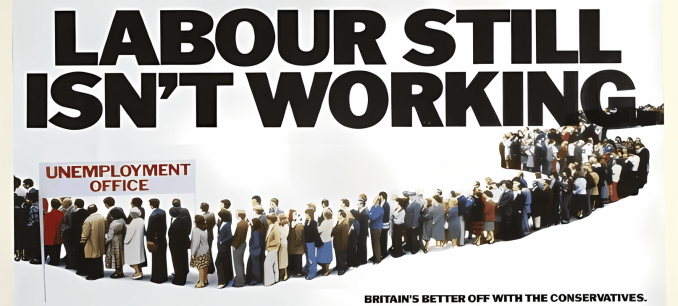
This article (Labour Still Isn’t Working) was created and published by The New Conservative and is republished here under “Fair Use” with attribution to the author Jack Watson
See Related Article Below
Britain is turning into a Third World country
One of the best aspects of our nation is social capital. But it is ebbing away, and the state is struggling to protect us from crime
It was little things that made me fall in love with Britain. You didn’t have to count your change in shops. You almost never saw private security guards. You could drink from the tap. You could flick a switch and the light would actually come on.
You could get into a taxi, confident, not only that you wouldn’t be mugged, but that you’d be driven by the shortest route and charged the correct fare. If you stopped at a red light, you would not have every car behind you hooting in fury. You could send valuables by post.
Arriving as a seven-year-old from Peru, I felt a glow of wonder at these things that, even now, has not entirely left me. I thought then, and I still think, that people who have grown up in this country are unconscionably blasé about what made it special.
Only much later did I find a phrase to explain what differentiated Britain, not just from Peru, but from most places. That phrase was “social capital”. Because Britain was a high-trust society, everyday transactions were frictionless. The cost of doing business was low, because neither side had to take expensive precautions against fraud. Social capital gave Brits a sense of patriotism and responsibility. They accepted election results when their party lost, obeyed laws with which they disagreed, paid their taxes grumblingly but honestly.
That, at least, was how it used to work – to the wonder of foreign visitors throughout the 19th and 20th centuries. But our social capital is flooding away.
We see it in lots of ways. Take the epidemic of shoplifting. Last year, retailers logged 20.4 million incidents of theft, an increase of 3.7 million on 2023. Or look at our filthy streets. The touristy parts of central London manage to pick up most of the debris, but every other part of the capital is grubbier than before lockdown, with fast-food wrappings and cartons blowing about forlornly.
The Government’s response is to ban single-use vapes. Now vapes do contribute to the detritus, but that reaction is a classic example of politicians tackling a side-issue because they can’t bring themselves to face the main one – rather as they responded to the Manchester Arena bombing, not by cracking down on the immigration loopholes that had let the Abedis into Britain, but by requiring staff at small venues to do anti-terrorism training.
The problem is not that vapes are messy, it is that people no longer care how their streets look. Why this has happened – largely over the past five years – is an underexplored question.
Have we imported a new population from countries where dropping litter is normal? Is it a consequence of fewer people being in offices, either because they have discovered invalidity benefits or because they are pretending to work from home? Or was it the lockdown itself? Did being cut off from human contact, raptly scrolling through online conspiracy theories, push a generation into anomie?
We should be asking the same questions about stealing from shops, which now costs retailers (or, rather, non-shoplifting customers) £2 billion a year. The thing that used to hold most people back from shoplifting was not fear of criminal sanction – few are caught, fewer detained and almost none prosecuted – so much as a feeling that it was unacceptable. That feeling, like so many things, was vitiated by the pandemic. At the same time, mass immigration dilutes the homogeneity on which high-trust societies depend.
When a nation’s character alters, the enforcement of its laws shifts before the laws themselves. In theory, we still have statutes against theft. In practice, the police are less interested in enforcing them than in going after people with unfashionable views.
It is unthinkable that someone like Lucy Connolly, jailed for an intemperate post, would be in prison had she nicked stuff from M&S – not even had she been caught a dozen times before. Coppers are ceasing to be citizens in uniform and becoming enforcers of state ideology. The task of protecting property thus falls to everyone else. It is in this way that we are most visibly becoming a low-trust society, reminiscent of the poorer parts of Latin America or Africa.
The rich are retreating into gated communities, hiring security firms, posting sentries (these are especially obvious outside synagogues, which have felt unprotected since anti-Israel protesters were allowed to behave menacingly at their doors while the police looked on). Walls are springing up – including a hideous new fence around Parliament.
In my native Lima, big houses had uniformed watchmen (Latin American Spanish is full of delicious English loanwords, and a security guard is known as a “guachimán”). How long before London goes the same way?
For those who cannot afford their own guachimanes, there is always do-it-yourself enforcement. A news item about a couple who traced their stolen Jaguar through its airtag and stole it back has unleashed an online flood of similar recollections. Always the same story: a car stolen, owners calling police to beg them to intercept it before the thieves found the airtag, the police sitting on their hands, the owners acting themselves.
Private citizens are plugging the gaps left by our crumbling state apparatus. A group of volunteers has been washing graffiti from Tube trains – prompting the extraordinary response that they should have left it to the experts as they might be using the wrong cleaning fluids.
Robert Jenrick, the tireless shadow justice secretary, spent a morning personally confronting fare dodgers, asking them on camera why they felt they should not pay like everyone else. The numpties at Transport for London, sensing that they were being shown up, complained that he had not sought their permission to film on their property.
I happen to believe that lots of things that are badly done by the state could be better done by private individuals. I don’t understand why the Government needs to own and operate London Underground, and there is a strand of libertarian thought that holds that most of the functions of the police should indeed be hived off to private firms.
But we are a million miles away from libertarianism. We have the highest taxes since the 1940s, we have more than tripled the national debt since the turn of the century and we are passing pettifogging laws on everything from the regulation of football to what employers must do to prevent their staff from overhearing the wrong things in the workplace.
It is in this sense that we are most authentically becoming like a developing nation. A Government that aspires to do things that are none of its business simultaneously fails in its core responsibilities – above all, in its duty to provide a functioning justice system that protects property.
The Telegraph: continue reading

••••
The Liberty Beacon Project is now expanding at a near exponential rate, and for this we are grateful and excited! But we must also be practical. For 7 years we have not asked for any donations, and have built this project with our own funds as we grew. We are now experiencing ever increasing growing pains due to the large number of websites and projects we represent. So we have just installed donation buttons on our websites and ask that you consider this when you visit them. Nothing is too small. We thank you for all your support and your considerations … (TLB)
••••
Comment Policy: As a privately owned web site, we reserve the right to remove comments that contain spam, advertising, vulgarity, threats of violence, racism, or personal/abusive attacks on other users. This also applies to trolling, the use of more than one alias, or just intentional mischief. Enforcement of this policy is at the discretion of this websites administrators. Repeat offenders may be blocked or permanently banned without prior warning.
••••
Disclaimer: TLB websites contain copyrighted material the use of which has not always been specifically authorized by the copyright owner. We are making such material available to our readers under the provisions of “fair use” in an effort to advance a better understanding of political, health, economic and social issues. The material on this site is distributed without profit to those who have expressed a prior interest in receiving it for research and educational purposes. If you wish to use copyrighted material for purposes other than “fair use” you must request permission from the copyright owner.
••••
Disclaimer: The information and opinions shared are for informational purposes only including, but not limited to, text, graphics, images and other material are not intended as medical advice or instruction. Nothing mentioned is intended to be a substitute for professional medical advice, diagnosis or treatment.
Disclaimer: The views and opinions expressed in this article are those of the author and do not necessarily reflect the official policy or position of The Liberty Beacon Project.


Leave a Reply