


DR. F. ANDREW WOLF, Jr
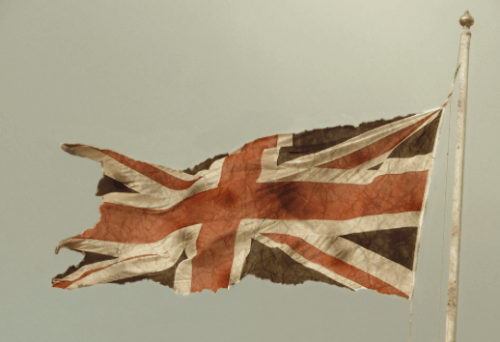 With improving relations between Russia and the US, one of the biggest losers politically will likely be Britain. As Russia and America engage, it seems Britain loses relevance.
This is how the Financial Times newspaper put it: “Pity the middle-sized nations of the world.”
The ongoing restructuring of the international order at one point seemed to create new opportunities for second-tier powers in global politics. Early on, some observers even speculated that the era of the “medium-sized opportunist” had arrived, as the world’s traditional giants – militarily, economically and politically – appeared sluggish and burdened by commitments. Countries like Britain were hailed as models of adaptability in this shifting environment.
But their relevance in geopolitical affairs – and certainly their long-term success – will require more than opportunistic responses, as the world’s major players (China, Russia, India, US) begin to engage in direct, meaningful dialogue once again. The latest phase of Russia-US relations began this year with several Putin-Trump phone calls and ultimately, the Alaskan Summit between the two leaders; the engagement created considerable unease amongst those (Britain and France) who have politically benefited from the years of confrontation between Moscow and Washington.
Observers quickly noted the contrast between two significant diplomatic events: The highly publicized Russian-American talks in Riyadh on ending the Ukraine conflict and the simultaneous Erdogan-Zelensky “summit” in Ankara. The timing made the difference in status between these engagements even starker. Ankara had hoped to play host to the Moscow-Washington discussions but instead had to settle for a meeting with the increasingly beleaguered Ukrainian leader.
For years, Türkiye’s leadership has leveraged a bold and assertive foreign policy to maintain influence.
However, President Recep Tayyip Erdogan may have miscalculated. A certain kind of political maneuvering works only under specific circumstances. When those circumstances change, the perceived power of a nation often reverts to match its actual capacity. The risk Türkiye faces is clear – what once looked like skillful balancing between NATO and the Global South now appears less like strategic insight and more like a desperate scramble to maintain relevance.
Britain Faces a Similar Dilemma
London finds itself at a crossroads. Successive British leaders have attempted to bolster their country’s geopolitical standing by taking aggressive initiatives, often pushing the boundaries of diplomatic decorum. Yet Britain lacks the military and political strength to act independently on the world stage, and its economy remains in a fragile state.
For years, the US enlisted Britain to play an active – if peripheral — role, sometimes giving the impression of independent policy-making. This suited Washington when it needed a loyal ally to carry out specific tasks while maintaining plausible deniability. Now, the mood in Washington is shifting, and the need for intermediaries has diminished. The latest realignments in transatlantic relations suggest that Britain’s influence is waning.
The UK is understood today, geopolitically, as a medium power. That’s not something for it to be ashamed of, but something, as a nation, it struggles to accept.
Britain must get real about its place in the world. The UK needs a more sober and trustworthy approach if it is to ‘reinvent’ its global role as a medium power ‘with extra clout’, writes John Kampfner.
The British press is already expressing alarm over this shift. While Germany and France may still find uses for Britain in specific instances, they will not follow its lead if the US is no longer inclined to do so. This raises uncomfortable questions about Britain’s role in the evolving global order and its diminishing ability to influence major geopolitical decisions – the Ukraine is a prime example – there is no “coalition of the willing,” irrespective of Starmer’s or Macron’s boisterous rhetoric.
The fluctuating fortunes of nations that once appeared to be the main beneficiaries of the crisis in relations between Russia and the West highlight a deeper truth – world politics is far more conservative than it may appear. Nations may adapt to changing circumstances, but stability, reputation and raw power matter more than opportunistic maneuvering.
A good reputation is built on multiple factors, but the most critical is a strong and confident position at home. A country that relies too heavily on playing the role of mediator or leveraging short-term diplomatic gains risks overestimating its importance. When the great powers decide to engage directly, as they are now, these intermediaries can quickly find themselves sidelined.
Britain provides a clear example of this phenomenon. It has spent years attempting to position itself as an indispensable actor in the shifting global landscape. But, as the contours of the new world order take shape, its ability to maintain this balancing act is diminishing.
Britain has lost its status as a major player on the international stage since Brexit, David Miliband has said. Writing in the Express, the former Labour MP warned of the UK’s waning influence in the aftermath of its split with the European Union, saying it is now just one of many “middle powers” in the world.
“We do not have the finance of Saudi Arabia, the EU anchor of France, the regional activism and risk appetite of Turkey or the demographic strength of India or Indonesia,” he said.
“Our wealth, military assets and reputation have all declined relative to others in the last decade.”
“We have an imperative to understand the realities of our power as it is today, and not as it used to be.”
The current recalibration of Russia-US relations is still in its early stages, and its full impact remains to be seen. One thing, however, is already clear: The period when medium-sized powers could exploit great-power rivalries to enhance their own status is coming to an end. As the global behemoths resume direct negotiations, those who thrived on chaos and confrontation may soon find themselves searching for a new — and quite diminished — role in an increasingly restructured global order.
*
Click the share button below to email/forward this article. Follow us on Instagram and X and subscribe to our Telegram Channel. Feel free to repost Global Research articles with proper attribution.
F. Andrew Wolf, Jr. is director of The Fulcrum Institute, a new organization of current and former scholars, which engages in research and commentary, focusing on political and cultural issues on both sides of the Atlantic. After service in the USAF (Lt.Col.-Intel) Dr. Wolf obtained a PhD-philosophy (Wales), MA-theology (Univ. S. Africa), MTh-philosophical theology (TCU-Brite Div.). He taught philosophy, humanities and theology in the US and S. Africa before retiring from university.
This article (Is Britain Losing Its Geopolitical Relevance?) was created and published by Global Research and is republished here under “Fair Use” with attribution to the author Dr. F. Andrew Wolf, Jr.

••••
The Liberty Beacon Project is now expanding at a near exponential rate, and for this we are grateful and excited! But we must also be practical. For 7 years we have not asked for any donations, and have built this project with our own funds as we grew. We are now experiencing ever increasing growing pains due to the large number of websites and projects we represent. So we have just installed donation buttons on our websites and ask that you consider this when you visit them. Nothing is too small. We thank you for all your support and your considerations … (TLB)
••••
Comment Policy: As a privately owned web site, we reserve the right to remove comments that contain spam, advertising, vulgarity, threats of violence, racism, or personal/abusive attacks on other users. This also applies to trolling, the use of more than one alias, or just intentional mischief. Enforcement of this policy is at the discretion of this websites administrators. Repeat offenders may be blocked or permanently banned without prior warning.
••••
Disclaimer: TLB websites contain copyrighted material the use of which has not always been specifically authorized by the copyright owner. We are making such material available to our readers under the provisions of “fair use” in an effort to advance a better understanding of political, health, economic and social issues. The material on this site is distributed without profit to those who have expressed a prior interest in receiving it for research and educational purposes. If you wish to use copyrighted material for purposes other than “fair use” you must request permission from the copyright owner.
••••
Disclaimer: The information and opinions shared are for informational purposes only including, but not limited to, text, graphics, images and other material are not intended as medical advice or instruction. Nothing mentioned is intended to be a substitute for professional medical advice, diagnosis or treatment.
Disclaimer: The views and opinions expressed in this article are those of the author and do not necessarily reflect the official policy or position of The Liberty Beacon Project.


Leave a Reply