

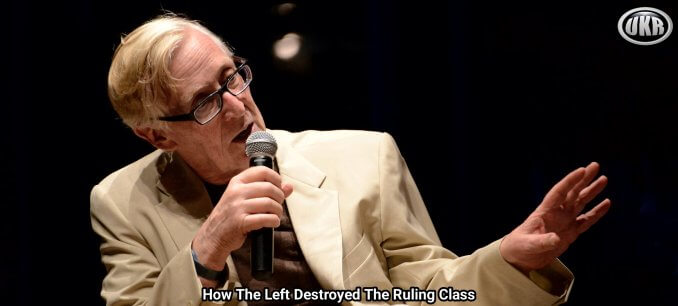
JAMES ALEXANDER
The greatest living Englishman? By Englishman, I mean this in the broadest sense, to mean someone who writes in English. Perry Anderson. Anglo-Irish. Eton. Oxford. New Left. Berkeley. Now aged 87. He is the only writer I am willing to read anything of – except perhaps anything that involves admiration of Frederic Jameson. He is highly intelligent, and, if not original, then everything else that one wants intelligence to be: high, learned, systematic, erudite, capable of narrative, and also possessing a distinctive style, which is not particularly personal, but, on the contrary, impersonal, since Anderson has made the late Marxist dispassion his own. He is, in his writing, Etruscan-lipped, Aztec-eyed, allowing his verdicts to arrive interstitially. He is an admiral of a great ship, who lets the mutineers hang themselves. He writes in a spirit of condemnation, but punishment is not administered by anything as direct as criticism: it is administered by the miasma, by the fates, by the verdict of history. He is Clio crossed with Karajan.
Read anything by him: something from the New Left Review or one of his books, new or old. His book on European union is magnificent. His books on ideas, Spectrum etc., are good. His histories of Antiquity and Feudalism and Absolutism from the 1970s are remarkable. His essays are always interesting. Even his book on Western Marxism is important. His recent book on historians of the First World War, Disputing Disaster, is unparalleled: a genuine delight.
I have just reread English Questions, which was published by Verso in 1992. It was a book built out of essays: two astonishing essays written in the 1960s, ‘Origins of the Present Crisis’ and ‘Components of the National Culture’ and some later essays, among which ‘A Culture in Contraflow’, written in 1990, was a return to what he had said in the 1960s, with reflections on the changes to intellectual life that had taken place between the 1940-1968 era and the 1968-1990 era.
The essays are, the book is, remarkable: like nothing ever written. The only literature I know of that is in any sense equivalent is that of my own teacher, Maurice Cowling, who eviscerated thought and practice from not the Left but from the Right: in histories, but also in the introduction to the second edition of Mill and Liberalism in 1990, and the volumes of Religion and Public Doctrine published between 1980 and 2001. Cowling was as high and impersonal as Anderson, but lacked the sort of respectful audience that the Left has always had – that Left which shades from the New Left Review through the London Review of Books and which maintains a link between the academy and a non-academic press: so he, Cowling, wrote with, as he put, “irony, geniality and malice”. There is no malice in Anderson, or hardly any.
In every writer, even in every great writer, there are simple shapes. Sometimes these simple shapes are magnificent; sometimes they have internal articulation; sometimes, alas, they are obscured by a pompous and circumstantial style, or by confusion. Sometimes the shapes are unfocused, sometimes contradictory, sometimes cast in bronze. In Anderson, they are not obscure: he is too good for obscurity. Let me try to lay out some of these simple shapes.
First of all, about the English past he lamented in the 1960s that there was no singular good history that had been written. So he essayistically tried to propose a history. This had the following elements: 1. England had the “least pure bourgeois revolution”; 2. England had the earliest proletariat, one that had emerged before there was a socialist doctrine to school it; 3. England was formed by empire; and 4. England was not apparently broken by either of the World Wars. This was a view of England across the last four centuries: it enabled Anderson to show that there was a remarkable continuity in English history, also a remarkable continuity of rule – whereby the bourgeoisie had never taken political power but allowed themselves to be ruled by the aristocracy, and finally also a remarkable reluctance to recognise the significance of any of this. Yes, Anderson’s recognition of the significance of all this was supposed to be an explicit assault on the old tradition.
He commented that hegemony in England lacked “any systematic major ideology, but [was] rather diffused in a miasma of commonplace prejudices and taboos”. What was English thought? It was “traditionalism and empiricism” fused into a “single legitimating system”. This was the analysis of 1964, but it was still the analysis of 1991. England, he said, was “the solitary state in Europe whose basic device for choosing a government predates the idea of democratic representation but even that of electoral competition”.
Now, on reflecting back on this analysis he was willing to admit that it argued that England had not followed a historical type. Ironically, the historical type was France: the land of late revolution, highly conscious bourgeois culture, gesturing after principle and system, and political instability. Odd, odd, odd. It is to Anderson’s credit that he saw later on that he had been guilty of what Deutscher called “national nihilism”, but he could not, it seems, abandon it. The entire critique of England depended on the view that Europe was normal and England exceptional – and that exceptionality was not only a political fault but an intellectual incapacity.
His complaint about intellect self-consciousness in England in 1968 was that there had always been “an absent centre” in England’s apprehension of itself. He meant by this that there was no totality, especially not the sociology that he found to be the academic equivalent of or substitute for socialism. In other words, he wanted socialism to be a political and theoretical centre, and, if that was lacking, wanted Comtean or Weberian analogues for it – and he did not find them in English intellectual thought. Instead there was a retarded, mediocre, ephemeral, artificial, soothing, empty literature. He was obviously appalled by the English “aversion to the very category of the totality” by which the English “never had to rethink society as a whole, in abstract theoretical reflection”. (This is from English Questions, p. 57.) Instead, and in his essay Anderson went through all academic subjects on the side of the humanities, there was only what he called “psychologism” or “methodological individualism”: the inclination to bring everything in relation to the exalted individual mind. History, for instance, was poor: it showed “ideas divorced from history” and “a history voided of ideas” (p. 73). Sociology was non-existent. Literary criticism was limited. The only exception to this entire lack of total thinking was in anthropology, and this for the impressive reason that “British imperial society exported its totalisations onto its subject peoples” (p. 93). This insight is worth the entry fee alone: it is quite something for Anderson to have identified firstly just how remarkable the anthropological literature was in its explanatory capacity and secondly to himself explain why this was.
So what Anderson wanted in the 1960s was a singular explanation, a single theory, a grand picture of totality. In relation to what he wanted he found only bits and pieces, and was brutal about them. But we may well ask, and people should have asked in the 1960s, why we should want a singular explanation, and whether it was not the case that the ramshackle set of prejudices, taboos and mediocrity was what made England great. And, consequently, whether his demand that we have a singular explanation was going to be the cause of further civilisational breakdown.
This is what I suppose to be the case. I think the Anderson error is a search for a myth that was magnificent in scope, and attractive, intellectually, but was, in its practical consequences, a disastrous error. In other words, Anderson contributed, perhaps fatally, to what followed. He was not simply an outward observer: he was an insider, a trouble-maker, and his writing played its part in the formation of a successor intellectuality.
We see signs of this in the essay ‘A Culture in Contraflow’, written in 1990. Here he noticed that whereas in the 1960s and before, education was supposed to be conservative and was attacked by the Left, now, for the first time in history – an “anomaly”, he said – the education system was progressive, or influenced by progressivism, and so attacked by the Right. What had happened was the emergence of “a stratum of radicalised graduates” (p. 195). He obviously thought this was a good thing: now there were a thousand perries where there had only been one. And so the intellectual consequence was that, finally, the English had written sociology, and he instanced those interminable books by Michael Mann (author of The Sources of Social Power), Anthony Giddens (author of Capitalism and Modern Social Theory and Central Problems in Social Theory) and W.G. Runciman (author of A Treatise on Social Theory), plus Ernest Gellner (author of the admittedly more entertaining Plough, Sword and Book). Anderson was always good at writing about other writers, and about history he was interesting, noticing that historians like J.C.D. Clark had begun to say that Whiggism and Marxism were fairly much the same thing. So there was a New Right intellectuality, but Anderson did not think much of it. What I observe about all the detail is that Anderson was obviously attracted to some of what he read: he liked Leavis’s criticism, for instance, and some aspects of Cowling’s history. But he tended not to offer critical verdicts about them, instead weighing them against his theoretical demand that what proper understanding should offer is a master theory relating society, thought, argument and history in a single great arc. Against that demand almost everything was wanting.
Now the question I think that still arises from all this is ‘What is intellectuality for?’ or, perhaps, ‘What is the academy for?’ There are several vague answers, involving scholarly disinterest, mere education and engagement with one’s own civilisation. This is the sort of answer Oakeshott would have given, perhaps also Leavis. But there are two major political answers to this question. Anderson gives both of them, and doesn’t like one of them.
1. The first is that the academy and disciplined intellectuality is there ultimately to serve the purpose of generating a ruling mentality: of supplying whatever is needed by an aristocratic ethos, enabling rulers to rule by using codes of mystification similar to those used by the imperialists in the colonies. This is the sort of thing that made sense in the Oxford and Cambridge of the 19th century, when the old tradition of educating priests and lawyers was supplemented by a newer tradition of educating an imperial civil service. This is, we could say, the Right idea. Education is there to support a ruling class. The education may itself be concerned with truth, but the ruling class is not: it is primarily interested in power and law.
2. The second is that the academy and disciplined intellectuality is there to serve a contrary mentality. Here there is a fusion of truth and power. For what we want from all this scholarship and study is exactly that singular, total and conscious way of making sense of ourselves that will not only add to an understanding but also to a critique and finally also to a programme of how to improve our civilisation: making it more equitable, less expropriating. This is the Left idea. Education is consciously imagined as being opposed to the ruling class: that is, the old ruling class, the old aristocratic, imperial ruling class.
In general, the second idea, the Left idea, has, as Anderson noted in 1990, been very successful since the 1960s. In fact, it has only entrenched itself further in the mass Thatcherian and Blairian university. There, the literature is impatient and totalising and bewildered by our collective failure to use Giddens, Runciman, Mann et al. to better ourselves.
But there has also been an unintended consequence, and this is where disaster supervenes. The unintended consequence was that the “stratum of radical graduates”, taught to oppose the ruling class, became the ruling class. No one had anticipated this. And so what we have had, disastrously, is a systematically irresponsible class of rulers: who, for one reason or another, thought that the established Tory Imperial order was an infallible Dreadnought, an unsinkable Titanic, and they assumed that their cold-hearted and resentful bits of ice would do nothing to it. They could moan and moralise without consequence. But, in fact, their Leftist and impossibilist yearnings for an emancipatory totalising doctrine eventually brought the old house of cards down – and what we have now is a ruling class that is irresponsible, since it wanted to carp and complain instead of rule. In fact, it knows almost nothing of the responsibilities of rule. It has been awakened, or enlightened, or wokened to a sort of great totalising sense of guilt and unworthiness and hence mental combustibility.
Anderson complains that the old order was prejudiced, fragmentary, religious, hypocritical. One thinks of Locke, Johnson, Burke, Macaulay. But was this not a great achievement? Was it not the insane Marx, Gramsci, Adorno insistence-on-conscious-totality that was the real mental breakdown and cultural collapse? I, too, sometimes think that we should not call the current silliness ‘cultural Marxism’. But perhaps this is what the phrase means.
The point is that I, too, admire totalising thought. But there is a limit. This is a Hegelian limit. The limit should be that what happens in theory stays in theory. Whereas the entire Marxist cult fell for the radically enlightened view that what happens in theory should be exported, by violence if necessary, into practice: hence Gracchus Babeuf, Saint-Simon, hence Fourier, hence Marx, hence the rest of them: all those dreary Eric Hobsbawms and E.P. Thompsons and Christopher Hills and the people Anderson admired in the 1960s. Their sort of self-consciousness, Anderson’s sort, is not only dangerous: it is destructive, and it immobilises the responsible, ruling self. Herbert Butterfield glimpsed this in the 1940s: when he defended the Whig tradition. Moses Finley, of all people, saw it when he defend the “ancient constitution” against conscious philosophy. They both said, in effect: ‘Beware: you want good history, true history. But good politics, insofar as we have ever had it, has depended on bad history. So now you teach good history, you are likely to have bad politics.’ Anderson seems to have missed this argument. And so he has reaped the whirlwind and his successors have absolutely no idea how to weather the storm.
I admire Perry Anderson more than any other living and writing Englishman. But I am afraid I have to condemn him, in sorrow, at his having made such a grave mistake.
At the end, let me clearly state the error so you can see exactly what it is.
The error was to ask for total social explanation. This was mistake. It destroyed our ruling class. It made us into bureaucratic narcissists, permanently dissatisfied with all reality, and very proud in believing that by doing a bit of social science we could understand ourselves. We think we understand ourselves; the generation since the 1960s thinks it understands itself. They do not; we do not. And we acquired a ruling class devoted to its own destruction.
James Alexander is a Professor in the Department of Political Science at Bilkent University in Turkey.
This article (How The Left Destroyed The Ruling Class) was created and published by The Daily Sceptic and is republished here under “Fair Use” with attribution to the author James Alexander
Featured image:Flickr

••••
The Liberty Beacon Project is now expanding at a near exponential rate, and for this we are grateful and excited! But we must also be practical. For 7 years we have not asked for any donations, and have built this project with our own funds as we grew. We are now experiencing ever increasing growing pains due to the large number of websites and projects we represent. So we have just installed donation buttons on our websites and ask that you consider this when you visit them. Nothing is too small. We thank you for all your support and your considerations … (TLB)
••••
Comment Policy: As a privately owned web site, we reserve the right to remove comments that contain spam, advertising, vulgarity, threats of violence, racism, or personal/abusive attacks on other users. This also applies to trolling, the use of more than one alias, or just intentional mischief. Enforcement of this policy is at the discretion of this websites administrators. Repeat offenders may be blocked or permanently banned without prior warning.
••••
Disclaimer: TLB websites contain copyrighted material the use of which has not always been specifically authorized by the copyright owner. We are making such material available to our readers under the provisions of “fair use” in an effort to advance a better understanding of political, health, economic and social issues. The material on this site is distributed without profit to those who have expressed a prior interest in receiving it for research and educational purposes. If you wish to use copyrighted material for purposes other than “fair use” you must request permission from the copyright owner.
••••
Disclaimer: The information and opinions shared are for informational purposes only including, but not limited to, text, graphics, images and other material are not intended as medical advice or instruction. Nothing mentioned is intended to be a substitute for professional medical advice, diagnosis or treatment.
Disclaimer: The views and opinions expressed in this article are those of the author and do not necessarily reflect the official policy or position of The Liberty Beacon Project.


Leave a Reply