
TALI FRASER
Threats, abuse and organised intimidation have reached new levels in British public life. It feels like almost every week brings a fresh example, each one a little more brazen than the last.
The latest emerged quietly over the weekend, when it was revealed that a Jewish Labour MP had been barred from visiting a school in his own constituency because his presence was deemed liable to “inflame the teachers”. I wouldn’t have thought such a sentence could be written in 2026 Britain without stopping us cold.
The disclosure came not from the school or the relevant authorities, but from the Communities Secretary Steve Reed, speaking at the Jewish Labour Movement conference. “I have a colleague who is Jewish,” Reed told Jewish News, “who has been banned from visiting a school and refused permission to visit a school in his own constituency, in case his presence inflames the teachers. That is an absolute outrage.”
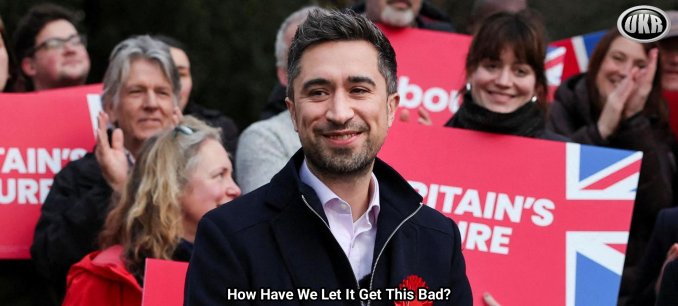
The MP in question is Damian Egan, who represents Bristol North East. His visit to Bristol Brunel Academy last September was cancelled following a successful campaign by far-left activists from Bristol’s National Education Union (NEU) branch and its local Palestine Solidarity Campaign. The pretext was “safeguarding”. But the real objection was openly flagged on social media, Egan himself, and everything that comes around his association with Labour Friends of Israel.
There was a warning sign. Last year it emerged that the NEU was actively coaching members on how to bring the “Palestinian struggle” into schools. The line between education and activism has been dissolving for some time. Now we see the trickle of results.
This happened five months ago. Five months in which a teaching union branch appears to have endorsed and encouraged racial exclusion, applied pressure to a public institution and then boasted about it online, without any known consequence so far. Five months in which regulators, academy trusts and ministers have yet to act. Five months in which we, the public and the press, had no idea.
Reed has promised that those responsible will be “called in” and “held to account”, because, as he put it, “you cannot have people with those kinds of attitudes teaching our children”. Quite so. But what does “called in” actually mean? And why only now? Antisemitism allowed to fester in schools surely warrants something more robust than vague ministerial concern voiced months after the event.
There are serious questions here for the academy trust that runs the school, for the NEU, and for the Education Secretary, Bridget Phillipson. Why was no action taken earlier? And why does accountability in cases like this so often arrive late, if at all?
It is worth asking how we allowed such a situation to arise in the first place, let alone to go unaddressed for nearly half a year. It is a grotesque position to put Mr Egan in. Yet one might also hope that either he or the Communities Secretary would have felt able to speak out sooner. Too often the scale of intimidation in public life remains hidden because its victims are frightened of making things worse by going public.
Education cannot be surrendered as lost ground. It cannot be acceptable for teachers to veto elected representatives on such grounds. Nor can it be shrugged off when, as another recent news story highlighted, a foreign government like the UAE restricts funding for study in Britain over fears of campus radicalisation.
Silence and secrecy are what allow these episodes to multiply. This is another example of the slow creep of public intimidation becoming normalised. A new cross-party body, launched by Tory MP Nick Timothy alongside the government’s former anti-extremism tsar Lord Walney, has been established to examine how hostile states, Islamist groups and activist movements are exploiting democracy.
As Timothy put it to The Times: “People are very nervous about being divisive but guess what? We’re already divided.”
This version of division is antisemitic ostracisation. A Jewish MP excluded from a school to placate bigoted staff. Football fans barred from matches because police allow themselves to be manipulated by violent activists. Metropolitan Police officers standing by while protesters harass an Israeli restaurant in Notting Hill, chanting calls for “armed resistance, by any means”.
Each incident is treated as an aberration. Together, they form a pattern.
See Related Article Below
Britain: Where a Jewish MP cannot visit a local school
What a shocking case reveals about the dire state of our education system
MATT GOODWIN
Something is going badly wrong inside Britain’s education system — and the warning signs are no longer subtle.
Today, Britain’s newspapers are filled with an astonishing revelation. A Jewish (Labour) Member of Parliament, Damien Egan, was effectively barred from visiting a secondary school in his own constituency of Bristol North East.
The reason?
A campaign by pro-Palestinian teachers and activists, reportedly supported by members of the National Education Union (NEU), argued his presence would be “unsafe” because of Egan’s views on Israel.
He is vice-chair of Labour Friends of Israel.
The local Palestine Solidarity Campaign celebrated the cancellation as a “victory” and declared that politicians who support Israel are “not welcome in our schools”.
Pause on that for a moment.
A democratically elected Member of Parliament has been prevented from visiting a school in his own constituency— not because of any serious security threats or criminal behaviour but because his views happen to offend a group of radicalised activists and teachers.
Labour’s Communities Secretary Steve Reed is right to describe the shocking incident as an “absolute outrage”. But outrage is not enough.
Because this episode is not an isolated incident. It is a symptom of a much deeper structural problem within our country’s educational system.
The teaching profession, as most parents will know, has become woefully out-of-touch with the rest of Britain — increasingly comfortable imposing ideological dogma on our taxpayer-funded schools (and universities) from the top down.
This is not just an opinion —we now have hard data to back this up.
According to a bombshell new survey of Britain’s teachers, some 82% of the people who are teaching our children in schools align themselves with the Liberal Left.
Only 16% support the Conservatives or Reform.
In other words, while about half of all Brits currently support right-wing parties in the opinion polls, only about one in eight teachers do. They are in a world of their own.

The most popular party among teachers? The Greens, on 37%, followed by Labour on 29%, and then the Liberal Democrats, on 11%.
In other words, the most popular party among teachers happens to be the party that is calling for open borders, the legalisation of drugs, wealth taxes, and thinks a “genocide” is taking place in the Middle East — though happens to be much less vocal about what is currently unfolding in Iran.
All of this matters — a lot. Teachers are not just another occupational group. They shape the values, assumptions, and worldview of our children, the next generation.
When a profession becomes so heavily skewed in only one ideological direction, it raises unavoidable questions about what children are being exposed to in the classroom, and which views are being excluded.
For years, critics like me were told that these concerns were exaggerated. Teachers, we were told, time and time again, were politically neutral professionals. Yes, they might lean to the left but politics stayed outside the school gates.
But recent events, like this one, tell a very different story.
The NEU has already been caught coaching its members on how to bring the “Palestinian struggle” into schools. Legal groups have warned that such activism risks breaching long-standing rules on political neutrality in education.
And now we see activist teachers celebrating the exclusion of a Jewish MP from a school — framing it as “safeguarding”, as if this is somehow in the best interests of the children.
This not safeguarding. It is ideological gatekeeping. And it fits a broader pattern that we are now seeing across Britain’s institutions.
Public sector professions — education, academia, parts of the civil service — are increasingly dominated by a narrow, activist-left worldview that bears little resemblance to the values and priorities of the wider electorate.
As I have already shown, some three-quarters of all people who work in Britain’s taxpayer-funded public institutions now lean to the political left.
This is unsustainable. It is fuelling a growing democratic imbalance because people are not idiots —they can see what is happening in the institution they are bankrolling.
A relatively small, highly mobilised ideological minority gains disproportionate influence over institutions that are supposed to serve everyone. Dissenting views are not debated — they are treated as dangerous, illegitimate, or “harmful”.
Supporters of the NEU, of course, will argue that teachers are underpaid, overworked, and struggling with declining wellbeing. Much of that is true.
But legitimate grievances do not justify turning schools into political madrassas, or deciding which democratically elected representatives are acceptable based on what they happen to think about events in the Middle East.
The language used by local campaigners — “victory”, “not welcome”, “genocidal support” — also reveals a mindset in which political disagreement is being repackaged in front of our children as moral contamination. Once you accept this logic, exclusion becomes justified, and censorship becomes virtuous.
This is how democratic norms erode — not through dramatic coups, but through thousands of small decisions like this one, made by activists who believe they are on the “right side of history” when they are only destroying our education system.
The uncomfortable truth is this: Britain’s schools have now fully drifted away from the society they are meant to serve. When teachers’ unions are overwhelmingly dominated by views far outside the mainstream, and when those views are actively enforced inside taxpayer-funded public institutions, public trust will inevitably collapse.
Most parents do not want schools to function as ideological filtering mechanisms. Most parents do not want to visit their local schools and be bombarded with radical woke propaganda from one room to the next.
They want their children to be taught to think critically, to be exposed to different views, and to be prepared for life in a pluralistic democracy where, guess what, people do actually disagree with one another.
Blocking MPs from schools because of their beliefs is the opposite of that mission.
If this trajectory continues — if ideological conformity is normalised inside Britain’s schools — then Britain will continue to face generations of young people who have been raised not in open, democratic debate, but in an authoritarian monoculture —a stifling regime of censorship where only pre-approved views are allowed.
Once that happens, restoring democratic balance will become far harder than preventing its loss. And it will be our children, more than anybody else, who will suffer as a result.
This article (Britain: Where a Jewish MP cannot visit a local school) was created and published by Matt Goodwin and is republished here under “Fair Use”


Leave a Reply