

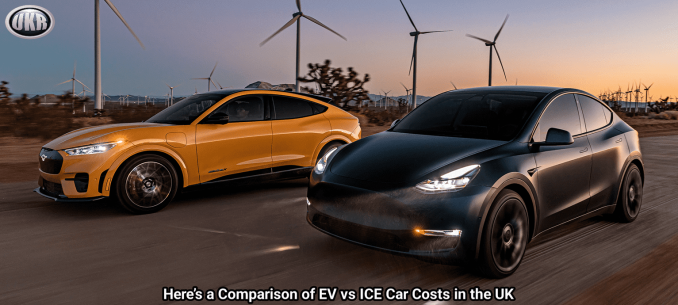
Here’s a comparison of EV V ICE car costs in the UK – prepare to be bamboozled as the government plans to remove all ICE cars from UK roads by 2030 .
The process is the punishment – make thing so complicated people stop beating themselves up trying to work out an answer.
PETER HALLIGAN
ICE = (fossil fuelled) internal combustion engines
Refer to (100) Substack Home – Peter’s Newsletter for how London has increased/removed EV exemptions/subsidies.
From here:
Cost of running an EV versus a combustion engine car
You will have to read the article that covers, buying, maintaining and insurance cost comparisons.
The comparisons are somewhat dated and appear designed to confuse the reader – electricity prices have increased many times since the article was compiled.
Buying an EV v or ICE car
“According to the RAC, the cheapest new EVs currently available in the UK start at around £21,000 (once the government-funded purchase grant has been deducted) while secondhand ones can be found from as little as £4,500.
On the higher end, you’re looking at nearly £160,000 for a brand new top-spec Porsche Taycan, or £99,000 for a Tesla Model X.
Meanwhile, the average price for a petrol car on AutoTrader now sits at £14,850, with the cheapest new model (the Dacia Sandero) coming in at £14,715.
Fuelling an EV OR ICE car
“As of January 2025, the average pay-as-you-go (PAYG) cost to charge an EV on the UK’s public network are approximately 53p per kilowatt-hour (kWh) – about 16p per mile – for standard chargers or 81p per kWh – about 24p per mile – for rapid and ultra-rapid ones.”
“Using the average UK electricity price of around 27p per kWh and average electric car mileage of 3.5 miles per kWh, EDF Energy calculates a cost of 7.7p per mile.
That was a year ago.
“Compare this with fossil fuel, unleaded petrol currently costs £1.36 per litre on average in the UK, with diesel at £1.43. A petrol car gets approximately 36 miles per gallon (MPG) of fuel, equating to 19p per mile, with the average diesel car at a consumption rate of 43 MPG costing 13p per mile.
Don’t forget from here – Tax as percentage of UK pump price
“The interactive chart below shows how taxation on petrol and diesel (duty and VAT) has changed as a proportion of the pump price over time. Fuel duty is currently levied at a flat rate of 52.95p per litre for both petrol and diesel, while VAT at 20% is then charged on both the product price and the duty. Hover over the chart to see exact values.
Petrol and diesel have taxes of around 62 pence out of s pump p4ice of 1.36 – apples and apples or government price fixing in true socialist style!
“ Road tax : Here’s where the confusion starts.
“Fully electric cars used to be road tax exempt in the UK, but this is no longer the case.
As of April this year, the rate of tax for an EV is based on when the car was first registered, with three different tiers:
- For those registered after April 1, 2025, the first year vehicle tax rate is set at £10, rising to the standard rate annual rate of £195 from there.
- For those registered between April 1, 2017 and March 31, 2025, the standard rate of £195 applies.
- For those registered after March 1, 2001 and before March 1, 2017, the tax rate is set at £20 per year.
Road tax for an internal combustion engine car also depends on its age and list price when new, with a standard rate of £195 a year for those registered between April 1, 2017 and March 31, 2025.
“However, under new rules, CO2 emissions can greatly increase tax in the first year for new vehicles – up to a total of £5,490 for models that emit 255g/km or more.
Regardless of whether it’s electric or petrol-powered, any car registered after April 1, 2025 with a list price exceeding £40,000 will also be subject to an expensive car supplement of £425 per year between the second and sixth years of ownership.
The rules are a little different for cars registered from March 1, 2001 to March 31, 2017, with 13 tax bands based on CO2 emissions ranging from £20 to £760 annually. Cars registered before this period (unless eligible for historic car exemption) are taxed based on engine size, with two bands set at £210 and £345 a year.”
Confused? Just wait until the budget o 26 November when the scale of the government climate change racketeering accelerates.
Insurance – not all insurance companies will insure EV’s
“The average annual cost of insurance for an electric vehicle currently sits at £587, according to MoneySuperMarket. For both petrol and diesel car, the averages are quite a bit lower, at £501 and £538 respectively. I suggest that EV rates are a few hundred pounds higher and premiums for ICE cars a hundred pounds or so lower.
“There are a few reasons for this: as a rule, more expensive cars (which EVs often are) cost more to insure, but premiums may also be impacted by the high price of battery replacement or lack of available EV parts and skilled automotive technicians.”
You don’t say!
Don’t forget:
“Mechanic visits can be cheaper too, as EVs have fewer parts than internal combustion cars which means less to fix or replace. That said, in the – albeit unlikely – event the battery fails out of warranty (typically around eight years), you could face a substantial bill of up to £15,000.
T’s not so much battery failure, but battery damage from driving over kerbs and pot holes!.
The batteries can spontaneously combust too!
Onwards!!!
Please take a (paid or unpaid) subscription or forward this article to those you think might be interested my social care costs a few hundred pounds a week!
You can also donate via Ko-fi – any amount from three dollars upwards. Ko-fi donations here:
https://ko-fi.com/peterhalligan
This article (Here’s a comparison of EV V ICE car costs in the UK – prepare to be bamboozled as the government plans to remove all ICE cars from UK roads by 2030) was created and published by Peter Halligan and is republished here under “Fair Use”
See Related Article Below
Electric vehicles are a train wreck heading our way
PAUL HOMEWOOD
OUR local shopping centre has just installed six new rapid 150 kW EV chargers to replace 50kW chargers.
With strong speculation this week that EVs will face pay-per-mile charges from 2028, these new chargers are a reminder that driving will become not only unpractical but unaffordable for anybody who does not have off-street parking. It is estimated that this is the case for at least 40 per cent of car owners across the UK.
Let’s take the Kia EV3 as an example. This is Kia’s compact SUV, with an on-the-road price of £36,005 for the 81 kWh basic version. This is about £10,000 more than an equivalent petrol model. It has a claimed range of 375 miles, but this will be more like 230 miles in real-world conditions. Efficiency is reckoned to be 3.3 to 4.0 miles/kWh in real world driving conditions – call it 3.6 miles.
On a typical annual mileage of 10,000, electricity consumption would be 2,777 kWh. At 89p/kWh, which is the price at our new charging station, that works out at £2,471 a year.
A diesel would run at maybe 40 mpg, which at current prices comes to £1,590 a year. But half of that is fuel duty – pre-tax, the annual cost would be about £800. One way or another, our Kia EV3 driver will have to pay that tax eventually, on top of his charger bill of £2,471.
A pay-per-mile tax is forecast to be set at 3p/mile, around £300 pa. But to replace the loss of fuel duty currently paid by petrol/diesel drivers, this rate would eventually have to be at least doubled. It would be payable annually as a surcharge on Vehicle Tax; the owner would have to declare his mileage online at the time of payment.
There has long been talk of road charging, using satellite technology and black boxes in cars. But this is still many years from being rolled out, if it ever is.
One consequence of this flat tax, which has really upset our green friends, is that by default they would have to pay tax on mileage driven abroad, such as when driving their Tesla to their second home in the Dordogne!
More widely, this new potential tax has been slammed because it could discourage the uptake of electric cars. But the reality is that the rest of us have had to subsidise virtue-signalling EV owners for too long. For years, the government threw thousands in subsidies to buy EVs, which also attracted ultra-low vehicle tax. There are still generous tax breaks for business and fleet buyers. And, of course, EV owners have until now not had to pay fuel duty.
It is time they paid their fair share of tax.
Off Street Charging
AS mentioned, millions of car owners in Britain have no access to off-street parking, and therefore will find it impractical or even impossible to charge at home. Their only solution will be to use public chargers.
As well as the cost issue outlined above, there will be practical considerations. In our town of about 25,000 inhabitants, we have only the six public rapid chargers I have described. On national averages, I would guess there are 12,000 cars in town, of which 7,000 might be parked on driveways. The other 5,000 would need public chargers. Most of these would have to be charged at weekends, as drivers would be at work during the week. (The alternative of charging on the way home from work would be extremely unpopular, given that they could be queueing for an hour or more with everybody else trying to do the same thing.)
You don’t need Diane Abbott’s abacus to work out that six chargers won’t be enough to cope with thousands of cars over the weekend. As perspective, the Kia EV3 quoted above would take about half an hour to charge. It is common practice for drivers to leave their cars charging while they do their shopping – this often means an hour or more, meaning that one charger might handle only ten cars or so a day.
In reality, we will need hundreds of chargers to cope with demand when all cars are electric. But there are no plans to build more at this stage. Nor is there any land available for the number that would be needed.
I have written to our Labour MP asking her what Labour’s policies are for dealing with this train wreck heading our way. In particular, I have asked whether car owners will be allowed to run their charging cables across pavements from their house to the car. This, of course, would be extremely hazardous for pedestrians and would make pavements impassable for disabled people.
Even then, there are hundreds of cars in town that cannot be parked outside the home – flats, for instance, or streets which are too narrow for parking. Are these people, who are often the poorest, to be penalised?
I’m not expecting a meaningful reply from the MP. It will be written by some lackey in the Department for Transport, and will probably be based around these talking points:
- We must get rid of petrol/diesel cars to achieve Net Zero;
- EVs are clean and better for the environment;
- EVs are cheaper to run;
- We have a target to build thousands more chargers up and down the country;
- We are investing millions in public transport and cycle paths.
Translation: We don’t give a toss about your problems. Get on a bus instead and stop moaning!
I suspect that very few members of the public are even aware of the problems I have outlined. Do they know how many miles an electric car will do per kWh? Do they know how long it takes to charge?
There has been very little discussion in the media either. In particular, motoring correspondents invariably write glowing reviews of all things electric – I wonder what incentives they have been offered?
One day the public will wake up to the harsh realities. Unfortunately it will be too late to do anything about it by then.
Quite simply, ordinary people will not be able to afford to run their already expensive to buy car, if they are forced to use public chargers.
Which has probably been the Government’s plan all along!
This article (The climate scaremongers: Electric vehicles are a train wreck heading our way) was created and published by Conservative Woman and is republished here under “Fair Use” with attribution to the author Paul Homewood
.

••••
The Liberty Beacon Project is now expanding at a near exponential rate, and for this we are grateful and excited! But we must also be practical. For 7 years we have not asked for any donations, and have built this project with our own funds as we grew. We are now experiencing ever increasing growing pains due to the large number of websites and projects we represent. So we have just installed donation buttons on our websites and ask that you consider this when you visit them. Nothing is too small. We thank you for all your support and your considerations … (TLB)
••••
Comment Policy: As a privately owned web site, we reserve the right to remove comments that contain spam, advertising, vulgarity, threats of violence, racism, or personal/abusive attacks on other users. This also applies to trolling, the use of more than one alias, or just intentional mischief. Enforcement of this policy is at the discretion of this websites administrators. Repeat offenders may be blocked or permanently banned without prior warning.
••••
Disclaimer: TLB websites contain copyrighted material the use of which has not always been specifically authorized by the copyright owner. We are making such material available to our readers under the provisions of “fair use” in an effort to advance a better understanding of political, health, economic and social issues. The material on this site is distributed without profit to those who have expressed a prior interest in receiving it for research and educational purposes. If you wish to use copyrighted material for purposes other than “fair use” you must request permission from the copyright owner.
••••
Disclaimer: The information and opinions shared are for informational purposes only including, but not limited to, text, graphics, images and other material are not intended as medical advice or instruction. Nothing mentioned is intended to be a substitute for professional medical advice, diagnosis or treatment.
Disclaimer: The views and opinions expressed in this article are those of the author and do not necessarily reflect the official policy or position of The Liberty Beacon Project.


Leave a Reply