

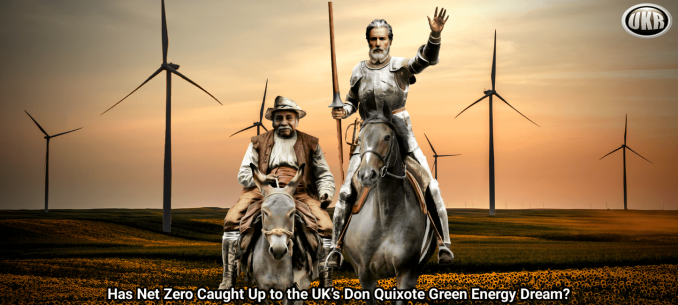
 the UKs Green Energy Policies meet Don Quixoe – Created by Grok on X
CLARK SAVAGE
The Net Zero Push: A Bold Vision
Environmental Lawfare: Blocking the North Sea
The Energy Bill Crisis: A Wake-Up Call
The Political and Economic Tightrope
Has Net Zero Caught Up?
Sadly, I believe the great people in the UK are in trouble, and they are running their oil and gas companies out of business, and out of the UK. They may have done irreparable harm to their oil and gas industry through their lawfare, regulations, and reliance on grid interconnects with other nations. Energy security starts at home, and they have compromised their security by imposing Net Zero policies across all business sectors, resulting in high energy costs.
See Related Article Below
Net Stupid: UK’s Largest Fiberglass Factory Closing Over Soaring Energy Costs
‘The UK government is standing by and watching British industry collapse.’
KURT ZINDULKA
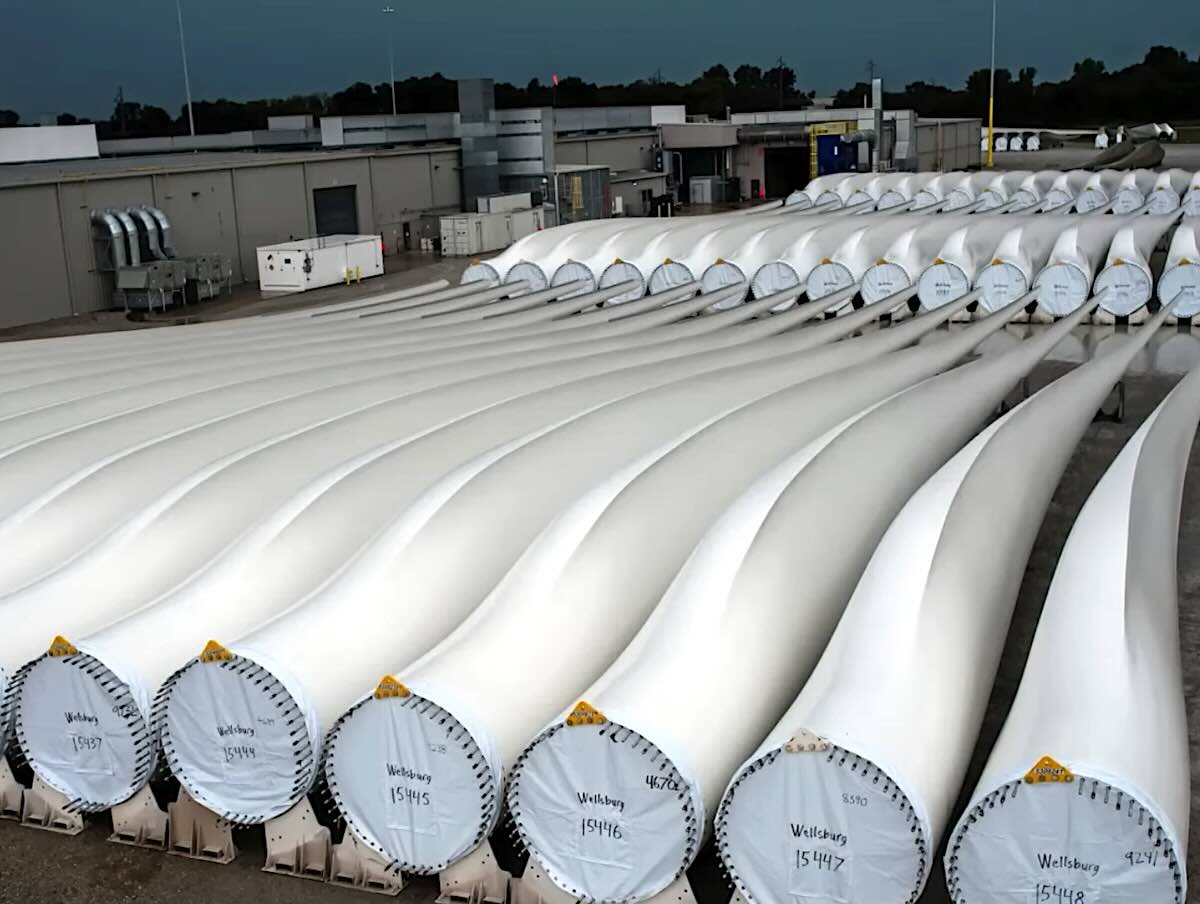
Britain’s largest producer of fiberglass, a key component in wind turbines and electric cars, is reportedly set to shut down in part due to the high energy costs in the United Kingdom. [emphasis, links added]
The Japanese-owned Electric Glass Fiber UK factory in Wigan, which employs around 250 people, is said to be set for closure after the left-wing Labour Party government failed to organize a buyout from Tokyo-based Nippon Electric Glass owners.
According to the BBC, the owners claimed that the factory operated at a £12 million loss last year due to increased competition from Chinese manufacturers, low sales, and the soaring cost of energy in Britain.
Britain currently has some of the most expensive energy prices in the world, in large part as a result of the very same green agenda, which the Electric Glass Fiber UK factory assisted via its production of the critical component to wind turbines and electric cars.
While defenders of ‘Net Zero’ in the UK, such as cabinet minister Ed Miliband, have attempted to cast blame for the sky-high energy prices on the global price shocks following the coronavirus and the Russian invasion of Ukraine, Westminster’s green agenda [worsens] many of these issues, with traditional forms of energy being taxed to subsidize so-called renewable forms of energy.
Additionally, while global price fluctuations do impact the price of natural gas and oil in Britain, the country is more vulnerable to such international pressures because the British government refuses to tap into the nation’s resources, such as through the banning of fracking upheld by both establishment parties in London.
The promised financial benefits of energy sources like wind power have also been hampered by Britain’s outdated grid and inability to efficiently store excess energy during peak weather.
Thus, the taxpayer is forced to pay wind energy firms millions to turn off their turbines so as not to overload the system.
On top of demonstrating the inherent follies of the green agenda, the planned closure of the Electric Glass Fiber UK factory further undermines the Labour government’s claims of seeking to reindustrialize Britain.
The London-based Tegu investment firm said that it was in negotiations to purchase the plant from Nippon. However, their request to have the government underwrite £5 million in dancing for the deal was ultimately shot down.
Tegu chairman Jack Khan told the Financial Times: “The fundamental issue here is that the UK government is standing by and watching British industry collapse.”
Top image of fiberglass wind turbines via History Of Simple Things/YouTube screencap
Read more at Breitbart
Via Climate Dispatch
*****
Starmer Slashes Net Zero Taxes to Save Britain’s Industries

WILL JONES
Net Zero taxes will be slashed by up to 25% for thousands of manufacturers as Keir Starmer scrambles to save British industry from electricity costs that are the highest of any developed country. The Telegraph has more.
As part of the Government’s long-awaited Industrial Strategy, the Prime Minister is to cut power bills by up to 25% for some 7,000 “electricity intensive” manufacturers, including car makers, aircraft factories and chemical plants.
From 2027, they will no longer have to pay the Net Zero levies that are normally added to their power bills, such as the renewables obligation, the feed-in-tariff and capacity market charges.
This will be paid for by financial reforms to the energy market and a raid on companies that burn natural gas, through higher carbon taxes, the Government said.
However, the support was at risk of being diluted on Sunday as Iran’s threat to cut off a vital oil and gas supply route in the Middle East risked sending energy prices around the globe soaring.
It comes after repeated warnings that British manufacturers are labouring under the highest industrial electricity prices of any developed country, with output down by a third since 2021.
Sir Keir’s announcement was welcomed by manufacturers, including Derby-based Rolls Royce, as a “giant and much needed step forward”.
The Prime Minister said: “This Industrial Strategy marks a turning point for Britain’s economy and a clear break from the short-termism and sticking plasters of the past.
“In an era of global economic instability, it delivers the long term certainty and direction British businesses need to invest, innovate and create good jobs that put more money in people’s pockets as part of the plan for change.
“Our message is clear – Britain is back and open for business.”
Worth reading in full.
However, Net Zero Watch (NZW) dismissed the move as a gimmick that is “robbing Peter to pay Paul”, as the cost of the discount has to be paid somehow, with hints that gas users will foot the bill.
NZW Director Andrew Montford said:
Ed Miliband is once again merely proposing to shuffle costs from one energy user to another. Robbing Peter to pay Paul is all he has to offer, because his mad fixation on decarbonisation means he will not look at the underlying problem, namely the gross inefficiency of a renewables-based grid.
This latest wheeze will bring temporary relief for sectors favoured by the Secretary of State, but at the expense of others, who can ill afford it. And in the medium term, bills will continue to rise for everyone. The country can’t afford this madness any longer.

••••
The Liberty Beacon Project is now expanding at a near exponential rate, and for this we are grateful and excited! But we must also be practical. For 7 years we have not asked for any donations, and have built this project with our own funds as we grew. We are now experiencing ever increasing growing pains due to the large number of websites and projects we represent. So we have just installed donation buttons on our websites and ask that you consider this when you visit them. Nothing is too small. We thank you for all your support and your considerations … (TLB)
••••
Comment Policy: As a privately owned web site, we reserve the right to remove comments that contain spam, advertising, vulgarity, threats of violence, racism, or personal/abusive attacks on other users. This also applies to trolling, the use of more than one alias, or just intentional mischief. Enforcement of this policy is at the discretion of this websites administrators. Repeat offenders may be blocked or permanently banned without prior warning.
••••
Disclaimer: TLB websites contain copyrighted material the use of which has not always been specifically authorized by the copyright owner. We are making such material available to our readers under the provisions of “fair use” in an effort to advance a better understanding of political, health, economic and social issues. The material on this site is distributed without profit to those who have expressed a prior interest in receiving it for research and educational purposes. If you wish to use copyrighted material for purposes other than “fair use” you must request permission from the copyright owner.
••••
Disclaimer: The information and opinions shared are for informational purposes only including, but not limited to, text, graphics, images and other material are not intended as medical advice or instruction. Nothing mentioned is intended to be a substitute for professional medical advice, diagnosis or treatment.
Disclaimer: The views and opinions expressed in this article are those of the author and do not necessarily reflect the official policy or position of The Liberty Beacon Project.


Leave a Reply