

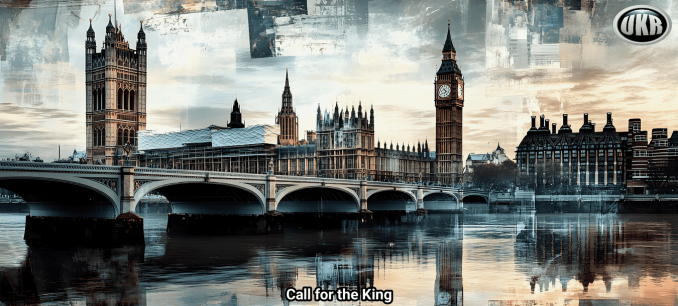
Why the Restoration and Renewal Programme is mad, bad, dangerous for Parliament and must be stopped
NICHOLAS BOYS SMITH
I have just finished reading the 128 pages of the Delivering restoration and renewal of the Palace of Westminster: the costed proposals (as well as rereading previous reports) so that you don’t have to. It’s worse than you think.
First came the scandal of the £9.6m new House of Lords door (a new piece of infrastructure so ugly, expensive and inherently useless (it creates queues and requires more staff to manage) that it is hard to imagine it was planned or executed by well-meaning adults. Then came the new House of Lords security fence, which thoughtlessly trashes a whole side of the Palace of Westminster and violently inserts a US/Mexico frontier fence aesthetic into the public space between the Henry VII chapel and the House of Lords, two of the greatest examples of Perpendicular Gothic anywhere in the world — as the fence’s designers neither knew nor cared.
Now, the next act in this unfurling tragedy, and after years of dither, comes ruinously expensive detail on the languorous leviathan which is Parliament’s Restoration and Renewal Programme. Reader, I love Parliament. I wish to see its stonework restored, its asbestos removed, its pipes cleaned and its fear of fire diminished. I will bow to no man in my admiration of Sir Charles Barry‘s autodidactic excellence. I thrill to Augustus Pugin’s mad and workaholic genius, creating linenfold panel by the acre with his whirling brain and his ceaseless pen. But, as currently conceived, I hope that these plans fail. If I could, I would pay from my own pocket to stop them.
When everyone in the room agrees with each other, then expert consensus can go catastrophically wrong. That has happened here. A generation ago, the King, then Prince of Wales, saved Trafalgar Square from those scheming to ruin it when he compared a proposed National Gallery extension to a “monstrous carbuncle on the face of a much-loved and elegant friend.” Parliament now needs the same clarity. These proposals are a scam, total scope-creep, utterly out of control, conceptually confusing the necessary with the needless and jolly ugly to boot. They must be stopped. They are a cancer infecting the physical heart of parliament with their deracinated Dubai hotel aesthetic, their protracted disruption and their indefensibly pointless cost. If ever we had need of the King’s common sense in place of elite lunacy, we have need of it now.
Taking between 19 and 61 years the programme will probably take longer than the original construction. Costing between £11billion and £39billion, it will certainly cost far more in real terms than the Palace cost to build in Victorian England: between four and fifteen times more if you inflate by wage growth, between 27 and 93 times more if you inflate by prices. Fair “apples for apples” comparisons with similar refurbishments of large historic buildings are difficult but, depending on the final option and outlay, I cautiously estimate the programme is costing between four and 15 times as much per square metre as the restoration of Manchester’s town hall and between three and half and 13 times as much per square metre as the repair of the Dutch Binnenhof. At best, it will be roughly the same price per square metre as the rebuilding of Paris’s utterly fire-gutted Notre Dame. At worst, it will be over three times as expensive per square metre. What on earth is going on?
At the heart of the matter are five fundamental failures of scope-creep, philosophy, counting, design and mis-management
First, the scope keeps growing. The programme treats “more” as “better”. Despite being told by Government and parliamentarians in 2021 to restrict works to what’s actually necessary, the programme has grown out of control, muddling up the genuinely necessary (stripping out asbestos, updating pipes, repairing stonework) with the nice to have, the unnecessary and the nearly impossible (creating visitor centres, trying to make a Victorian building net zero or completely compartmentalising the fire management system as if it was a modern building.) The barrel has been stuffed with pork.
It is not just me claiming this. The Restoration and Renewal Programme publicly admit to unnecessary scope-creep themselves. In paragraphs 15-17 of their 2024 Strategic Case, or paragraph 26 of their latest report, they explain unambiguously how they considered six different levels of ambition from the minimum necessary (level 0) to the most ambitious (level 5). They plumped for the second-most ambitious option, so termed level 4. Incredibly, the main reason cited for choosing this more expensive option is that it would be easier to add even more to it later. As they explain, “the appeal of this scope level was the potential to add additional improvements to the scope for Restoration and Renewal after costed proposals have been approved, should circumstances or the Houses’ priorities change.” So, not content with choosing the second most expensive of six options, they still want to do more not less. We are in “you could not make it up” territory. The producers have captured the process. The tail is wagging the dog.
Even the programme’s own figures do not justify this cost. The stated financial rationale (in paragraph 8) of the programme is that it at present £75.9m a year “is spent solely on works to maintain and repair the Palace of Westminster.” This does not seem too bad to me for the maintenance of the national parliament and one of the world’s most iconic buildings. However, even if we accept that this figure is unacceptably high, they go on to claim (at paragraph 11) that implementing the programme (after 30 years or so) will save around £45m a year. The so-called Net Present Value (the cost in today’s money of the ongoing future liability or saving) of spending or saving these sums is around £2.2 billion and £1.3 billion respectively, discounted at HM Treasury’s standard rate. In other words, in order to make a saving that is worth £1.3 billion we are proposing to spend between £11 billion and £39 billion. A programme of this gargantuan cost for so relatively modest a reward is not in the public interest.
The programme’s second fundamental flaw is philosophical. It mistakes building-level thermal efficiency for cost-effective decarbonisation. It is premised on an erroneously narrow understanding of sustainability and a related total failure to consider environmental trade-offs and opportunity costs. This has led to costly decisions which do not maximise carbon reduction at the national level. As well as being inexcusably expensive, the programme actually fails in its own terms.
The biggest single cost in the construction programme is “the wholesale replacement of the building services systems to improve resilience, reliability, and energy efficiency, targeting around a 40 per cent reduction in the Palace of Westminster’s energy consumption.” Achieving this will take up nearly half the programme’s construction costs, nearly two and a half times what is being spent on preserving the building’s fabric.
The Victorian Houses of Parliament are, it is true, less thermally efficient than modern buildings. However, “energy in use” is only half the environmental story. So-called “embodied carbon” (i.e. the energy used to make a building) also matters if you’re counting carbon. Approximately 20 to 50 per cent of the whole life energy use of a building comes from constructing it not from heating it. The longer a building lasts, therefore, the more effectively that carbon used in construction is working as th ‘average carbon budget per year collapses over the decades. The greenest building, one might say, is one already built. And, of course hewn from stone and wood and Victorian iron, the Palace of Westminster has used far less carbon to create than any modern skyscraper built from energy-gulping steel and glass and concrete. If we are considering its full-life carbon cost over time, The Houses of Parliament is therefore far “greener” than its leaky heating implies. It appears unsustainable because we are only considering half the balance sheet and trying to solve a problem that is much more modest than the Restoration and Renewal programme implies.
This leads to even deeper waters. It is possible to reengineer old buildings to behave thermally like modern ones but it often goes wrong, is difficult and can be eye-poppingly expensive, particularly for a building as large and complex as the Palace of Westminster. This is why it’s normally foolish to try. Of course, most heritage and energy consultants love the complexity and cost of the challenge. But, crucially, this is not a zero-sum came. Heaping treasure on making an already quite carbon-friendly Parliament a little bit greener is an inherently inefficient way of pursuing net zero. For instance, if the roughly £2billion we are proposing to spend on building service renewal were instead spent on trams, we could build about 50 miles of tram line (at the European average cost per mile). Spending £2billion on public transport in secondary cities would be both greener and more economy-boosting than trying to turn a Victorian building into a modern one.
The third error is bad counting. The programme uses the wrong metric to justify accessibility spending. One of the programme’s few actual numerical targets is nonsense. The programme wishes to increase the amount of the Palace of Westminster which is step free from 12 per cent to at least 60 per cent, and 90 per cent in areas “with high Member and visitor use.” When I first read this, I was sympathetic. It is right that a modern public building is accessible to as many people as possible. Parliament has more visitors, and cultural and workplace norms have changed and in a welcome direction since the 1830s when the building was first designed.
However, all is not as it seems. Existing parliamentary maps and visitor guides make clear that in fact nearly all the key public rooms already are accessible step-free. As a visitor guide puts it, “UK Parliament is accessible for wheelchair users and there is step-free access to the public galleries and committee rooms of both Houses.” I myself have been to lunch in the House of Lords with a peer who uses a nifty mobility scooter and accompanied him in the lifts from the Peers’ entrance all-round the House of Lords. He had no problems. Meanwhile the new additional buildings on the Parliamentary estate (such as Portcullis House), though imperfect, do have more lifts and better step-free access for MPs’ and peers’ offices.
The 12 per cent figure seems so inexcusably awful because it mathematically counts a square metre at the back of the building’s most obscure corridor as objectively equal to a square metre in central lobby or the twin chambers. But it is not. It is less important. Clearly, we can and should make as much of Parliament as accessible as possible. Doubtless more rooms should be accessibly step-free but the core functions, and many offices, already are. The main battle is already won. The public can fund some modest improvements but spending hundreds of millions to ensure full access to nearly every back corridor is a luxury this increasingly poor country can no longer afford. Pushing this too far is arrogant parliamentary self-indulgence, not a defensible use of funds in a cash-strapped nation. The taxpayers’ funds need to be spent elsewhere.
The programme’s fourth core problem is loveless design. Current proposals are embarrassed by the building’s Gothic exuberance. Like the recent calamitous interventions in the House of Lords, the brief appears to have been written by consultants who have no comprehension of the sanctity and symbolism of parliament. The initial designs seem sketched by architects with no capacity or desire to design in the footsteps of Pugin. The word “architecture” appears only four times in the latest report, “Gothic” only once. Barry or Pugin not at all. The proposed designs for the visitor’ space, visitor entrance, public lifts and education centre have clearly been created by someone who regards Gothic architecture with profound distaste. They are bland and joyless. To insert an empty atrium of such stunning tedium into a building of such intricate joy as the Palace of Westminster is an act of pure malice, needless and nasty. Constituents and tourists come to Westminster to see Pugin and Barry not pastiche Scandinavian pine.
Visitors are not coming to visit Ikea
Finally, the programme has substituted process for control with expensive consequences. Four times the latest report asserts that “best practice for major programmes avoids setting a fixed funding envelope or timeframe in the early stages of programme development.” Their consultants may have asserted that this is true, but it is only correct if you regard the journey as more important than the destination. As nearly any project manager or CEO would tell you programmes without budgets waste money. No deadlines lead to late delivery.
So over-managed has the whole process been that over five years the Restoration and Renewal Programme has so far spent £79m in staff costs and over £300m in consultants, contractors and other costs. This is set to continue. Between 31 to 41 per cent of the programme’s total costs are oversight and construction management (it varies by scenario). This is significantly higher than the range you would normally expect of 15 to 30 per cent.
There are clever, good people on the MPs’ and Lords’ oversight boards. They have been out-generalled. Members rapidly rotate on and off. The average time spent on them by MPs or Peers who have recently left the Client or Programme Boards was eight and a half months. This is insufficient time for busy people to understand what is going on. I looked up the, longer-serving and independent, non-MPs and peers on the oversight boards: two chartered accountants, a “board advisor” and a former head of a disability strategy but no one with experience of repairing large old buildings. This is not serious governance.
From the numbers provided in Annex 2 of the report it’s impossible to know precisely how much of the total cost is over management and scope-creep and how much is necessary. About thirty five per cent I guestimate, is definitely necessary. About a third is definitely not required. Beyond that it’s hard to know but management costs are high.
Sometimes I fantasise that buried deep within the adamantine bowels of the Palace of Westminster, hidden in a darkly discreet room far from public access, is an all-powerful character who secretly hates Charles Barry and Augustus Pugin’s high gothic masterpiece with an overwhelming and all-consuming passion. Maybe he’s a plant from the Twentieth Century Society. Maybe he’s a sleeper agent, trying to sap our love of country and our hope in good government. Perhaps he is the reincarnation of Le Corbusier. Maybe he was just hit on the head by a falling quatrefoil as a child. But his loathing for the structure and symbolism of Parliament is unquenchable. How else to explain the sudden catalogue of recent Parliament-harming and confidence-sapping decisions?
Of course, the problem is not one dastardly baddie scheming in his lair but the whole uncontrolled industry that the Restoration and Renewal programme has summoned into being. There is no single villain that Parliament can send James Bond to assassinate to ensure a happy ending.
So what next? Here is what I would do. I do not know if this parliament would vote for it, but the next one will. The current pork-stuffed programme cannot and will need survive for long. I predict its ultimate demise with confidence.
Parliament needs to take back control. Dissolve the Restoration and Renewal programme and its board. Fire three quarters of the team, keeping some for institutional and programme memory. Let the current architectural and design teams go and never rehire them. The tiny amount of new design still required should blend effortlessly into the existing building. Rein back ludicrous current ambition. Abandon plans for “level 4” intervention and move back to the much more reasonable and rational “level 0” — or, at most, “level 1.” Target accessibility improvements on the most important public spaces and a core of offices and committee rooms. Put a proper CEO or a retired general in charge (as the clever French did at Notre Dame). Set an immovable deadline. Repair only what is essential for safety and longevity. Don’t try to make a nineteenth century building into a twenty-first century one. It is unnecessary, too expensive and it will fail. Work to the deadline not the programme and dive for the line. Be finished by 2035 at the latest.
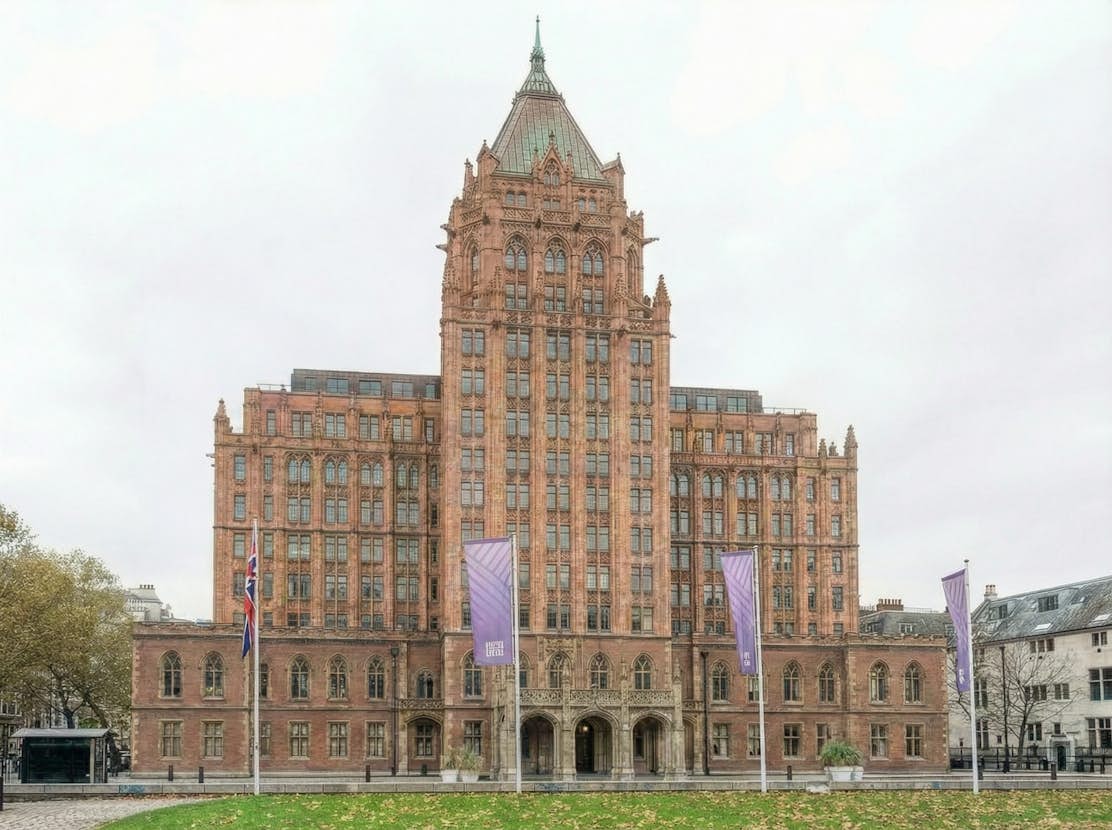
Creating a visitor centre is a nice idea but don’t try to squeeze it into a Victorian parliament. Instead, knock down the excrescence which is the squalid and squat five storey Queen Elizabeth II Centre on the other side of Parliament Square. Replace it with a sumptuous 15 storey modern gothic tower (King Charles III Tower) mingling the world’s best visitor centre with luxuriant conference space, offices and flats. All the other gothic towers in Westminster are eighteenth or nineteenth century. Why not create one more even bigger and more marvellous, and use the profit to pay for the restoration? This is the right type of ambition.
I feel sorry for those working in the Restoration and Renewal programme. They are doubtless intelligent and serious people, well-intentioned and hard-working. They have been led up the wrong path.
A smaller more focused programme needs to rediscover not just its deadline but its sense of purpose. Theirs is the duty to care for one of the world’s greatest buildings, one of the handful of instantly recognisable structures around the world which symbolises not just London and Britain but the rich tension between democracy and monarchy, liberalism and tradition which, once upon a time, was the British genius.
At present, our inability to restore the Palace is the quintessential exemplar of “Broken Britain”, of a country no longer able to conceive sensibly ambitious plans or execute them effectively, of a public discourse so focused on posturing and process that it has forgotten about common sense and outcomes.
This is why it is so important to change course, not just to be heir to Gladstone and Disraeli, but to engender and to symbolise the British renaissance which — I dare to hope — is soon to come.
This article (Call for the King) was created and published by The Critic and is republished here under “Fair Use” with attribution to the author Nicholas Boys Smith

••••
The Liberty Beacon Project is now expanding at a near exponential rate, and for this we are grateful and excited! But we must also be practical. For 7 years we have not asked for any donations, and have built this project with our own funds as we grew. We are now experiencing ever increasing growing pains due to the large number of websites and projects we represent. So we have just installed donation buttons on our websites and ask that you consider this when you visit them. Nothing is too small. We thank you for all your support and your considerations … (TLB)
••••
Comment Policy: As a privately owned web site, we reserve the right to remove comments that contain spam, advertising, vulgarity, threats of violence, racism, or personal/abusive attacks on other users. This also applies to trolling, the use of more than one alias, or just intentional mischief. Enforcement of this policy is at the discretion of this websites administrators. Repeat offenders may be blocked or permanently banned without prior warning.
••••
Disclaimer: TLB websites contain copyrighted material the use of which has not always been specifically authorized by the copyright owner. We are making such material available to our readers under the provisions of “fair use” in an effort to advance a better understanding of political, health, economic and social issues. The material on this site is distributed without profit to those who have expressed a prior interest in receiving it for research and educational purposes. If you wish to use copyrighted material for purposes other than “fair use” you must request permission from the copyright owner.
••••
Disclaimer: The information and opinions shared are for informational purposes only including, but not limited to, text, graphics, images and other material are not intended as medical advice or instruction. Nothing mentioned is intended to be a substitute for professional medical advice, diagnosis or treatment.
Disclaimer: The views and opinions expressed in this article are those of the author and do not necessarily reflect the official policy or position of The Liberty Beacon Project.


Leave a Reply